

Read summarized version with
How to Measure ROI in CRO and Maximize Returns
Are you investing time and resources into CRO but not measuring the return on investment? If so you might be flying blind. Sure, you can see changes in website performance and traffic, but do those changes translate into profit?
Here’s the truth: Measuring ROI in CRO isn’t just a nice-to-have—it’s a must. Without it, you cannot see how your optimizations translate into revenue or whether your marketing budget is being used effectively.
In this guide, we’ll break down how to measure ROI in CRO, the key metrics to track, and strategies to maximize your ROI in your CRO efforts.
What Is ROI in CRO?
ROI, or Return on Investment, measures how much profit your conversion rate optimization efforts generate compared to the costs incurred in optimizations. It helps you determine whether your CRO efforts are driving real revenue growth so you can refine your strategy effectively to ensure every dollar spent leads to measurable gains.
Why Measuring ROI in CRO Matters
Conversion rate optimization is essential for businesses looking to maximize their digital performance. However, simply implementing CRO efforts without measuring their effectiveness can lead to wasted resources and missed opportunities. By tracking your CRO ROI, you can make informed decisions, optimize your strategies, and ultimately drive more revenue.
Helps to Maximize Profitability
At its core, CRO is about getting more value from your existing traffic. Measuring ROI in CRO gives you a clear picture of how much revenue your optimizations are generating compared to the costs involved, ensuring that every dollar invested in optimization efforts contributes to overall profitability. By analyzing which strategies lead to the highest conversion rates and revenue, you can refine your approach, eliminate underperforming tactics, and focus on high-impact changes. For example, if you are investing in A/B testing for landing pages, you can identify the most effective design elements that generate more leads and reduce customer acquisition costs while boosting revenue.
Improves Budget Allocation
One of the biggest challenges in CRO is determining where to allocate resources. Without measuring ROI, you may continue investing in strategies that do not yield substantial returns. By tracking ROI, you can identify which CRO efforts provide the highest return on investment and prioritize your budget accordingly. For instance, if heatmaps reveal that users abandon checkout pages due to complex forms, you can allocate more budget to simplifying the checkout process, increasing conversions and overall revenue.
Enhances Data-Driven Decision Making
Successful CRO efforts rely on data rather than guesswork. Measuring ROI in CRO provides valuable insights into which optimization strategies contribute to success and which require adjustments. You can use analytics tools to track user behavior, measure conversion rates, and analyze customer journeys to understand what drives engagement. This data-backed approach can help you make CRO decisions based on solid evidence, which can lead to higher efficiency and better results. A structured CRO process ensures these decisions are reproducible and compounding over time.
Increases Conversion Efficiency
The ultimate goal of CRO is to convert more visitors into customers without increasing your traffic acquisition costs. Measuring ROI in CRO helps you fine-tune your website to achieve this goal by identifying which changes enhance conversion efficiency, allowing you to get more value from your existing traffic. For example, by analyzing ROI data, you might find that simplifying your lead capture form increases conversions without requiring additional ad spend.
Demonstrates Business Impact
CRO efforts require buy-in from stakeholders, and the best way to secure continued investment is by demonstrating tangible financial gains. Measuring ROI in CRO provides concrete evidence of how optimization strategies drive revenue, reduce costs, and improve customer acquisition. For instance, if your CRO initiatives result in a 25% increase in sales, you can present this data to stakeholders to justify further investment, aligning CRO initiatives with overall business goals for long-term success.
Encourages Continuous Optimization
CRO success is not a one-time achievement: it requires ongoing refinement and improvement. Measuring ROI in CRO highlights areas where performance can be further enhanced, ensuring continuous growth. For instance, if your ROI analysis reveals that mobile users have a lower conversion rate than desktop users, you can focus on improving the mobile experience. This continuous cycle of testing, measuring, and refining is what drives long-term growth. Review CRO best practices for a structured approach to continuous optimization in 2026.
Key Metrics and KPIs to Track ROI in CRO
When evaluating the return on investment in CRO, you need to track the right metrics. The most important metrics include conversion rate, average order value, revenue per visitor, cost per acquisition, customer lifetime value, total revenue, and gross profit. The table below summarizes each metric with its formula and primary use:
Metric | Formula | What It Measures | Primary Use |
|---|---|---|---|
Conversion Rate | (Conversions / Total Visitors) x 100 | % of visitors completing a desired action | Baseline CRO effectiveness |
Average Order Value | Total Revenue / Number of Orders | Average spend per transaction | Upsell and cross-sell impact |
Revenue Per Visitor | Total Revenue / Total Visitors | Average revenue generated per visitor | Combined CR and AOV signal |
Cost Per Acquisition | Total Marketing Spend / New Customers | Average cost to acquire one customer | Acquisition efficiency |
Customer Lifetime Value | Avg Purchase Value x Frequency x Lifespan | Revenue per customer over full relationship | Long-term profitability signal |
Total Revenue | Sum of all sales over a period | Overall financial health | Top-level business outcome |
Gross Profit | Total Revenue minus COGS | Profit after production costs | Sustainability check |
1. Conversion Rate
The conversion rate is the percentage of website visitors who complete a desired action. It is the backbone of your CRO efforts, telling you how effective your website is at turning visitors into leads or customers. A high conversion rate indicates your website is effectively persuading visitors to take action, while a low rate suggests inefficiencies in your user experience, messaging, or design. Formula: Conversion Rate = (Conversions / Total Visitors) x 100.
Use Google Analytics or similar tools to track conversions across different channels.
Set up A/B testing to compare variations of landing pages or call-to-action buttons.
Monitor heatmaps and session recordings to analyze user behavior.
Segment conversion data by traffic source, device type, and demographics for deeper insights.
2. Average Order Value (AOV)
Average order value (AOV) measures the average amount of money each customer spends per transaction. By increasing your AOV, you can boost revenue without needing to acquire more customers. Tracking AOV alongside your CRO efforts ensures you are not just driving more conversions but also maximizing the value of each sale. Formula: Average Order Value = Total Revenue / Number of Orders.
Track AOV within your analytics dashboard.
Analyze AOV trends over different periods to spot seasonal fluctuations.
Segment AOV by customer type (new vs. returning) for targeted marketing strategies.
Compare AOV across different product categories to identify high-value items.
3. Revenue Per Visitor (RPV)
Revenue per visitor (RPV) determines the average amount of money each visitor generates. RPV combines conversion rate and AOV into a single metric. If your RPV increases, your optimization strategies are working; if it decreases, something needs to be fixed. Formula: RPV = Total Revenue / Total Visitors.
Integrate revenue tracking into Google Analytics or your preferred analytics tool.
Compare RPV across different traffic sources to optimize acquisition strategies.
Analyze how RPV changes with different pricing strategies or promotions.
Use customer segmentation to assess RPV by demographics, location, or purchase behavior.
4. Cost Per Acquisition (CPA)
Cost per acquisition (CPA) represents the average amount you spend to acquire a new customer. Tracking CPA helps you determine whether your customer acquisition strategies are sustainable and efficient. Lowering CPA can improve the return on investment in CRO. Formula: CPA = Total Marketing Spend / Total New Customers Acquired.
Track CPA separately for paid and organic channels to optimize budget allocation.
Use UTM parameters to measure the effectiveness of different marketing campaigns.
Monitor CPA alongside CLV to ensure customer acquisition is profitable.
Analyze CPA trends to identify cost-saving opportunities in ad spend.
5. Customer Lifetime Value (CLV)
Customer lifetime value (CLV) estimates how much revenue an average customer will generate throughout their entire relationship with your business. If your CLV is significantly higher than your CPA, it means your customers are loyal and generate significant revenue over time. Formula: CLV = Average Purchase Value x Purchase Frequency x Customer Lifespan.
Track repeat purchase rates and customer retention metrics.
Analyze customer purchase behavior over different time frames.
Use predictive analytics to estimate future CLV based on historical data.
Compare CLV across customer segments to refine targeting strategies.
6. Total Revenue
Total revenue is the total amount of money your business generates from sales over a specific period. Even if your CRO efforts improve certain KPIs, total revenue must increase to validate overall business growth.
Track revenue using your CRM platform.
Compare total revenue across different marketing campaigns to assess their effectiveness.
Monitor revenue trends over different periods to identify seasonality.
Analyze total revenue alongside profit margins to ensure sustainability.
7. Gross Profit
Gross profit is the revenue remaining after subtracting the cost of goods sold (COGS). Monitoring gross profit ensures that your CRO efforts contribute to sustainable profitability, not just top-line revenue growth. Formula: Gross Profit = Total Revenue minus COGS.
Track COGS meticulously to ensure accurate gross profit calculations.
Compare gross profit margins across different products or services.
Analyze how discounting or promotions affect gross profit.
Monitor supply chain and operational costs to optimize profitability.
Tracking these seven key metrics provides a comprehensive view of how your optimization efforts are impacting your business. For a full list of recommended tracking metrics in 2026, see A/B testing metrics for the most current KPI framework.
Steps to Measure ROI From CRO Efforts
Evaluating your ROI in CRO helps determine how well your optimization activities contribute to revenue growth relative to their costs. Here is a detailed breakdown of the steps involved.
Step 1: Evaluate Your Total Costs
The first step is to calculate all expenses tied to your conversion rate optimization efforts. Without a clear understanding of your investment, you cannot accurately measure ROI.
CRO tools and software: Tools like A/B testing platforms, heatmaps, and analytics software come with subscription fees that need to be accounted for.
Personnel costs: Whether you have in-house CRO specialists, web developers, or designers, their salaries and time spent on optimization projects are part of the cost.
Third-party services: If you have hired consultants or CRO agencies, include their fees in your calculations.
Marketing spend: Factor in the costs of paid ads, email marketing campaigns, and other promotional activities that support your CRO strategies.
Step 2: Evaluate Your Gains
Once you have accounted for the costs, measure the financial impact of improved conversion rates. It is not just about the number of conversions; it is about understanding how those conversions translate into revenue.
Revenue before and after CRO: Compare total revenue generated before implementing CRO changes to the revenue after optimization.
Average order value (AOV): If your CRO strategies have encouraged customers to spend more per transaction, track the increase in AOV.
Customer lifetime value (CLV): Monitor changes in CLV to understand the long-term benefits of improved customer retention and loyalty.
Reduction in customer acquisition costs (CAC): Optimizing your website and marketing funnels can help you spend less to acquire each customer.
Step 3: Calculate ROI
Having defined the costs and gains, calculate the ROI of your CRO efforts using the following formula:
CRO ROI = (Revenue from Conversions minus Cost of CRO) / Cost of CRO x 100%
For example, suppose you generated $50,000 in revenue from conversions after implementing CRO changes, and your total CRO costs amounted to $10,000. Plugging these numbers into the formula: CRO ROI = ($50,000 minus $10,000) / $10,000 x 100% = 400%. This means that for every dollar you invested in CRO, you earned $400 in return.
Step 4: Analyze Results
Calculating ROI is just the beginning. To truly understand the effectiveness of your CRO efforts, you need to analyze the results in detail to uncover insights and identify areas for improvement.
High-performing strategies: Which CRO tactics yielded the highest ROI: a specific A/B test, a redesigned landing page, or a new call to action?
Unexpected outcomes: Were there any surprising results, such as a change that was expected to perform well but actually underperformed?
Comparison to goals: How do the results stack up against your initial goals and KPIs?
Website performance: Which pages or elements contributed most to the gains, and are there underperforming areas that need attention?
Step 5: Iterate and Improve
CRO is not a one-time project; it is an ongoing process. Use the insights from your analysis to iterate and improve, as continuous optimization is the key to sustained CRO success.
Test new hypotheses: Based on your analysis, develop new hypotheses to test. For example, if a particular CTA performed well, experiment with its placement or design.
Conduct A/B tests: Regularly run tests to compare different versions of web pages, emails, or ads to see which performs better.
Implement data-driven changes: Use the data from your tests to make informed decisions about what changes to implement.
Monitor impact: After making changes, closely monitor their impact on key metrics like conversion rates, AOV, and overall ROI.
Platforms Offering Ad to Landing Page Personalization Features
One of the highest-leverage ways to improve ROI in CRO in 2026 is connecting your ad campaigns directly to personalized landing page experiences. When every paid click lands on a page built specifically for that ad's audience, message, and offer, conversion rates increase without any additional ad spend required. The platforms below represent the leading solutions for ad to landing page personalization, evaluated on personalization depth, ease of deployment, and impact on CRO ROI.
Platform | Best For | Key Personalization Features | CRO ROI Impact |
|---|---|---|---|
Fibr AI | AI-driven personalization at scale for paid campaigns | AI agents match every ad group to a tailored landing page; agentic A/B testing; LLM traffic detection; no-code deployment | 28% higher ROI, 30% lower CAC reported by customers |
Instapage | Google Ads-connected landing page personalization | Ad-to-page mapping by campaign, ad group, or keyword; dynamic text replacement; built-in A/B testing | Reduces wasted ad spend by improving post-click relevance |
Unbounce | No-code landing page testing for SMBs | Smart Traffic AI routing; dynamic text replacement; A/B testing; 100+ templates | Reduces time-to-test; improves conversion on paid traffic |
Mutiny | Account-based personalization for B2B SaaS | Firmographic-based page personalization; no-code editor; integration with CRM and ad platforms | Increases demo request rate from target account segments |
VWO | Enterprise A/B testing with personalization overlay | Heatmaps, session recordings, multivariate testing, audience segmentation, behavioral targeting | Reduces bounce rate and improves funnel conversion at scale |
1. Fibr AI
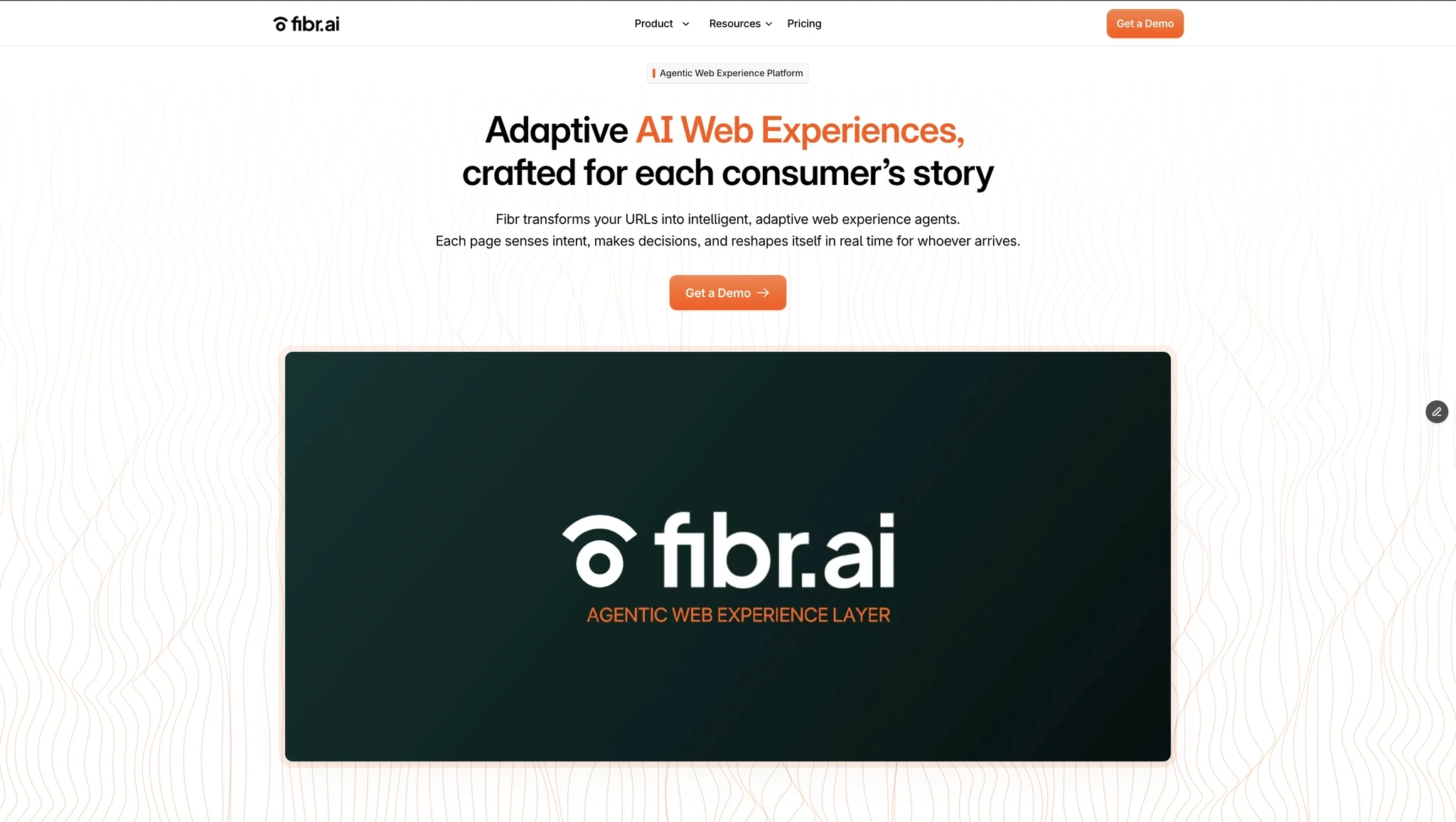
Fibr AI is the most purpose-built platform for ad to landing page personalization in 2026. Its ad personalization layer reads your Google Ads and Meta campaign data and automatically generates landing page variants that mirror the headline, offer, and value proposition of each specific ad group, keyword, or audience segment. The platform operates without developer involvement: marketers can build, deploy, and test personalized variants directly from the Fibr AI interface.
In 2026, Fibr AI's agentic layer adds autonomous experiment generation: AI agents that create hypotheses, build variants, route traffic, monitor statistical significance, and scale winning experiences without manual intervention. Fibr AI also detects traffic arriving from AI assistants including ChatGPT, Perplexity, and Gemini and serves LLM-based personalization experiences matched to research-intent behavior, converting AI discovery traffic into measurable revenue. Customers report 28% higher ROI and 30% lower customer acquisition costs within the first 90 days.
2. Instapage
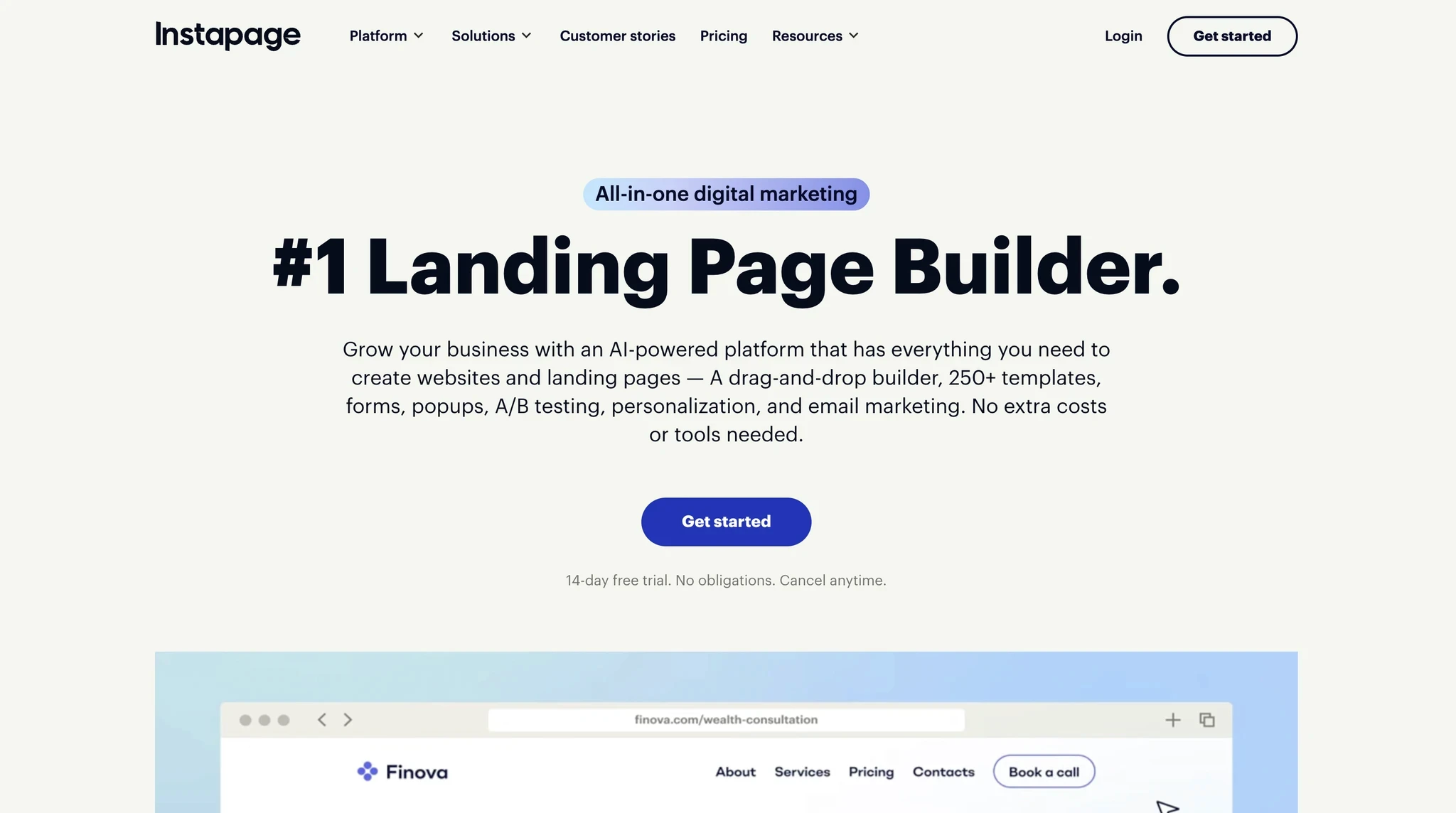
Instapage offers ad-to-page mapping that connects individual Google Ads campaigns, ad groups, and keywords to specific landing page variants. Its AdMap visual interface shows how each ad maps to its post-click experience, making it easy to identify gaps where multiple ads are driving traffic to the same generic page. Dynamic text replacement allows headlines to automatically mirror the keyword a visitor searched, improving message match without building a separate page for every variant.
3. Unbounce
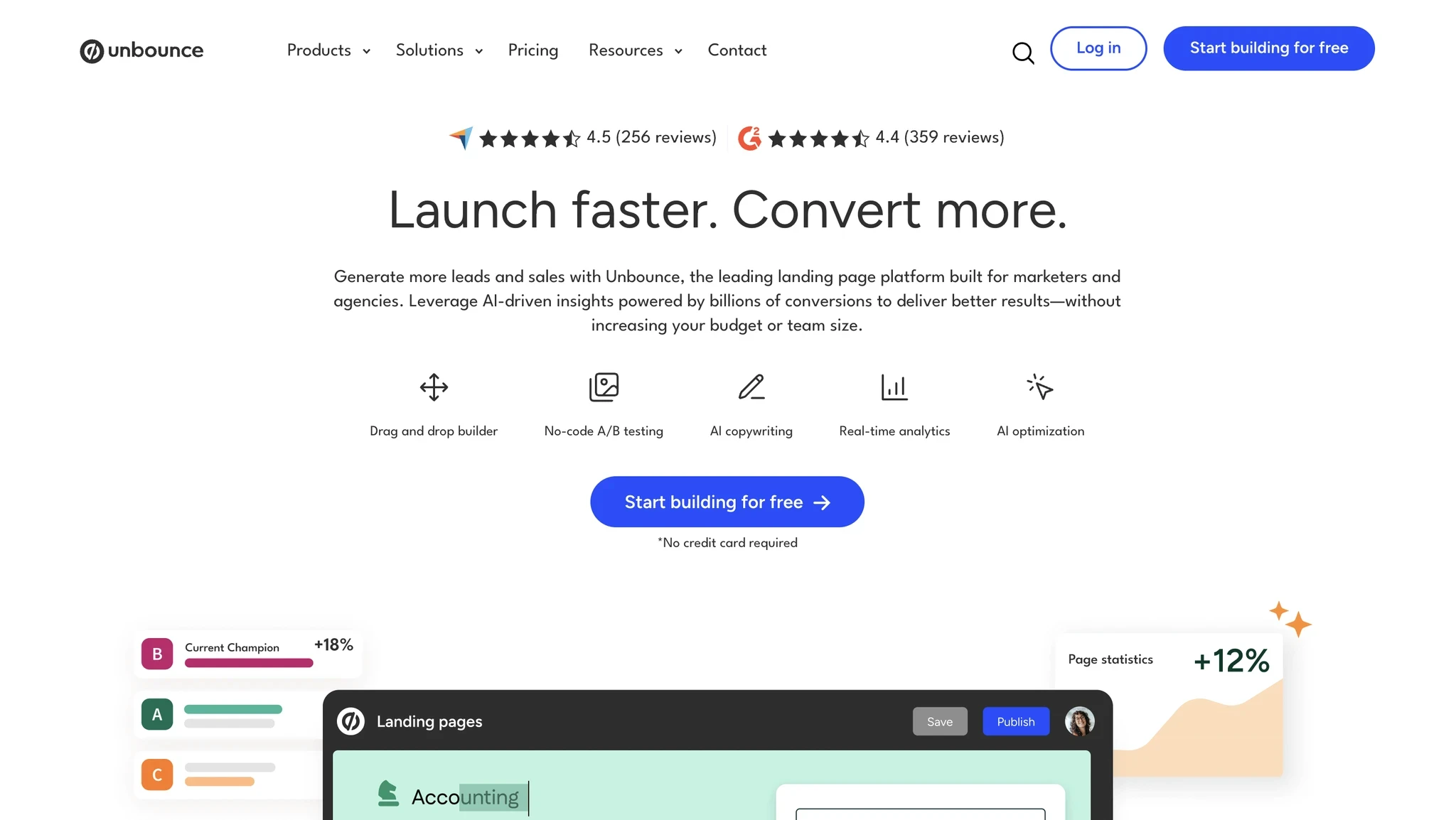
Unbounce combines a drag-and-drop landing page builder with Smart Traffic, an AI-powered routing engine that automatically sends visitors to the variant most likely to convert based on device, location, time of day, and referral source. Its dynamic text replacement feature personalizes headlines in real time based on the search query or ad creative that drove the click. Unbounce is the fastest-to-deploy option for teams needing no-code landing page A/B testing without technical support.
4. Mutiny
Mutiny specializes in account-based personalization for B2B SaaS teams. It connects to your CRM and ad platforms to serve different landing page content to visitors from specific target accounts, industries, or company sizes. For B2B paid campaigns where the same ad might be seen by a startup and a Fortune 500 company, Mutiny ensures the post-click experience is relevant to each account's specific context and pain points.
5. VWO
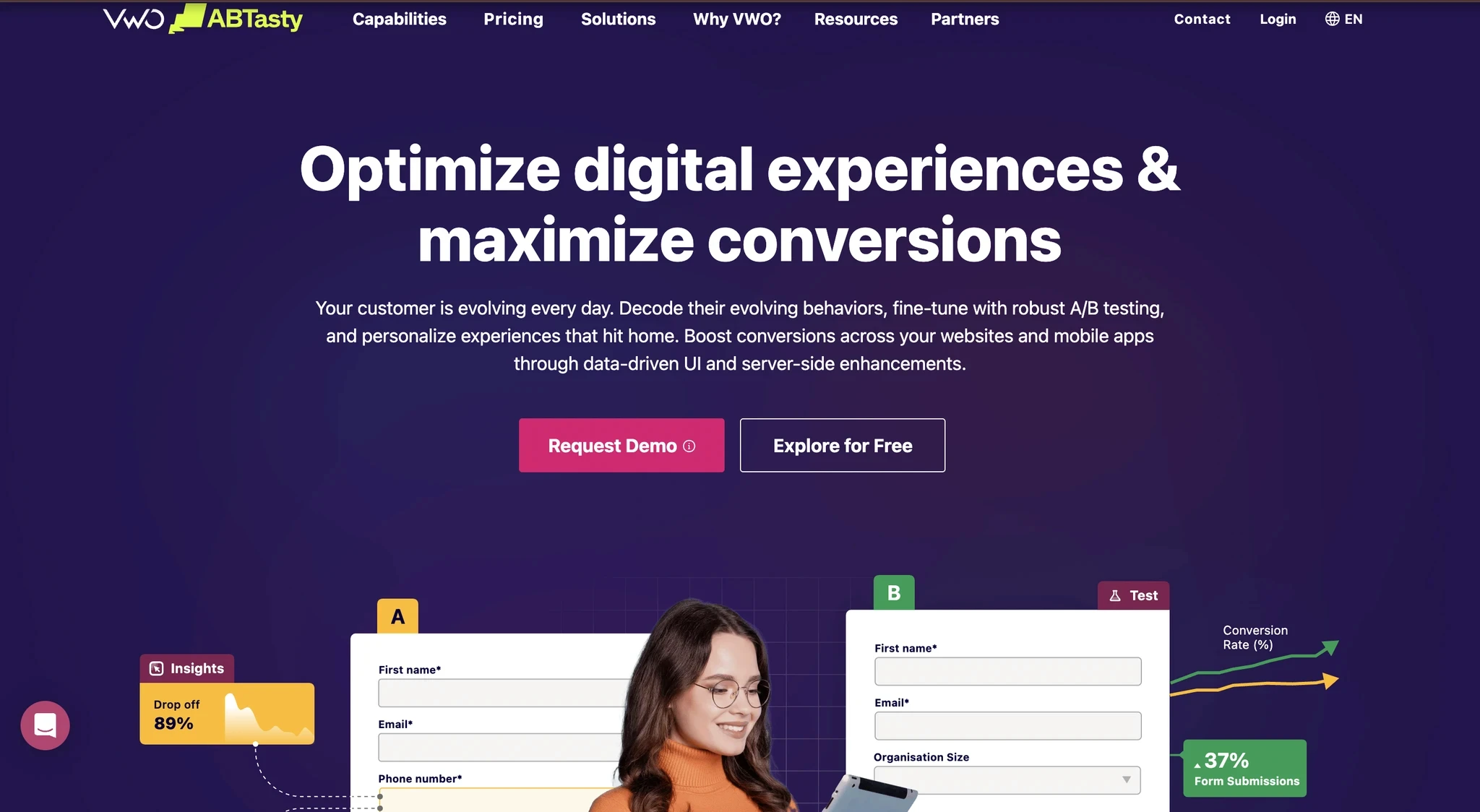
VWO is a full-suite experimentation platform that supports A/B testing, multivariate testing, and behavioral personalization. Its audience segmentation features allow teams to show different page experiences to visitors from specific traffic sources, industries, or behavioral segments. Combined with its heatmap and session recording capabilities, VWO gives CRO teams both the testing infrastructure and the behavioral diagnostic tools needed to understand why variants win or lose.
When selecting a platform for ad to landing page personalization, prioritize message match capability, ease of variant creation without developer dependency, and the ability to run experiments at the audience segment level rather than across all traffic simultaneously. These three criteria determine how quickly a platform translates personalization investment into measurable CRO ROI improvement. See Fibr AI pricing for a full breakdown of plans for growing businesses and enterprises.
How to Improve Your ROI in CRO
Maximizing your return on investment in CRO requires a strategic approach and the right tools to optimize your website or landing page for conversions.
Define Your Conversion Goals and Target Audience
The foundation of any successful CRO effort lies in clearly defining your conversion goals and understanding your target audience. Without a clear goal, your CRO efforts will lack direction, and without knowing your audience, you cannot tailor your content effectively. Start by identifying what you want to achieve, whether that is increasing sign-ups, sales, or downloads. Equally important is understanding your target audience: who are your ideal customers, what are their needs, pain points, and behaviors? By gathering demographic and psychographic data, you can tailor your content, design, and offers to resonate with them.
Conduct User Research and Testing
To truly optimize your website for conversions, you need to gather data and feedback directly from your users to understand what drives them to take the desired action.
Conduct surveys and interviews: Gather direct feedback from users and uncover barriers to conversion.
Use heatmaps and session recordings: Tools like Hotjar and Crazy Egg help you understand how users interact with your site.
Analytics and funnel analysis: Use Google Analytics to understand where users drop off in the conversion process.
Perform A/B testing: Experiment with different headlines, CTAs, layouts, and content variations to determine which website elements resonate most with your audience.
Implement CRO Best Practices
Once you have a clear understanding of your goals and audience, implement proven CRO best practices that can significantly improve your conversion rates. A full guide to these practices is available in the CRO best practices resource. Key implementations include:
Create clear headlines and calls to action (CTAs): Craft headlines that immediately communicate the value of your offer and use action-oriented, visually prominent CTAs.
Use social proof and urgency: Display customer testimonials, reviews, or case studies to build trust, and create a sense of urgency to encourage users to take immediate action.
Simplify forms and checkout processes: 22% of shoppers abandon their purchase due to a long or complicated checkout process. Streamline these steps by asking only for essential information and offering guest checkout options.
Optimize for speed, mobile-friendliness, and SEO: Ensure your site is optimized for speed and responsive across all devices, and incorporate SEO best practices to attract more organic traffic.
Monitor and Measure Your CRO Metrics
Continuously monitor and measure your performance using tools like Google Analytics and HubSpot to track key metrics such as conversion rates, bounce rates, and average session duration. These insights will help you identify what is working and what needs improvement. For example, if a particular landing page has a high bounce rate, you can investigate whether the headline is unclear or the page is loading too slowly, and address those issues to refine your CRO efforts and achieve better results over time.
In 2026, the most effective monitoring programs also track Google ad quality score as a signal of ad-to-page message match quality, connecting the ad channel and the landing page into a unified measurement framework.





Pritam Roy
Co-Founder @ Fibr AI
Pritam Roy, the Co-founder of Fibr, is a seasoned entrepreneur with a passion for product development and AI. A graduate of IIT Bombay, Pritam's expertise lies in leveraging technology to create innovative solutions. As a second-time founder, he brings invaluable experience to Fibr, driving the company towards its mission of redefining digital interactions through AI.
Read summarized version with
How to Measure ROI in CRO and Maximize Returns
Are you investing time and resources into CRO but not measuring the return on investment? If so you might be flying blind. Sure, you can see changes in website performance and traffic, but do those changes translate into profit?
Here’s the truth: Measuring ROI in CRO isn’t just a nice-to-have—it’s a must. Without it, you cannot see how your optimizations translate into revenue or whether your marketing budget is being used effectively.
In this guide, we’ll break down how to measure ROI in CRO, the key metrics to track, and strategies to maximize your ROI in your CRO efforts.
What Is ROI in CRO?
ROI, or Return on Investment, measures how much profit your conversion rate optimization efforts generate compared to the costs incurred in optimizations. It helps you determine whether your CRO efforts are driving real revenue growth so you can refine your strategy effectively to ensure every dollar spent leads to measurable gains.
Why Measuring ROI in CRO Matters
Conversion rate optimization is essential for businesses looking to maximize their digital performance. However, simply implementing CRO efforts without measuring their effectiveness can lead to wasted resources and missed opportunities. By tracking your CRO ROI, you can make informed decisions, optimize your strategies, and ultimately drive more revenue.
Helps to Maximize Profitability
At its core, CRO is about getting more value from your existing traffic. Measuring ROI in CRO gives you a clear picture of how much revenue your optimizations are generating compared to the costs involved, ensuring that every dollar invested in optimization efforts contributes to overall profitability. By analyzing which strategies lead to the highest conversion rates and revenue, you can refine your approach, eliminate underperforming tactics, and focus on high-impact changes. For example, if you are investing in A/B testing for landing pages, you can identify the most effective design elements that generate more leads and reduce customer acquisition costs while boosting revenue.
Improves Budget Allocation
One of the biggest challenges in CRO is determining where to allocate resources. Without measuring ROI, you may continue investing in strategies that do not yield substantial returns. By tracking ROI, you can identify which CRO efforts provide the highest return on investment and prioritize your budget accordingly. For instance, if heatmaps reveal that users abandon checkout pages due to complex forms, you can allocate more budget to simplifying the checkout process, increasing conversions and overall revenue.
Enhances Data-Driven Decision Making
Successful CRO efforts rely on data rather than guesswork. Measuring ROI in CRO provides valuable insights into which optimization strategies contribute to success and which require adjustments. You can use analytics tools to track user behavior, measure conversion rates, and analyze customer journeys to understand what drives engagement. This data-backed approach can help you make CRO decisions based on solid evidence, which can lead to higher efficiency and better results. A structured CRO process ensures these decisions are reproducible and compounding over time.
Increases Conversion Efficiency
The ultimate goal of CRO is to convert more visitors into customers without increasing your traffic acquisition costs. Measuring ROI in CRO helps you fine-tune your website to achieve this goal by identifying which changes enhance conversion efficiency, allowing you to get more value from your existing traffic. For example, by analyzing ROI data, you might find that simplifying your lead capture form increases conversions without requiring additional ad spend.
Demonstrates Business Impact
CRO efforts require buy-in from stakeholders, and the best way to secure continued investment is by demonstrating tangible financial gains. Measuring ROI in CRO provides concrete evidence of how optimization strategies drive revenue, reduce costs, and improve customer acquisition. For instance, if your CRO initiatives result in a 25% increase in sales, you can present this data to stakeholders to justify further investment, aligning CRO initiatives with overall business goals for long-term success.
Encourages Continuous Optimization
CRO success is not a one-time achievement: it requires ongoing refinement and improvement. Measuring ROI in CRO highlights areas where performance can be further enhanced, ensuring continuous growth. For instance, if your ROI analysis reveals that mobile users have a lower conversion rate than desktop users, you can focus on improving the mobile experience. This continuous cycle of testing, measuring, and refining is what drives long-term growth. Review CRO best practices for a structured approach to continuous optimization in 2026.
Key Metrics and KPIs to Track ROI in CRO
When evaluating the return on investment in CRO, you need to track the right metrics. The most important metrics include conversion rate, average order value, revenue per visitor, cost per acquisition, customer lifetime value, total revenue, and gross profit. The table below summarizes each metric with its formula and primary use:
Metric | Formula | What It Measures | Primary Use |
|---|---|---|---|
Conversion Rate | (Conversions / Total Visitors) x 100 | % of visitors completing a desired action | Baseline CRO effectiveness |
Average Order Value | Total Revenue / Number of Orders | Average spend per transaction | Upsell and cross-sell impact |
Revenue Per Visitor | Total Revenue / Total Visitors | Average revenue generated per visitor | Combined CR and AOV signal |
Cost Per Acquisition | Total Marketing Spend / New Customers | Average cost to acquire one customer | Acquisition efficiency |
Customer Lifetime Value | Avg Purchase Value x Frequency x Lifespan | Revenue per customer over full relationship | Long-term profitability signal |
Total Revenue | Sum of all sales over a period | Overall financial health | Top-level business outcome |
Gross Profit | Total Revenue minus COGS | Profit after production costs | Sustainability check |
1. Conversion Rate
The conversion rate is the percentage of website visitors who complete a desired action. It is the backbone of your CRO efforts, telling you how effective your website is at turning visitors into leads or customers. A high conversion rate indicates your website is effectively persuading visitors to take action, while a low rate suggests inefficiencies in your user experience, messaging, or design. Formula: Conversion Rate = (Conversions / Total Visitors) x 100.
Use Google Analytics or similar tools to track conversions across different channels.
Set up A/B testing to compare variations of landing pages or call-to-action buttons.
Monitor heatmaps and session recordings to analyze user behavior.
Segment conversion data by traffic source, device type, and demographics for deeper insights.
2. Average Order Value (AOV)
Average order value (AOV) measures the average amount of money each customer spends per transaction. By increasing your AOV, you can boost revenue without needing to acquire more customers. Tracking AOV alongside your CRO efforts ensures you are not just driving more conversions but also maximizing the value of each sale. Formula: Average Order Value = Total Revenue / Number of Orders.
Track AOV within your analytics dashboard.
Analyze AOV trends over different periods to spot seasonal fluctuations.
Segment AOV by customer type (new vs. returning) for targeted marketing strategies.
Compare AOV across different product categories to identify high-value items.
3. Revenue Per Visitor (RPV)
Revenue per visitor (RPV) determines the average amount of money each visitor generates. RPV combines conversion rate and AOV into a single metric. If your RPV increases, your optimization strategies are working; if it decreases, something needs to be fixed. Formula: RPV = Total Revenue / Total Visitors.
Integrate revenue tracking into Google Analytics or your preferred analytics tool.
Compare RPV across different traffic sources to optimize acquisition strategies.
Analyze how RPV changes with different pricing strategies or promotions.
Use customer segmentation to assess RPV by demographics, location, or purchase behavior.
4. Cost Per Acquisition (CPA)
Cost per acquisition (CPA) represents the average amount you spend to acquire a new customer. Tracking CPA helps you determine whether your customer acquisition strategies are sustainable and efficient. Lowering CPA can improve the return on investment in CRO. Formula: CPA = Total Marketing Spend / Total New Customers Acquired.
Track CPA separately for paid and organic channels to optimize budget allocation.
Use UTM parameters to measure the effectiveness of different marketing campaigns.
Monitor CPA alongside CLV to ensure customer acquisition is profitable.
Analyze CPA trends to identify cost-saving opportunities in ad spend.
5. Customer Lifetime Value (CLV)
Customer lifetime value (CLV) estimates how much revenue an average customer will generate throughout their entire relationship with your business. If your CLV is significantly higher than your CPA, it means your customers are loyal and generate significant revenue over time. Formula: CLV = Average Purchase Value x Purchase Frequency x Customer Lifespan.
Track repeat purchase rates and customer retention metrics.
Analyze customer purchase behavior over different time frames.
Use predictive analytics to estimate future CLV based on historical data.
Compare CLV across customer segments to refine targeting strategies.
6. Total Revenue
Total revenue is the total amount of money your business generates from sales over a specific period. Even if your CRO efforts improve certain KPIs, total revenue must increase to validate overall business growth.
Track revenue using your CRM platform.
Compare total revenue across different marketing campaigns to assess their effectiveness.
Monitor revenue trends over different periods to identify seasonality.
Analyze total revenue alongside profit margins to ensure sustainability.
7. Gross Profit
Gross profit is the revenue remaining after subtracting the cost of goods sold (COGS). Monitoring gross profit ensures that your CRO efforts contribute to sustainable profitability, not just top-line revenue growth. Formula: Gross Profit = Total Revenue minus COGS.
Track COGS meticulously to ensure accurate gross profit calculations.
Compare gross profit margins across different products or services.
Analyze how discounting or promotions affect gross profit.
Monitor supply chain and operational costs to optimize profitability.
Tracking these seven key metrics provides a comprehensive view of how your optimization efforts are impacting your business. For a full list of recommended tracking metrics in 2026, see A/B testing metrics for the most current KPI framework.
Steps to Measure ROI From CRO Efforts
Evaluating your ROI in CRO helps determine how well your optimization activities contribute to revenue growth relative to their costs. Here is a detailed breakdown of the steps involved.
Step 1: Evaluate Your Total Costs
The first step is to calculate all expenses tied to your conversion rate optimization efforts. Without a clear understanding of your investment, you cannot accurately measure ROI.
CRO tools and software: Tools like A/B testing platforms, heatmaps, and analytics software come with subscription fees that need to be accounted for.
Personnel costs: Whether you have in-house CRO specialists, web developers, or designers, their salaries and time spent on optimization projects are part of the cost.
Third-party services: If you have hired consultants or CRO agencies, include their fees in your calculations.
Marketing spend: Factor in the costs of paid ads, email marketing campaigns, and other promotional activities that support your CRO strategies.
Step 2: Evaluate Your Gains
Once you have accounted for the costs, measure the financial impact of improved conversion rates. It is not just about the number of conversions; it is about understanding how those conversions translate into revenue.
Revenue before and after CRO: Compare total revenue generated before implementing CRO changes to the revenue after optimization.
Average order value (AOV): If your CRO strategies have encouraged customers to spend more per transaction, track the increase in AOV.
Customer lifetime value (CLV): Monitor changes in CLV to understand the long-term benefits of improved customer retention and loyalty.
Reduction in customer acquisition costs (CAC): Optimizing your website and marketing funnels can help you spend less to acquire each customer.
Step 3: Calculate ROI
Having defined the costs and gains, calculate the ROI of your CRO efforts using the following formula:
CRO ROI = (Revenue from Conversions minus Cost of CRO) / Cost of CRO x 100%
For example, suppose you generated $50,000 in revenue from conversions after implementing CRO changes, and your total CRO costs amounted to $10,000. Plugging these numbers into the formula: CRO ROI = ($50,000 minus $10,000) / $10,000 x 100% = 400%. This means that for every dollar you invested in CRO, you earned $400 in return.
Step 4: Analyze Results
Calculating ROI is just the beginning. To truly understand the effectiveness of your CRO efforts, you need to analyze the results in detail to uncover insights and identify areas for improvement.
High-performing strategies: Which CRO tactics yielded the highest ROI: a specific A/B test, a redesigned landing page, or a new call to action?
Unexpected outcomes: Were there any surprising results, such as a change that was expected to perform well but actually underperformed?
Comparison to goals: How do the results stack up against your initial goals and KPIs?
Website performance: Which pages or elements contributed most to the gains, and are there underperforming areas that need attention?
Step 5: Iterate and Improve
CRO is not a one-time project; it is an ongoing process. Use the insights from your analysis to iterate and improve, as continuous optimization is the key to sustained CRO success.
Test new hypotheses: Based on your analysis, develop new hypotheses to test. For example, if a particular CTA performed well, experiment with its placement or design.
Conduct A/B tests: Regularly run tests to compare different versions of web pages, emails, or ads to see which performs better.
Implement data-driven changes: Use the data from your tests to make informed decisions about what changes to implement.
Monitor impact: After making changes, closely monitor their impact on key metrics like conversion rates, AOV, and overall ROI.
Platforms Offering Ad to Landing Page Personalization Features
One of the highest-leverage ways to improve ROI in CRO in 2026 is connecting your ad campaigns directly to personalized landing page experiences. When every paid click lands on a page built specifically for that ad's audience, message, and offer, conversion rates increase without any additional ad spend required. The platforms below represent the leading solutions for ad to landing page personalization, evaluated on personalization depth, ease of deployment, and impact on CRO ROI.
Platform | Best For | Key Personalization Features | CRO ROI Impact |
|---|---|---|---|
Fibr AI | AI-driven personalization at scale for paid campaigns | AI agents match every ad group to a tailored landing page; agentic A/B testing; LLM traffic detection; no-code deployment | 28% higher ROI, 30% lower CAC reported by customers |
Instapage | Google Ads-connected landing page personalization | Ad-to-page mapping by campaign, ad group, or keyword; dynamic text replacement; built-in A/B testing | Reduces wasted ad spend by improving post-click relevance |
Unbounce | No-code landing page testing for SMBs | Smart Traffic AI routing; dynamic text replacement; A/B testing; 100+ templates | Reduces time-to-test; improves conversion on paid traffic |
Mutiny | Account-based personalization for B2B SaaS | Firmographic-based page personalization; no-code editor; integration with CRM and ad platforms | Increases demo request rate from target account segments |
VWO | Enterprise A/B testing with personalization overlay | Heatmaps, session recordings, multivariate testing, audience segmentation, behavioral targeting | Reduces bounce rate and improves funnel conversion at scale |
1. Fibr AI
Fibr AI is the most purpose-built platform for ad to landing page personalization in 2026. Its ad personalization layer reads your Google Ads and Meta campaign data and automatically generates landing page variants that mirror the headline, offer, and value proposition of each specific ad group, keyword, or audience segment. The platform operates without developer involvement: marketers can build, deploy, and test personalized variants directly from the Fibr AI interface.
In 2026, Fibr AI's agentic layer adds autonomous experiment generation: AI agents that create hypotheses, build variants, route traffic, monitor statistical significance, and scale winning experiences without manual intervention. Fibr AI also detects traffic arriving from AI assistants including ChatGPT, Perplexity, and Gemini and serves LLM-based personalization experiences matched to research-intent behavior, converting AI discovery traffic into measurable revenue. Customers report 28% higher ROI and 30% lower customer acquisition costs within the first 90 days.
2. Instapage
Instapage offers ad-to-page mapping that connects individual Google Ads campaigns, ad groups, and keywords to specific landing page variants. Its AdMap visual interface shows how each ad maps to its post-click experience, making it easy to identify gaps where multiple ads are driving traffic to the same generic page. Dynamic text replacement allows headlines to automatically mirror the keyword a visitor searched, improving message match without building a separate page for every variant.
3. Unbounce
Unbounce combines a drag-and-drop landing page builder with Smart Traffic, an AI-powered routing engine that automatically sends visitors to the variant most likely to convert based on device, location, time of day, and referral source. Its dynamic text replacement feature personalizes headlines in real time based on the search query or ad creative that drove the click. Unbounce is the fastest-to-deploy option for teams needing no-code landing page A/B testing without technical support.
4. Mutiny
Mutiny specializes in account-based personalization for B2B SaaS teams. It connects to your CRM and ad platforms to serve different landing page content to visitors from specific target accounts, industries, or company sizes. For B2B paid campaigns where the same ad might be seen by a startup and a Fortune 500 company, Mutiny ensures the post-click experience is relevant to each account's specific context and pain points.
5. VWO
VWO is a full-suite experimentation platform that supports A/B testing, multivariate testing, and behavioral personalization. Its audience segmentation features allow teams to show different page experiences to visitors from specific traffic sources, industries, or behavioral segments. Combined with its heatmap and session recording capabilities, VWO gives CRO teams both the testing infrastructure and the behavioral diagnostic tools needed to understand why variants win or lose.
When selecting a platform for ad to landing page personalization, prioritize message match capability, ease of variant creation without developer dependency, and the ability to run experiments at the audience segment level rather than across all traffic simultaneously. These three criteria determine how quickly a platform translates personalization investment into measurable CRO ROI improvement. See Fibr AI pricing for a full breakdown of plans for growing businesses and enterprises.
How to Improve Your ROI in CRO
Maximizing your return on investment in CRO requires a strategic approach and the right tools to optimize your website or landing page for conversions.
Define Your Conversion Goals and Target Audience
The foundation of any successful CRO effort lies in clearly defining your conversion goals and understanding your target audience. Without a clear goal, your CRO efforts will lack direction, and without knowing your audience, you cannot tailor your content effectively. Start by identifying what you want to achieve, whether that is increasing sign-ups, sales, or downloads. Equally important is understanding your target audience: who are your ideal customers, what are their needs, pain points, and behaviors? By gathering demographic and psychographic data, you can tailor your content, design, and offers to resonate with them.
Conduct User Research and Testing
To truly optimize your website for conversions, you need to gather data and feedback directly from your users to understand what drives them to take the desired action.
Conduct surveys and interviews: Gather direct feedback from users and uncover barriers to conversion.
Use heatmaps and session recordings: Tools like Hotjar and Crazy Egg help you understand how users interact with your site.
Analytics and funnel analysis: Use Google Analytics to understand where users drop off in the conversion process.
Perform A/B testing: Experiment with different headlines, CTAs, layouts, and content variations to determine which website elements resonate most with your audience.
Implement CRO Best Practices
Once you have a clear understanding of your goals and audience, implement proven CRO best practices that can significantly improve your conversion rates. A full guide to these practices is available in the CRO best practices resource. Key implementations include:
Create clear headlines and calls to action (CTAs): Craft headlines that immediately communicate the value of your offer and use action-oriented, visually prominent CTAs.
Use social proof and urgency: Display customer testimonials, reviews, or case studies to build trust, and create a sense of urgency to encourage users to take immediate action.
Simplify forms and checkout processes: 22% of shoppers abandon their purchase due to a long or complicated checkout process. Streamline these steps by asking only for essential information and offering guest checkout options.
Optimize for speed, mobile-friendliness, and SEO: Ensure your site is optimized for speed and responsive across all devices, and incorporate SEO best practices to attract more organic traffic.
Monitor and Measure Your CRO Metrics
Continuously monitor and measure your performance using tools like Google Analytics and HubSpot to track key metrics such as conversion rates, bounce rates, and average session duration. These insights will help you identify what is working and what needs improvement. For example, if a particular landing page has a high bounce rate, you can investigate whether the headline is unclear or the page is loading too slowly, and address those issues to refine your CRO efforts and achieve better results over time.
In 2026, the most effective monitoring programs also track Google ad quality score as a signal of ad-to-page message match quality, connecting the ad channel and the landing page into a unified measurement framework.
Pritam Roy
Co-Founder @ Fibr AI
Pritam Roy, the Co-founder of Fibr, is a seasoned entrepreneur with a passion for product development and AI. A graduate of IIT Bombay, Pritam's expertise lies in leveraging technology to create innovative solutions. As a second-time founder, he brings invaluable experience to Fibr, driving the company towards its mission of redefining digital interactions through AI.
Featured Blogs
Featured Blogs



Delaware, USA
Subscribe to our newsletter for exclusive updates and insights.
By clicking submit, you agree to the terms and conditions and acknowledge the privacy policy.











Delaware, USA
Subscribe to our newsletter for exclusive updates and insights.
By clicking submit, you agree to the terms and conditions and acknowledge the privacy policy.
Delaware, USA
Subscribe to our newsletter for exclusive updates and insights.
By clicking submit, you agree to the terms and conditions and acknowledge the privacy policy.