Read summarized version with
Why Do You Need LLM Visibility Optimization Tools in 2026?
Are your customers finding your brand when they ask ChatGPT, Perplexity, or Claude for recommendations? If you cannot answer that question with confidence, you already have an AI visibility problem. Traffic to U.S. retail sites from generative AI sources exploded by 3,500% between July 2024 and May 2025. Your customers are not just Googling anymore. They are asking AI assistants for answers, and those AI systems are deciding which brands to mention in milliseconds, often without you knowing it happened.
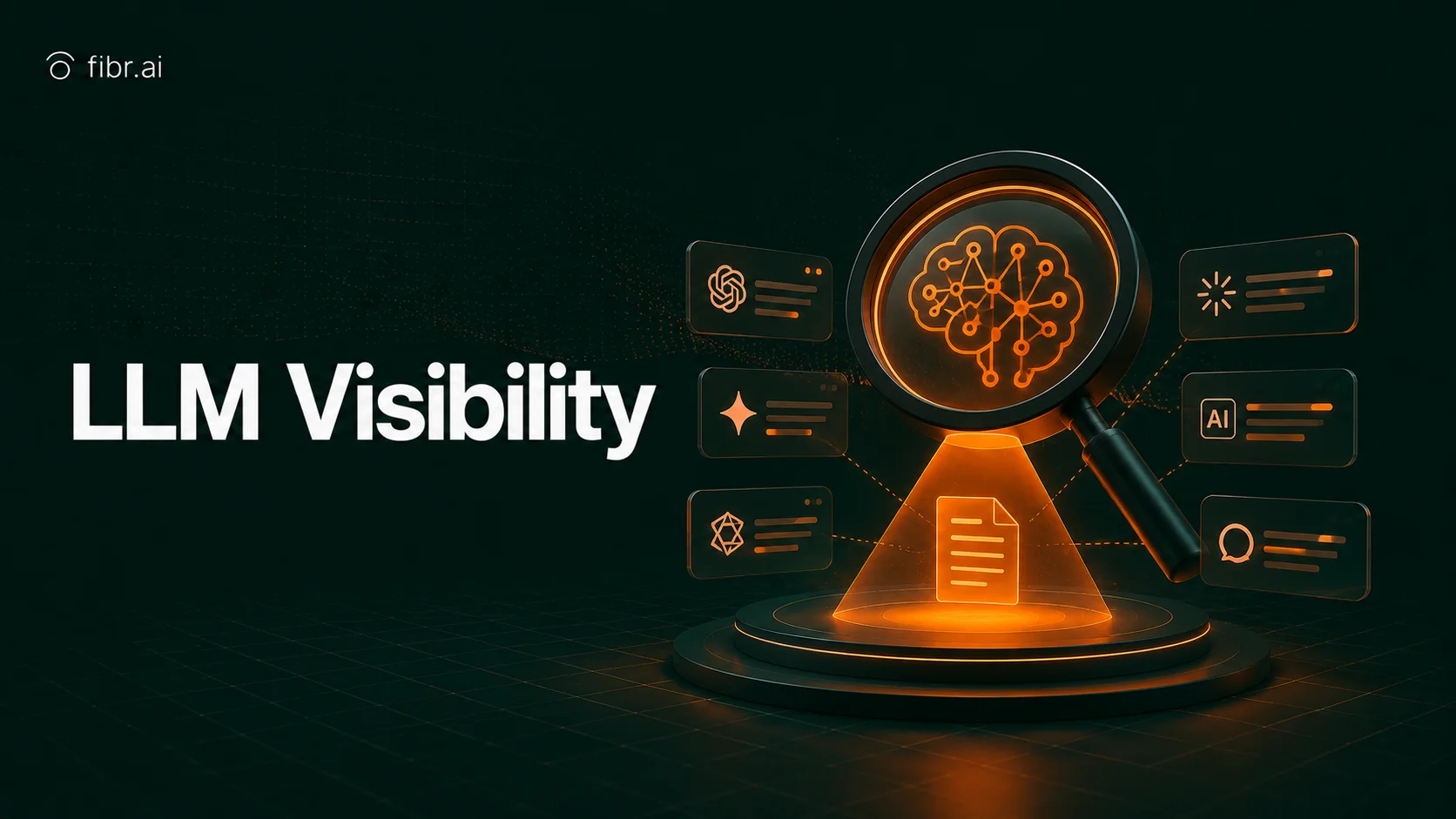
The best LLM visibility optimization tools in 2026 give you the infrastructure to track, measure, and improve how often AI systems cite and recommend your brand. This is a fundamentally different discipline from traditional SEO. A tool for LLM visibility does not just track search rankings: it monitors your brand's presence, position, and sentiment across every major AI platform simultaneously, benchmarks you against competitors, and in the most advanced cases deploys AI agents that automatically optimize your content for AI discoverability without requiring manual intervention.
In 2026, Gartner predicts traditional search engine volume will drop by 25% as people increasingly ask AI chatbots instead of using Google. Brands that treat software for LLM visibility as a nice-to-have are losing ground to competitors who are already optimizing for AI-powered discovery. This guide covers the 9 best LLM visibility optimization tools available in 2026: what each does, where it excels, and which use case it fits best.
Your Next Visitor Might Not Be Human
AI agents are changing how buyers search and decide. Here's how to make sure how buyers choose you.

What Are LLM Optimization Tools?
LLM optimization tools are specialized software platforms and frameworks made to improve the performance, efficiency, and discoverability of AI-powered applications built on foundation models like GPT, Claude, or Llama. They help you squeeze better performance out of massive AI models, cut down API bills, and make sure people can actually find your AI-powered content when asking questions to ChatGPT or other AI assistants.
These tools do everything from helping you write better prompts to compressing models so they run faster, to optimizing how your AI retrieves information from your knowledge base. In 2026, a whole new category has emerged around 'LLM visibility': making sure your content shows up when someone asks an AI a question. This is best understood as SEO for the age of AI answers instead of search results, and the leading AI visibility optimization tools are now as foundational to digital marketing strategy as Google Analytics was a decade ago.
Fibr AI's LLM-based personalization module exemplifies how advanced this category has become: it detects visitors arriving from ChatGPT, Claude, Gemini, and Perplexity and serves dynamically matched landing pages that convert AI discovery intent into revenue, closing the loop between LLM visibility and post-click conversion.
Why You Should Care About LLM Optimization Tools
The Opportunity Is Massive
McKinsey estimates that generative AI could add between $2.6 trillion to $4.4 trillion to the global economy every year, but only if companies can deploy these technologies without burning through their budgets or delivering terrible user experiences. Brands that invest in top AI visibility tools for optimization now are building compounding advantages that will be difficult to replicate once the market matures.
Your AI Bills Are Probably Out of Control
Running LLMs at any real scale is expensive. IBM's research shows that AI model training costs have skyrocketed, with some large models costing millions just to train and then thousands of dollars per day to keep running. Proper optimization tools can slash inference costs by anywhere from 50% to 90% through model compression, smart caching, and efficient request batching.
The Search Game Is Changing
Gartner predicts that by 2026, traditional search engine volume will drop by 25% because people are increasingly asking AI chatbots instead of Googling. If your content is not optimized to show up in AI responses, you are becoming invisible to a huge chunk of your potential audience. The best llm visibility optimization tools bridge this gap by tracking and improving your brand's position across every major AI platform simultaneously.
Brands winning in 2026 also invest in personalized web experiences that adapt in real time to visitors arriving from AI assistants, recognizing that LLM-sourced traffic has distinct research-intent behavior patterns that generic landing pages are not built to convert.
Quality Matters More Than Ever
Speed and cost are important, but getting good answers is still the most important thing. The leading ai visibility optimization tools help you implement better prompting strategies, fine-tune models on your specific data, and set up retrieval systems that actually pull the right information. This is especially critical if your customers are interacting with your AI-powered products or if AI assistants are sending high-intent research traffic to your site.
You Need to Scale Responsibly
When you have an AI model or AI-powered product, you need to monitor it for bias, track how your model behaves in the wild, set up safety guardrails, and stay compliant with AI regulations. LLM optimization tools give you that infrastructure without sacrificing performance. Every company has access to the same foundation models; the winners will be the ones who can deploy them smarter, faster, and more cost-effectively.
9 Best LLM Visibility Optimization Tools for 2026
The following nine platforms represent the leading software for LLM visibility and AI optimization in 2026. Each is evaluated on brand tracking capability, AI agent infrastructure, GEO scoring, technical observability, and ease of deployment.
1. Fibr AI
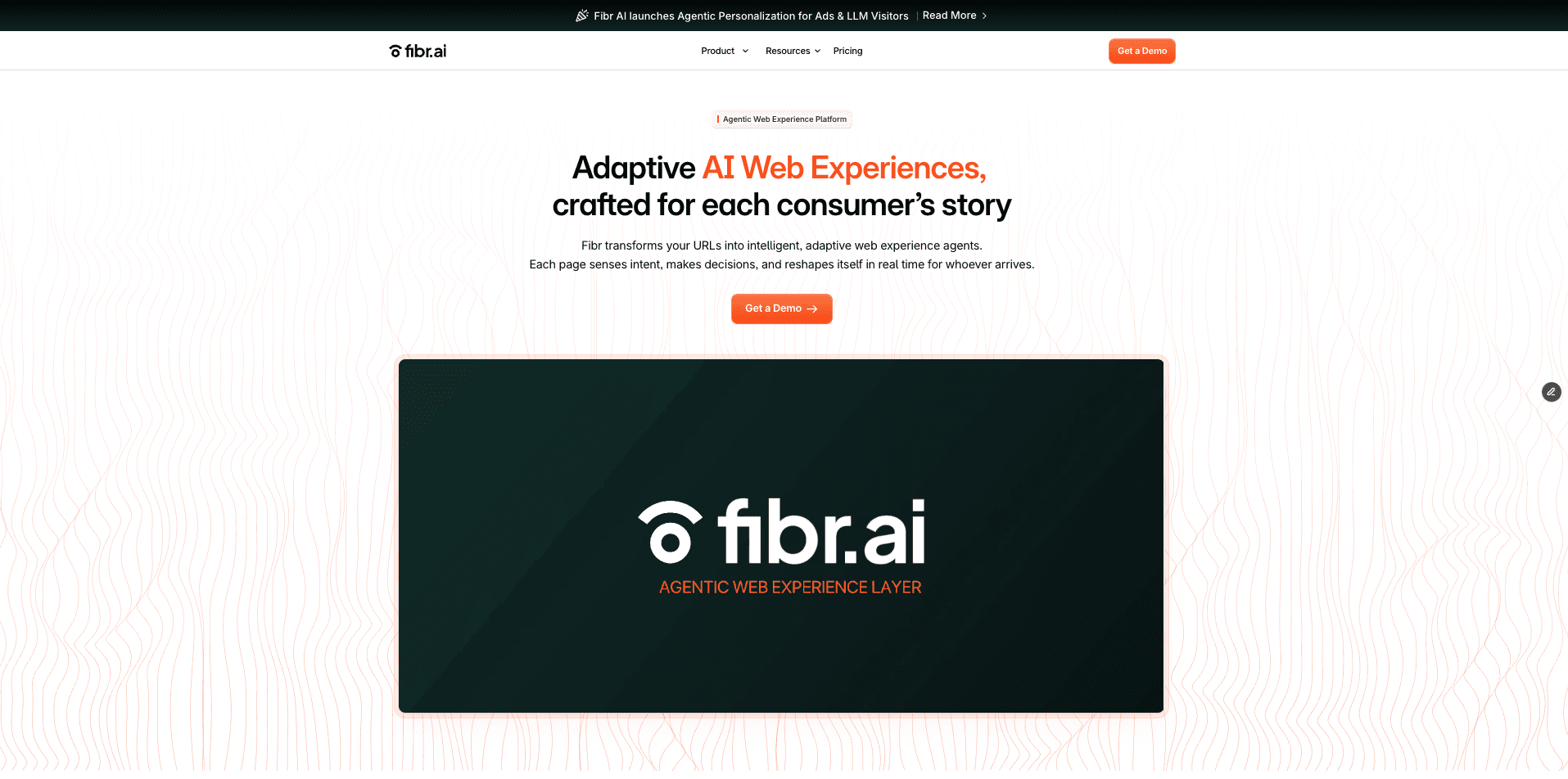
Fibr AI is a conversion optimization platform that deploys autonomous AI agents to personalize landing pages, run continuous A/B tests, and optimize LLM visibility, all without developer oversight. It is the most purpose-built tool for llm visibility that simultaneously addresses both the AI discovery problem and the post-click conversion problem, making it uniquely positioned among the leading AI visibility optimization tools available in 2026.
The platform runs three always-on capabilities as one connected system: real-time personalization with seamless website-to-martech integration, continuous experimentation through analytics, insights, and hypothesis generation, and proactive 24x7 optimization of website performance and vitals.
Beyond these agents, the LLM Presence module addresses the AI discovery challenge head-on. The system executes queries programmatically across OpenAI GPT, Gemini, Perplexity, Claude, and Grok with parallelization, retries, and full response capture, including timestamps and platform metadata. Presence analytics detect exact and variant brand mentions, calculate presence percentage per platform, and benchmark against competitors with ratios and trends. Positioning intelligence determines where you appear in lists, computes average position and first-mention frequency, and shows competitive hierarchy over time. Sentiment classification tracks positive, neutral, and negative share week-over-week.
Key Features
Specialized AI Capabilities: real-time personalization and martech integration, continuous experimentation and hypothesis generation, and 24x7 website performance optimization.
Multi-Platform LLM Tracking: Programmatic query execution across OpenAI GPT, Gemini, Perplexity, Claude, and Grok with parallelization, retries, and full response capture.
Advanced Presence Analytics: Detection of exact and variant brand mentions including misspellings, presence percentage calculation per platform, and competitive benchmarking with ratios and trends.
Positioning Intelligence: List placement determination, average position computation, first-mention frequency tracking, and competitive hierarchy visualization over time.
Sentiment and Reputation Monitoring: Classification of positive, neutral, and negative sentiment share, platform-specific differences, and week-over-week shift flagging.
Automated A/B Testing: Fibr crawls pages on desktop and mobile viewports, pulls real-time GA4 data, and creates variants based on hypotheses via the experimentation suite.
No-Code Visual Editor: WYSIWYG editor allowing creation of landing page variations without writing code via Page Builder.
Ad Platform Integration: Direct integration with Google, Meta, TikTok, and LinkedIn ad accounts, plus GA4, via Ads Personalization.
Pros
Integrates directly with existing martech infrastructure including Adobe Target, Optimizely, GA4, Adobe Analytics, and Mixpanel.
Unlimited 30-day free trial with no credit card required and 25-minute setup time.
Unique pay-per-use model with prices starting as low as $10, making it accessible for businesses of all sizes.
Cons
Browsing capabilities are still in the pipeline; some features are not yet fully developed.
May require an initial learning curve to fully leverage all three agents effectively.
Pricing
Starter Plan: $479/month (billed annually with a 20% discount) for 10 website URLs, 100k monthly tracked users, 2 ad account integrations.
Enterprise Plan: Starting at $999/month for businesses with monthly traffic over 500k.
Agency Program: Custom partnership. See Fibr AI pricing for full details.
2. Surfer SEO
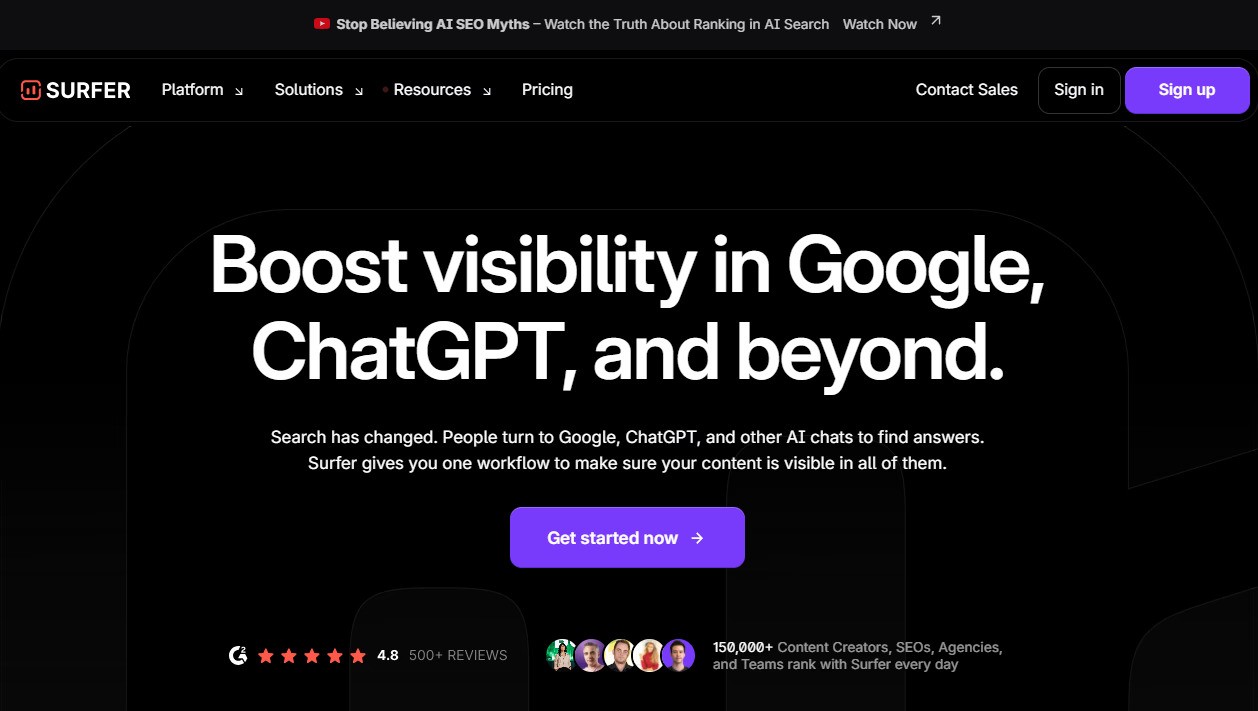
Surfer SEO, once a straightforward on-page optimization tool, is now a comprehensive content intelligence platform trusted by over 150,000 customers across 159+ countries, including major brands like FedEx, Shopify, and Lenovo. Surfer has recently pivoted towards AI visibility: the platform now tracks your brand's presence across AI chats, generative search models like ChatGPT and Gemini, and Google's AI Overviews. Its proprietary Content Score metric has become a gold standard in the industry for measuring content optimization.
Surfer's Content Editor analyzes top-ranking articles for your target keyword and tells you exactly what you need: word count, paragraphs, images, headings, and which semantic keywords to include. The Surfer AI feature generates complete, ready-to-rank articles in minutes. For teams seeking best llm visibility optimization tools that combine traditional SEO with AI discovery tracking in a single workflow, Surfer is one of the strongest mid-market options available.
Key Features
Content Editor with Real-Time Optimization: Live SEO suggestions as you write, with detailed guidance on word count, keyword density, and content structure.
AI Visibility Tracking: Monitor your brand's presence across ChatGPT, Gemini, and Google AI Overviews.
Surfer AI Article Generator: Create SEO-optimized articles in minutes using AI trained on SERP data.
Content Audit Tool: Analyze existing pages and get specific recommendations to improve rankings.
Pros and Cons
Pros: Data-driven recommendations backed by analysis of actual search results. User-friendly interface accessible even to beginners. Real-time optimization as you write.
Cons: Pricing adds up quickly for heavy content production. Content Score can lead to over-optimization. AI-generated content still needs human editing for accuracy and brand voice.
Pricing
Essential Plan: $99/month (or $79/month billed annually).
Scale Plan: $219/month (or $175/month billed annually).
Enterprise Plan: Custom pricing.
3. Adobe LLM Optimizer
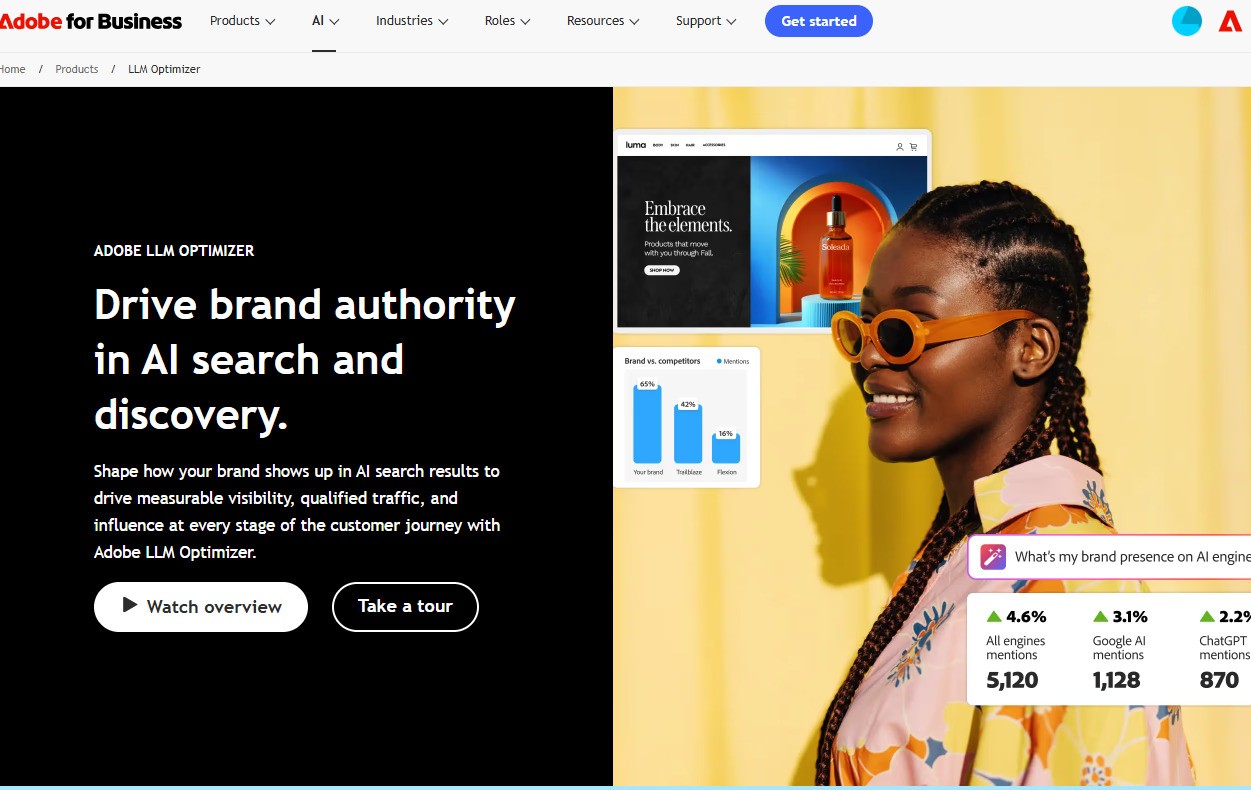
Adobe LLM Optimizer is an enterprise-grade solution that helps marketing teams understand and optimize how their brand appears in generative AI responses, built for an era where ChatGPT, Claude, and Perplexity are becoming primary discovery channels. The platform excels at detecting agentic traffic: activity from AI crawlers, LLM-based assistants, and AI-powered browsers that access and reference site content, which most traditional analytics platforms built for human visitors completely miss.
One-click deployment through Adobe Experience Manager Sites integration lets content strategists and marketers review, approve, and implement recommended changes without technical handoffs. Adobe's own marketing team used the tool and saw citations increase by 5 times for Adobe Firefly within one week, making it one of the fastest-demonstrating LLM visibility optimization tool results in any documented enterprise case study.
Key Features
AI Traffic Intelligence: Real-time monitoring of AI-driven traffic and identification of owned content being used by AI interfaces.
GEO Score Tracking: GEO scores that track how AI systems present and position your brand to high-intent audiences.
Competitive Benchmarking: Side-by-side benchmarking to evaluate visibility against competitors across high-value queries.
Visibility Gap Detection: Recommendation engine that detects gaps in brand visibility and suggests improvements across owned and external channels.
Pros and Cons
Pros: Native AEM integration makes deployment frictionless for existing Adobe customers. Comprehensive approach covering both on-domain and off-domain content. Attribution layer connects AI visibility to business outcomes.
Cons: Enterprise-only pricing with no transparent public tiers. Free trial limited to 200 prompts with no deployment support. Best suited for organizations with substantial Adobe ecosystem investments.
Pricing
Custom pricing (enterprise-only).
4. Galileo
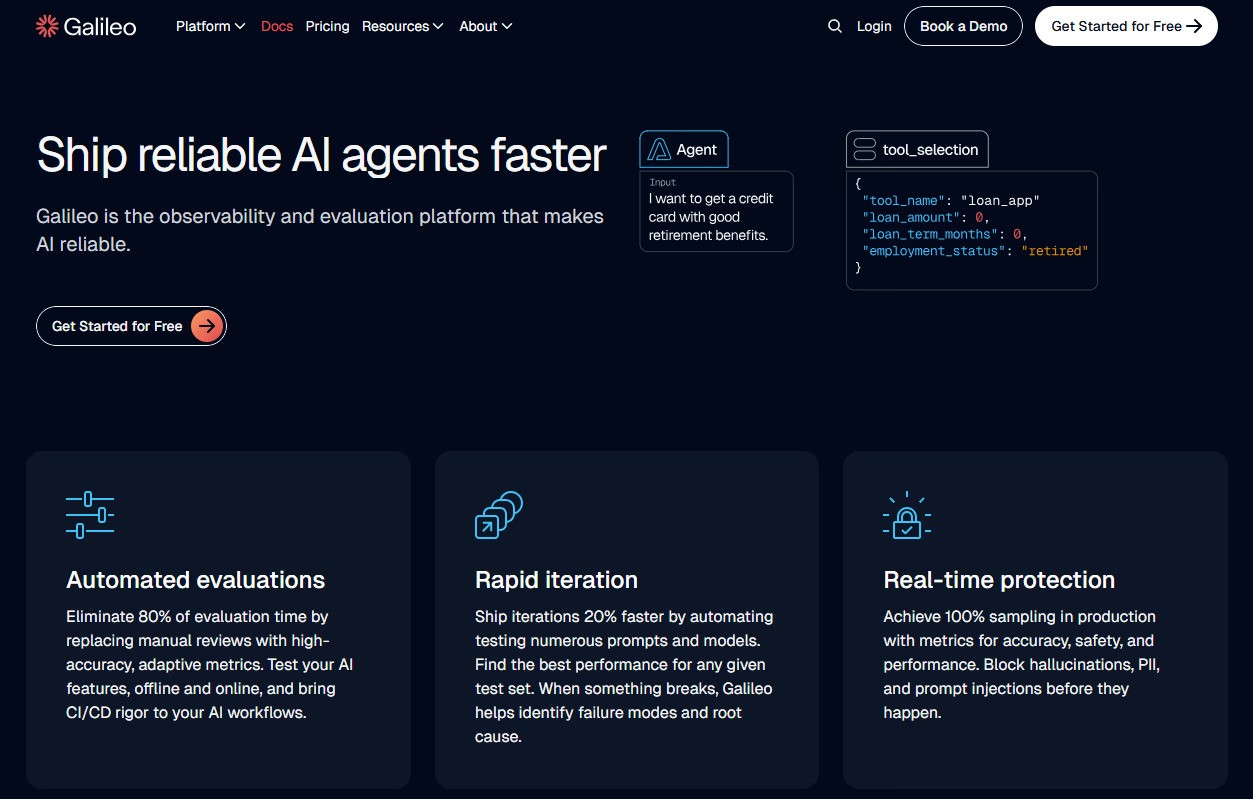
Galileo has positioned itself as the evaluation and observability platform for teams serious about making AI reliable, providing what it calls the best way to measure AI accuracy both offline and online. Unlike tools focused solely on tracking mentions or citations, Galileo goes deep into LLM performance, safety, and behavior. The company recently launched Agentic Evaluations to address growing complexity in multi-step AI agent workflows, providing complete visibility into multi-step agent completions with comprehensive tracing and agent-specific metrics.
Its Luna Evaluation Suite eliminates approximately 80% of evaluation time by replacing manual reviews with high-accuracy, adaptive metrics, and ships iterations 20% faster by automating the testing of numerous prompts and models. Luna-2 SLMs provide evaluation at 97% lower cost than GPT-4 alternatives, making Galileo one of the most cost-effective best ai visibility optimization tools in the technical evaluation category.
Key Features
Automated Evaluations: Eliminates 80% of evaluation time through high-accuracy, adaptive metrics.
Agentic Workflow Visibility: Complete tracing and visualization for multi-step agent completions.
Agent Performance Metrics: LLM Planner assessment, Tool Calls evaluation, and proprietary research-backed metrics.
Luna-2 Cost Efficiency: Evaluation at 97% lower cost than GPT-4 alternatives.
Pricing
Free Plan: $0/month with 5,000 traces per month, unlimited users, and unlimited custom evaluations.
Pro Plan: $100/month (billed yearly) with 50,000 traces per month, advanced analytics, real-time guardrails, and dedicated Slack support.
Enterprise Plan: Custom pricing with unlimited traces.
5. BrightEdge Autopilot
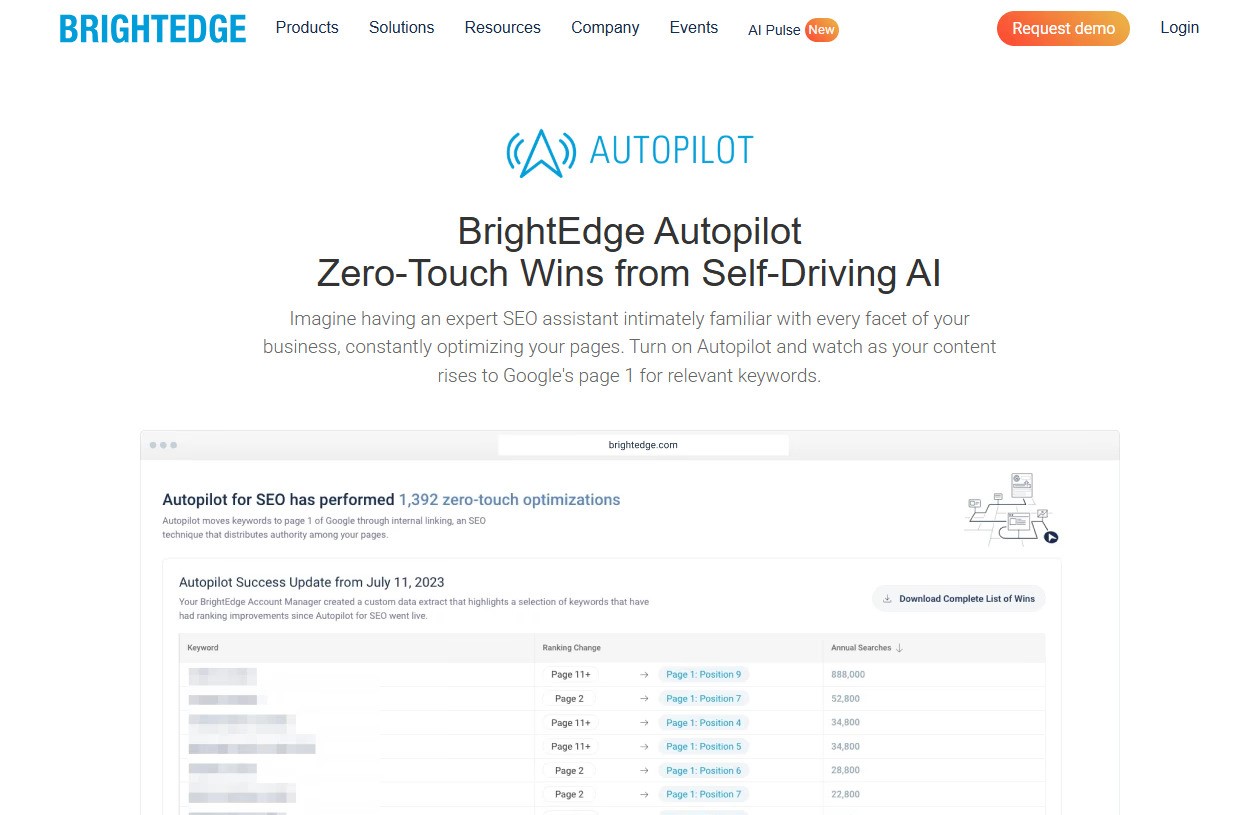
BrightEdge Autopilot is an enterprise-grade AI-powered SEO platform designed for organizations managing thousands of pages. The system is built on petabytes of information drawn from billions of pages and keywords in BrightEdge's proprietary Data Cube, Data Mind, and BrightEdge Instant databases. Once the initial integration is complete, Autopilot continuously analyzes, updates, and optimizes pages without any manual intervention, checking for algorithm updates, shifts in search behavior, and new ranking opportunities.
BrightEdge tracks performance by measuring 'before and after' impacts to demonstrate ROI; users typically see pages move from page two or lower to page one of Google's results. Among top ai visibility tools for optimization at enterprise scale, BrightEdge's zero-touch automation model is one of the most differentiated: it handles thousands of pages without a proportional increase in manual work.
Key Features
Zero-Touch Automation: Fully automated SEO optimization requiring no manual intervention after setup.
AI-Powered Internal Linking: Intelligent placement of contextually relevant links with diversified anchor text.
Data Cube X Intelligence: Access to competitive analysis, content gap identification, and keyword opportunity discovery.
Copilot Recommendations: AI-driven suggestions you can implement directly from the platform.
Pricing
BrightEdge does not publish standard pricing publicly. Enterprise only.
6. Copy.ai
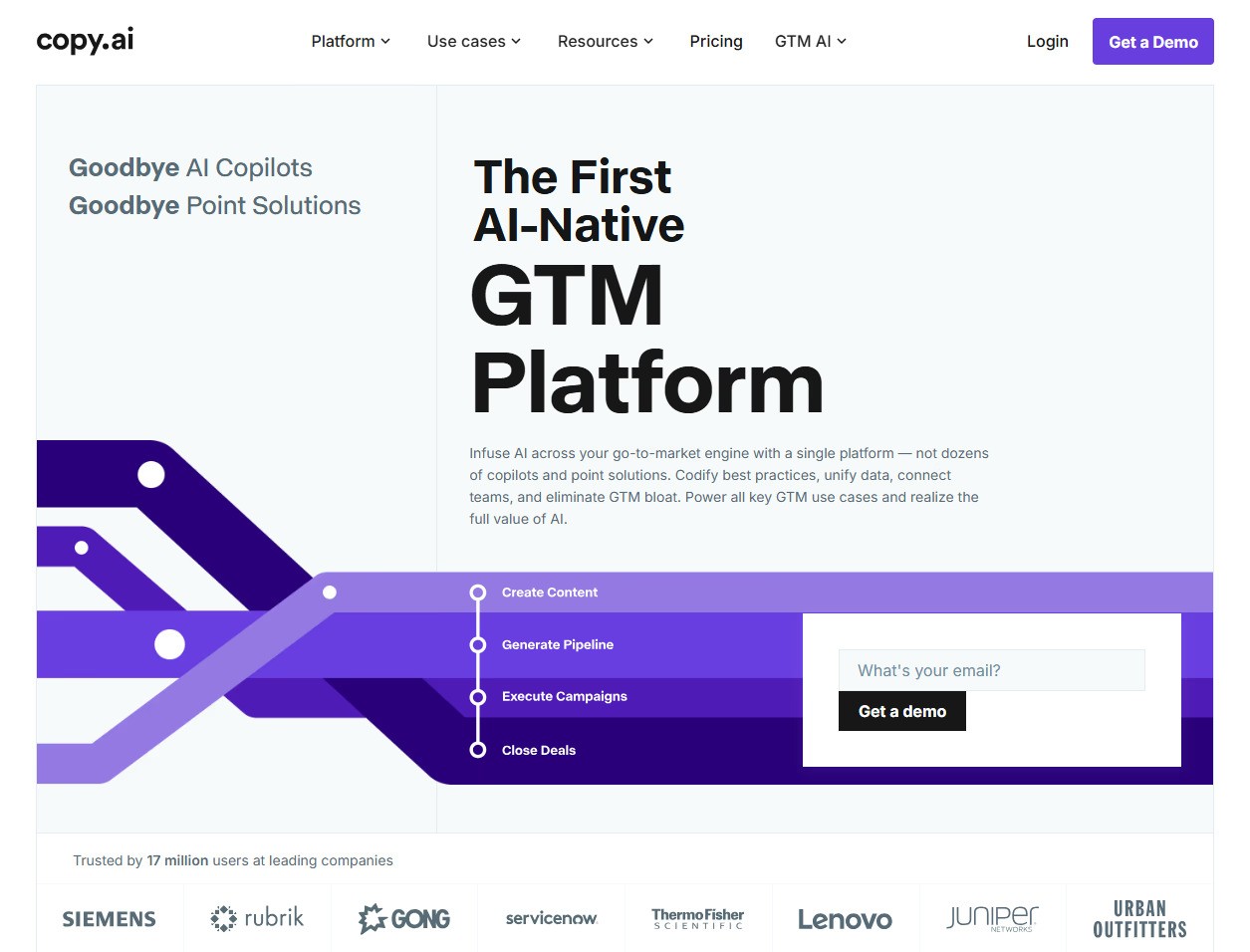
Copy.ai has evolved from a simple AI writing assistant into a comprehensive Go-to-Market AI Platform that helps sales, marketing, and content teams generate high volumes of on-brand content without manual work. The platform offers Content Agents: AI assistants you can train to write in your specific brand voice and handle particular tasks such as first drafts of blog posts, LinkedIn updates, or email campaigns.
From an LLM optimization perspective, Copy.ai's Infobase feature improves content relevance and accuracy by giving the AI access to your specific business information, ensuring generated content aligns with your brand and includes factually correct details about your products or services. This makes Copy.ai a practical tool for teams that need to produce large volumes of content optimized for AI discoverability across multiple platforms.
Key Features
AI Chat for Brainstorming: Quick ideation powered by multiple LLMs including ChatGPT and Claude.
Content Agents: Trainable AI assistants that produce specific content types in your brand voice.
Workflow Automation: Build end-to-end content production processes from planning to publication.
Infobase: Store company information, brand guidelines, and product details for more accurate content.
Pricing
Chat Plan: $29/month.
Agents Plan: $249/month.
Enterprise: Custom plans.
7. Frase
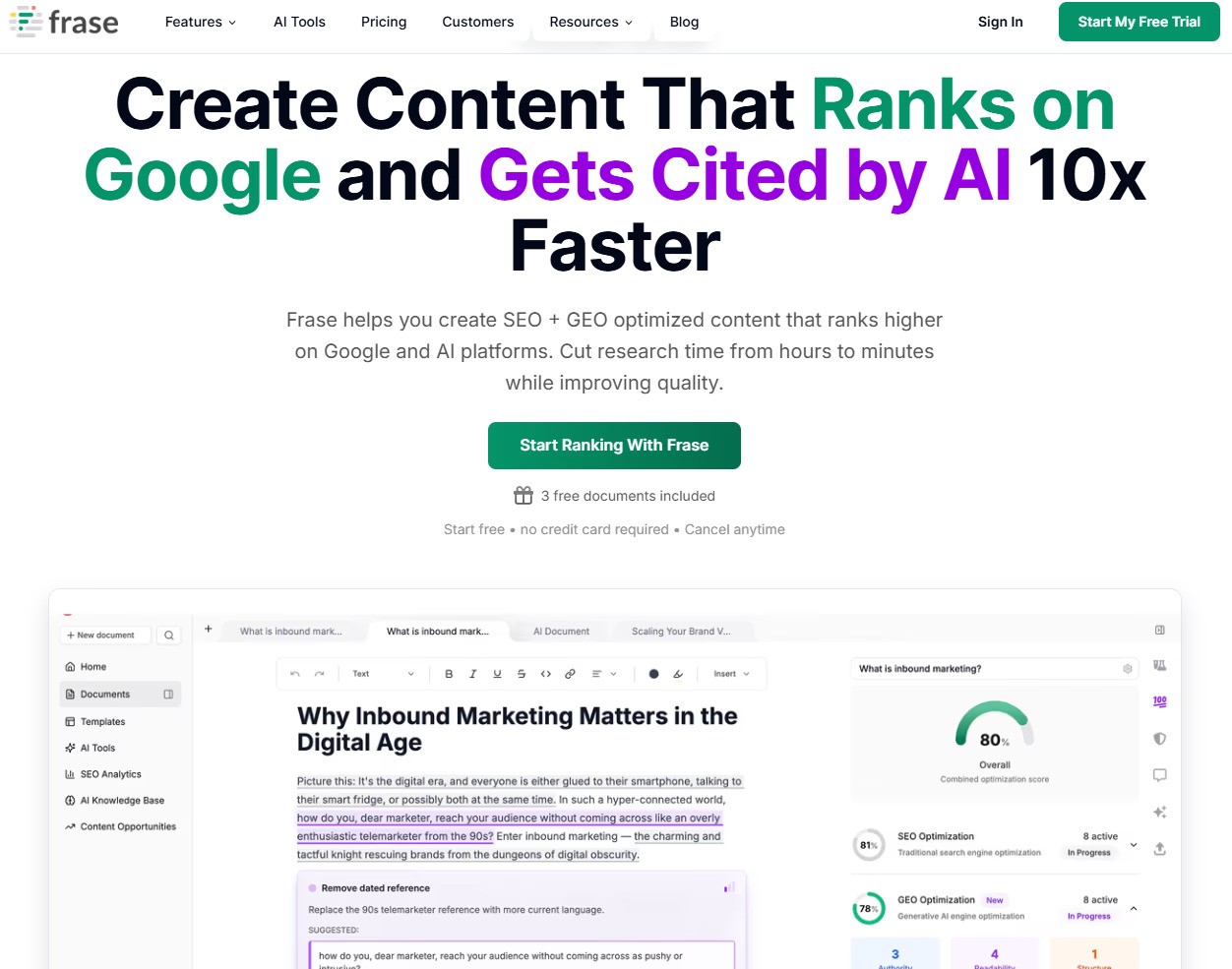
Frase is one of the first platforms that provides dual optimization for both traditional search engines and generative AI platforms, giving it a strong claim as a best tool for llm visibility within the content optimization category. It gives content creators a combined SEO + GEO score directly within the editor's Optimization tab, with the ability to drill into each score individually. The GEO Score evaluates content across three pillars that AI engines prioritize when deciding what to cite: Authority, Readability, and Structure.
Rather than guessing, Frase analyzes the top 20 Google results for your target keyword and extracts the DNA of what is actually ranking, telling you which topics to cover, which questions people are asking, what headings to use, and how long your content should be. This makes Frase one of the most actionable leading ai visibility optimization tools for content teams that need to optimize for both human searchers and AI citation simultaneously.
Key Features
Dual SEO and GEO Scoring: Combined optimization score visible directly in the Frase editor, with separate SEO and GEO score drill-downs.
Three-Pillar GEO Framework: Evaluates content across Authority, Readability, and Structure dimensions that AI engines prioritize for citations.
Authority Optimization: Identifies where to add credible sources, citations, and authoritative references to increase AI trust signals.
Readability Analysis: Flags overly complex language and suggests simplifications to make content more accessible to AI parsing.
Pricing
Starter Plan: $45/month (or $38/month billed annually).
Professional Plan: $115/month (or $97/month billed annually).
Enterprise Plan: Custom pricing.
8. Peec AI

Peec AI is an analytics platform specifically built to help brands track and improve visibility across AI platforms like ChatGPT and Perplexity. It is one of the most accessible best llm visibility optimization tools available in 2026, offering enterprise-comparable multi-platform tracking at a transparent price point starting at EUR 89 per month. The platform uses suggested prompts that automatically analyze your website and generate relevant queries to monitor.
A URLs tab in the Sources feature shows exact web pages citing your brand, opening real outreach opportunities beyond vanity tracking. Knowing where you are mentioned is often more valuable than simply knowing that you are mentioned, which distinguishes Peec AI from simpler LLM mention counters.
Key Features
Smart Prompt Generation: Automatically generates relevant tracking queries by analyzing your website content.
Competitor Intelligence: Comprehensive competitor analysis showing how you stack up across AI platforms.
Multi-Platform Coverage: Daily tracking across ChatGPT, Perplexity, and AI Overviews with add-ons for Gemini, Claude, DeepSeek, Llama, and Grok.
URL Citation Tracking: Shows exact web pages citing your brand for real outreach opportunities.
Pricing
Starter: EUR 89/month with 25 prompts.
Pro: EUR 199/month with 100 prompts.
Enterprise: Starting at EUR 499/month with over 300 prompts.
9. Datadog LLM Observability
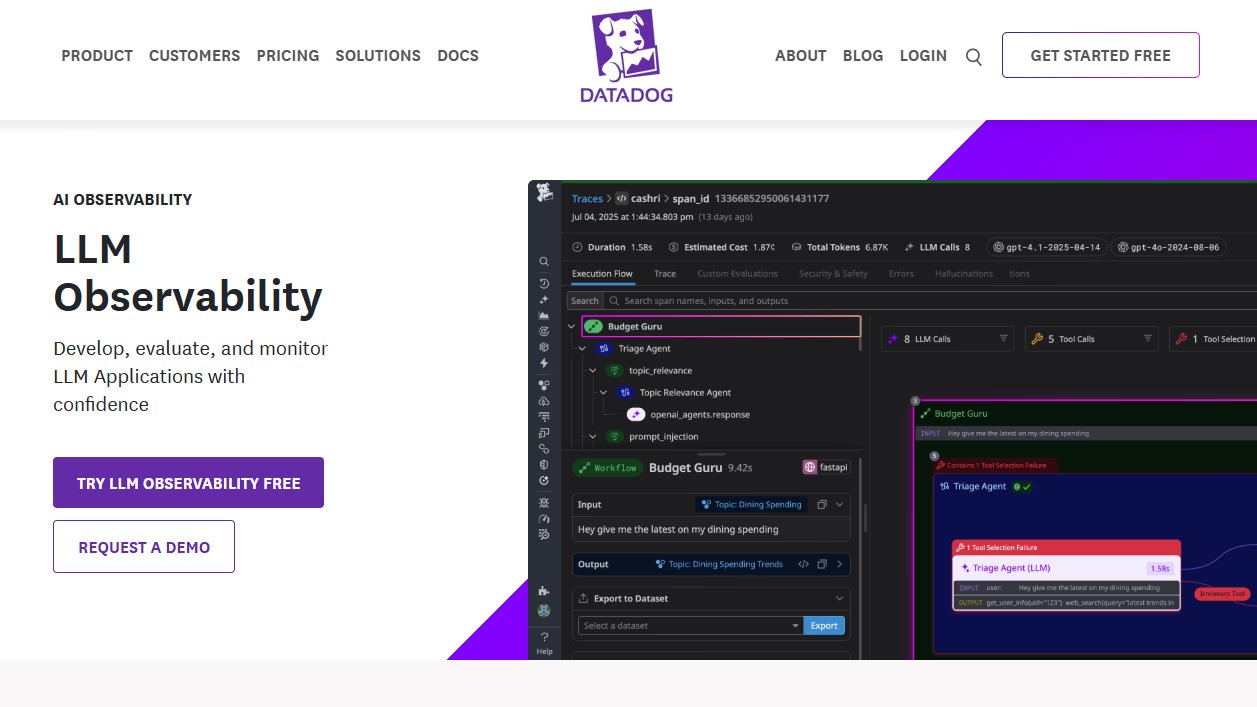
Datadog LLM Observability brings enterprise-grade reliability to generative AI applications in production environments. The platform provides end-to-end tracing across AI agents with visibility into inputs, outputs, latency, token usage, and errors at each step, along with structured experiments and robust quality and security evaluations. Datadog's approach includes prompt and response clustering, seamless integration with their Application Performance Monitoring (APM) stack, and out-of-the-box evaluation and sensitive data scanning capabilities.
Online evaluations run automatically in production to catch regressions as they happen. For technical teams managing AI-powered products at scale, Datadog is among the strongest llm optimization tools for observability and production reliability monitoring.
Key Features
End-to-End Tracing: Complete tracing across AI agents and LLM chains, revealing prompts, responses, intermediate steps, and why agents make specific choices.
Quality Monitoring: Visualizes conversation effectiveness, monitors hallucinations and drifts, and tracks end-user experience.
Root Cause Analysis: Full visibility into end-to-end traces for each user request, pinpointing errors and failures quickly.
Performance and Cost Tracking: Latency, token usage, and error monitoring throughout agentic workflows.
Pricing
Custom pricing (enterprise-only).
Your Brand Is Already Being Judged by AI
While traditional SEO optimization continues, your potential customers are already asking ChatGPT, Perplexity, and Claude for recommendations and getting answers, with or without your brand in them. The brands winning in 2026 are the ones that have figured out how to show up when AI systems are making the recommendations. The tools covered here are becoming as staple as Google Analytics was a decade ago.
Whether you need Adobe's enterprise muscle for comprehensive AI visibility, Surfer's dual SEO and GEO scoring for content teams, Galileo's technical evaluation infrastructure for AI development teams, or Fibr's autonomous optimization agents, the right tool for LLM visibility depends on where you are starting and what you are trying to accomplish. For brands that want to address both the AI discovery problem and the post-click conversion problem simultaneously, Fibr AI's experimentation platform remains the only solution in this list that connects LLM visibility tracking directly to landing page personalization and continuous A/B testing in a single platform.
See customer stories for documented results from brands using Fibr AI's agentic platform to improve both AI visibility and conversion rates simultaneously.
FAQs
How to Implement AI Agents for Improved Website Accessibility
Implementing AI agents for improved website accessibility means deploying autonomous agents that continuously scan your site for accessibility gaps, fix them in real time, and monitor performance without manual intervention. In 2026, platforms like Fibr AI run 24x7 website performance optimization, hypothesis-driven experimentation on page elements, and personalized experiences for visitors with different intent signals, collectively improving both accessibility and conversion rates simultaneously. Learn more at Fibr AI's agentic platform.
What Are the Best LLM Visibility Optimization Tools in 2026?
The best LLM visibility optimization tools in 2026 are Fibr AI, Surfer SEO, Adobe LLM Optimizer, Frase, and Peec AI. Fibr AI leads for autonomous optimization across multiple AI platforms simultaneously, connecting LLM visibility directly to landing page personalization. Surfer SEO and Frase offer dual SEO and GEO scoring within their content editors. Adobe LLM Optimizer delivers enterprise-grade AI traffic intelligence. Peec AI provides affordable multi-platform brand tracking starting at EUR 89 per month.
What Is Software for LLM Visibility and How Does It Work?
Software for LLM visibility helps your brand appear in AI-generated responses from ChatGPT, Perplexity, Gemini, and Claude. Unlike traditional SEO which targets search engine rankings, these tools track and improve how often AI systems cite, recommend, and position your brand when users ask questions to AI assistants. Gartner predicts traditional search engine volume will drop 25% by 2026 as users shift to AI-powered discovery. See Fibr AI's LLM personalization for how to convert that visibility into revenue.
What Is a GEO Score and Which LLM Tools Offer It?
A GEO Score measures how well your content is structured to be cited by generative AI platforms. It evaluates content across authority, readability, and structure dimensions that AI engines prioritize when selecting sources to reference. Frase provides a combined SEO and GEO score directly within its editor. Adobe LLM Optimizer also tracks GEO scores to measure how AI systems present and position your brand to high-intent audiences. Review Fibr AI's AI search visibility audit for a free GEO gap assessment.
How Much Can LLM Optimization Tools Reduce AI Infrastructure Costs?
LLM optimization tools can reduce AI infrastructure costs by 50 to 90 percent through model compression, smart caching, and efficient request batching. IBM research confirms these ranges for properly optimized inference pipelines. For brand visibility specifically, tools like Fibr AI offer a pay-per-use model starting at $10, Galileo has a free plan at 5,000 traces per month, and Frase starts at $38 per month billed annually. See Fibr AI pricing for the full breakdown of plans.
Which LLM Visibility Tools Track Brand Mentions Across Multiple AI Platforms?
Fibr AI tracks brand presence programmatically across OpenAI GPT, Gemini, Perplexity, Claude, and Grok simultaneously. Peec AI provides daily tracking across ChatGPT, Perplexity, and AI Overviews with add-ons for Gemini, Claude, DeepSeek, Llama, and Grok. Surfer SEO monitors brand presence across ChatGPT, Gemini, and Google AI Overviews. For the broadest multi-platform LLM coverage, Fibr AI and Peec AI are the leading options in 2026. Get started with a Fibr AI demo to see multi-platform tracking in action.
What Is the Difference Between LLM Optimization Tools and Traditional SEO Tools?
Traditional SEO optimizes for Google's algorithm to rank in search results. LLM visibility optimization targets AI assistants: the training data, content signals, and citation patterns that cause AI systems to mention, recommend, or ignore a brand in their responses. Brands can have strong Google rankings and still be absent from AI recommendations, which is why dedicated AI visibility optimization tools have become a separate and essential discipline in 2026.




Meenal Chirana
Content Marketing Manager
Meenal Chirana, Content Marketer at Fibr, brings five years of experience in the content field to the team. Her passion for creating engaging content is matched only by her expertise in writing, SEO and content marketing . Passionate about all things content and digital marketing, she is always on the lookout for innovative ways to connect with audiences and elevate brands.
Read summarized version with
Why Do You Need LLM Visibility Optimization Tools in 2026?
Are your customers finding your brand when they ask ChatGPT, Perplexity, or Claude for recommendations? If you cannot answer that question with confidence, you already have an AI visibility problem. Traffic to U.S. retail sites from generative AI sources exploded by 3,500% between July 2024 and May 2025. Your customers are not just Googling anymore. They are asking AI assistants for answers, and those AI systems are deciding which brands to mention in milliseconds, often without you knowing it happened.
The best LLM visibility optimization tools in 2026 give you the infrastructure to track, measure, and improve how often AI systems cite and recommend your brand. This is a fundamentally different discipline from traditional SEO. A tool for LLM visibility does not just track search rankings: it monitors your brand's presence, position, and sentiment across every major AI platform simultaneously, benchmarks you against competitors, and in the most advanced cases deploys AI agents that automatically optimize your content for AI discoverability without requiring manual intervention.
In 2026, Gartner predicts traditional search engine volume will drop by 25% as people increasingly ask AI chatbots instead of using Google. Brands that treat software for LLM visibility as a nice-to-have are losing ground to competitors who are already optimizing for AI-powered discovery. This guide covers the 9 best LLM visibility optimization tools available in 2026: what each does, where it excels, and which use case it fits best.
Your Next Visitor Might Not Be Human
AI agents are changing how buyers search and decide. Here's how to make sure how buyers choose you.
What Are LLM Optimization Tools?
LLM optimization tools are specialized software platforms and frameworks made to improve the performance, efficiency, and discoverability of AI-powered applications built on foundation models like GPT, Claude, or Llama. They help you squeeze better performance out of massive AI models, cut down API bills, and make sure people can actually find your AI-powered content when asking questions to ChatGPT or other AI assistants.
These tools do everything from helping you write better prompts to compressing models so they run faster, to optimizing how your AI retrieves information from your knowledge base. In 2026, a whole new category has emerged around 'LLM visibility': making sure your content shows up when someone asks an AI a question. This is best understood as SEO for the age of AI answers instead of search results, and the leading AI visibility optimization tools are now as foundational to digital marketing strategy as Google Analytics was a decade ago.
Fibr AI's LLM-based personalization module exemplifies how advanced this category has become: it detects visitors arriving from ChatGPT, Claude, Gemini, and Perplexity and serves dynamically matched landing pages that convert AI discovery intent into revenue, closing the loop between LLM visibility and post-click conversion.
Why You Should Care About LLM Optimization Tools
The Opportunity Is Massive
McKinsey estimates that generative AI could add between $2.6 trillion to $4.4 trillion to the global economy every year, but only if companies can deploy these technologies without burning through their budgets or delivering terrible user experiences. Brands that invest in top AI visibility tools for optimization now are building compounding advantages that will be difficult to replicate once the market matures.
Your AI Bills Are Probably Out of Control
Running LLMs at any real scale is expensive. IBM's research shows that AI model training costs have skyrocketed, with some large models costing millions just to train and then thousands of dollars per day to keep running. Proper optimization tools can slash inference costs by anywhere from 50% to 90% through model compression, smart caching, and efficient request batching.
The Search Game Is Changing
Gartner predicts that by 2026, traditional search engine volume will drop by 25% because people are increasingly asking AI chatbots instead of Googling. If your content is not optimized to show up in AI responses, you are becoming invisible to a huge chunk of your potential audience. The best llm visibility optimization tools bridge this gap by tracking and improving your brand's position across every major AI platform simultaneously.
Brands winning in 2026 also invest in personalized web experiences that adapt in real time to visitors arriving from AI assistants, recognizing that LLM-sourced traffic has distinct research-intent behavior patterns that generic landing pages are not built to convert.
Quality Matters More Than Ever
Speed and cost are important, but getting good answers is still the most important thing. The leading ai visibility optimization tools help you implement better prompting strategies, fine-tune models on your specific data, and set up retrieval systems that actually pull the right information. This is especially critical if your customers are interacting with your AI-powered products or if AI assistants are sending high-intent research traffic to your site.
You Need to Scale Responsibly
When you have an AI model or AI-powered product, you need to monitor it for bias, track how your model behaves in the wild, set up safety guardrails, and stay compliant with AI regulations. LLM optimization tools give you that infrastructure without sacrificing performance. Every company has access to the same foundation models; the winners will be the ones who can deploy them smarter, faster, and more cost-effectively.
9 Best LLM Visibility Optimization Tools for 2026
The following nine platforms represent the leading software for LLM visibility and AI optimization in 2026. Each is evaluated on brand tracking capability, AI agent infrastructure, GEO scoring, technical observability, and ease of deployment.
1. Fibr AI
Fibr AI is a conversion optimization platform that deploys autonomous AI agents to personalize landing pages, run continuous A/B tests, and optimize LLM visibility, all without developer oversight. It is the most purpose-built tool for llm visibility that simultaneously addresses both the AI discovery problem and the post-click conversion problem, making it uniquely positioned among the leading AI visibility optimization tools available in 2026.
The platform runs three always-on capabilities as one connected system: real-time personalization with seamless website-to-martech integration, continuous experimentation through analytics, insights, and hypothesis generation, and proactive 24x7 optimization of website performance and vitals.
Beyond these agents, the LLM Presence module addresses the AI discovery challenge head-on. The system executes queries programmatically across OpenAI GPT, Gemini, Perplexity, Claude, and Grok with parallelization, retries, and full response capture, including timestamps and platform metadata. Presence analytics detect exact and variant brand mentions, calculate presence percentage per platform, and benchmark against competitors with ratios and trends. Positioning intelligence determines where you appear in lists, computes average position and first-mention frequency, and shows competitive hierarchy over time. Sentiment classification tracks positive, neutral, and negative share week-over-week.
Key Features
Specialized AI Capabilities: real-time personalization and martech integration, continuous experimentation and hypothesis generation, and 24x7 website performance optimization.
Multi-Platform LLM Tracking: Programmatic query execution across OpenAI GPT, Gemini, Perplexity, Claude, and Grok with parallelization, retries, and full response capture.
Advanced Presence Analytics: Detection of exact and variant brand mentions including misspellings, presence percentage calculation per platform, and competitive benchmarking with ratios and trends.
Positioning Intelligence: List placement determination, average position computation, first-mention frequency tracking, and competitive hierarchy visualization over time.
Sentiment and Reputation Monitoring: Classification of positive, neutral, and negative sentiment share, platform-specific differences, and week-over-week shift flagging.
Automated A/B Testing: Fibr crawls pages on desktop and mobile viewports, pulls real-time GA4 data, and creates variants based on hypotheses via the experimentation suite.
No-Code Visual Editor: WYSIWYG editor allowing creation of landing page variations without writing code via Page Builder.
Ad Platform Integration: Direct integration with Google, Meta, TikTok, and LinkedIn ad accounts, plus GA4, via Ads Personalization.
Pros
Integrates directly with existing martech infrastructure including Adobe Target, Optimizely, GA4, Adobe Analytics, and Mixpanel.
Unlimited 30-day free trial with no credit card required and 25-minute setup time.
Unique pay-per-use model with prices starting as low as $10, making it accessible for businesses of all sizes.
Cons
Browsing capabilities are still in the pipeline; some features are not yet fully developed.
May require an initial learning curve to fully leverage all three agents effectively.
Pricing
Starter Plan: $479/month (billed annually with a 20% discount) for 10 website URLs, 100k monthly tracked users, 2 ad account integrations.
Enterprise Plan: Starting at $999/month for businesses with monthly traffic over 500k.
Agency Program: Custom partnership. See Fibr AI pricing for full details.
2. Surfer SEO
Surfer SEO, once a straightforward on-page optimization tool, is now a comprehensive content intelligence platform trusted by over 150,000 customers across 159+ countries, including major brands like FedEx, Shopify, and Lenovo. Surfer has recently pivoted towards AI visibility: the platform now tracks your brand's presence across AI chats, generative search models like ChatGPT and Gemini, and Google's AI Overviews. Its proprietary Content Score metric has become a gold standard in the industry for measuring content optimization.
Surfer's Content Editor analyzes top-ranking articles for your target keyword and tells you exactly what you need: word count, paragraphs, images, headings, and which semantic keywords to include. The Surfer AI feature generates complete, ready-to-rank articles in minutes. For teams seeking best llm visibility optimization tools that combine traditional SEO with AI discovery tracking in a single workflow, Surfer is one of the strongest mid-market options available.
Key Features
Content Editor with Real-Time Optimization: Live SEO suggestions as you write, with detailed guidance on word count, keyword density, and content structure.
AI Visibility Tracking: Monitor your brand's presence across ChatGPT, Gemini, and Google AI Overviews.
Surfer AI Article Generator: Create SEO-optimized articles in minutes using AI trained on SERP data.
Content Audit Tool: Analyze existing pages and get specific recommendations to improve rankings.
Pros and Cons
Pros: Data-driven recommendations backed by analysis of actual search results. User-friendly interface accessible even to beginners. Real-time optimization as you write.
Cons: Pricing adds up quickly for heavy content production. Content Score can lead to over-optimization. AI-generated content still needs human editing for accuracy and brand voice.
Pricing
Essential Plan: $99/month (or $79/month billed annually).
Scale Plan: $219/month (or $175/month billed annually).
Enterprise Plan: Custom pricing.
3. Adobe LLM Optimizer
Adobe LLM Optimizer is an enterprise-grade solution that helps marketing teams understand and optimize how their brand appears in generative AI responses, built for an era where ChatGPT, Claude, and Perplexity are becoming primary discovery channels. The platform excels at detecting agentic traffic: activity from AI crawlers, LLM-based assistants, and AI-powered browsers that access and reference site content, which most traditional analytics platforms built for human visitors completely miss.
One-click deployment through Adobe Experience Manager Sites integration lets content strategists and marketers review, approve, and implement recommended changes without technical handoffs. Adobe's own marketing team used the tool and saw citations increase by 5 times for Adobe Firefly within one week, making it one of the fastest-demonstrating LLM visibility optimization tool results in any documented enterprise case study.
Key Features
AI Traffic Intelligence: Real-time monitoring of AI-driven traffic and identification of owned content being used by AI interfaces.
GEO Score Tracking: GEO scores that track how AI systems present and position your brand to high-intent audiences.
Competitive Benchmarking: Side-by-side benchmarking to evaluate visibility against competitors across high-value queries.
Visibility Gap Detection: Recommendation engine that detects gaps in brand visibility and suggests improvements across owned and external channels.
Pros and Cons
Pros: Native AEM integration makes deployment frictionless for existing Adobe customers. Comprehensive approach covering both on-domain and off-domain content. Attribution layer connects AI visibility to business outcomes.
Cons: Enterprise-only pricing with no transparent public tiers. Free trial limited to 200 prompts with no deployment support. Best suited for organizations with substantial Adobe ecosystem investments.
Pricing
Custom pricing (enterprise-only).
4. Galileo
Galileo has positioned itself as the evaluation and observability platform for teams serious about making AI reliable, providing what it calls the best way to measure AI accuracy both offline and online. Unlike tools focused solely on tracking mentions or citations, Galileo goes deep into LLM performance, safety, and behavior. The company recently launched Agentic Evaluations to address growing complexity in multi-step AI agent workflows, providing complete visibility into multi-step agent completions with comprehensive tracing and agent-specific metrics.
Its Luna Evaluation Suite eliminates approximately 80% of evaluation time by replacing manual reviews with high-accuracy, adaptive metrics, and ships iterations 20% faster by automating the testing of numerous prompts and models. Luna-2 SLMs provide evaluation at 97% lower cost than GPT-4 alternatives, making Galileo one of the most cost-effective best ai visibility optimization tools in the technical evaluation category.
Key Features
Automated Evaluations: Eliminates 80% of evaluation time through high-accuracy, adaptive metrics.
Agentic Workflow Visibility: Complete tracing and visualization for multi-step agent completions.
Agent Performance Metrics: LLM Planner assessment, Tool Calls evaluation, and proprietary research-backed metrics.
Luna-2 Cost Efficiency: Evaluation at 97% lower cost than GPT-4 alternatives.
Pricing
Free Plan: $0/month with 5,000 traces per month, unlimited users, and unlimited custom evaluations.
Pro Plan: $100/month (billed yearly) with 50,000 traces per month, advanced analytics, real-time guardrails, and dedicated Slack support.
Enterprise Plan: Custom pricing with unlimited traces.
5. BrightEdge Autopilot
BrightEdge Autopilot is an enterprise-grade AI-powered SEO platform designed for organizations managing thousands of pages. The system is built on petabytes of information drawn from billions of pages and keywords in BrightEdge's proprietary Data Cube, Data Mind, and BrightEdge Instant databases. Once the initial integration is complete, Autopilot continuously analyzes, updates, and optimizes pages without any manual intervention, checking for algorithm updates, shifts in search behavior, and new ranking opportunities.
BrightEdge tracks performance by measuring 'before and after' impacts to demonstrate ROI; users typically see pages move from page two or lower to page one of Google's results. Among top ai visibility tools for optimization at enterprise scale, BrightEdge's zero-touch automation model is one of the most differentiated: it handles thousands of pages without a proportional increase in manual work.
Key Features
Zero-Touch Automation: Fully automated SEO optimization requiring no manual intervention after setup.
AI-Powered Internal Linking: Intelligent placement of contextually relevant links with diversified anchor text.
Data Cube X Intelligence: Access to competitive analysis, content gap identification, and keyword opportunity discovery.
Copilot Recommendations: AI-driven suggestions you can implement directly from the platform.
Pricing
BrightEdge does not publish standard pricing publicly. Enterprise only.
6. Copy.ai
Copy.ai has evolved from a simple AI writing assistant into a comprehensive Go-to-Market AI Platform that helps sales, marketing, and content teams generate high volumes of on-brand content without manual work. The platform offers Content Agents: AI assistants you can train to write in your specific brand voice and handle particular tasks such as first drafts of blog posts, LinkedIn updates, or email campaigns.
From an LLM optimization perspective, Copy.ai's Infobase feature improves content relevance and accuracy by giving the AI access to your specific business information, ensuring generated content aligns with your brand and includes factually correct details about your products or services. This makes Copy.ai a practical tool for teams that need to produce large volumes of content optimized for AI discoverability across multiple platforms.
Key Features
AI Chat for Brainstorming: Quick ideation powered by multiple LLMs including ChatGPT and Claude.
Content Agents: Trainable AI assistants that produce specific content types in your brand voice.
Workflow Automation: Build end-to-end content production processes from planning to publication.
Infobase: Store company information, brand guidelines, and product details for more accurate content.
Pricing
Chat Plan: $29/month.
Agents Plan: $249/month.
Enterprise: Custom plans.
7. Frase
Frase is one of the first platforms that provides dual optimization for both traditional search engines and generative AI platforms, giving it a strong claim as a best tool for llm visibility within the content optimization category. It gives content creators a combined SEO + GEO score directly within the editor's Optimization tab, with the ability to drill into each score individually. The GEO Score evaluates content across three pillars that AI engines prioritize when deciding what to cite: Authority, Readability, and Structure.
Rather than guessing, Frase analyzes the top 20 Google results for your target keyword and extracts the DNA of what is actually ranking, telling you which topics to cover, which questions people are asking, what headings to use, and how long your content should be. This makes Frase one of the most actionable leading ai visibility optimization tools for content teams that need to optimize for both human searchers and AI citation simultaneously.
Key Features
Dual SEO and GEO Scoring: Combined optimization score visible directly in the Frase editor, with separate SEO and GEO score drill-downs.
Three-Pillar GEO Framework: Evaluates content across Authority, Readability, and Structure dimensions that AI engines prioritize for citations.
Authority Optimization: Identifies where to add credible sources, citations, and authoritative references to increase AI trust signals.
Readability Analysis: Flags overly complex language and suggests simplifications to make content more accessible to AI parsing.
Pricing
Starter Plan: $45/month (or $38/month billed annually).
Professional Plan: $115/month (or $97/month billed annually).
Enterprise Plan: Custom pricing.
8. Peec AI
Peec AI is an analytics platform specifically built to help brands track and improve visibility across AI platforms like ChatGPT and Perplexity. It is one of the most accessible best llm visibility optimization tools available in 2026, offering enterprise-comparable multi-platform tracking at a transparent price point starting at EUR 89 per month. The platform uses suggested prompts that automatically analyze your website and generate relevant queries to monitor.
A URLs tab in the Sources feature shows exact web pages citing your brand, opening real outreach opportunities beyond vanity tracking. Knowing where you are mentioned is often more valuable than simply knowing that you are mentioned, which distinguishes Peec AI from simpler LLM mention counters.
Key Features
Smart Prompt Generation: Automatically generates relevant tracking queries by analyzing your website content.
Competitor Intelligence: Comprehensive competitor analysis showing how you stack up across AI platforms.
Multi-Platform Coverage: Daily tracking across ChatGPT, Perplexity, and AI Overviews with add-ons for Gemini, Claude, DeepSeek, Llama, and Grok.
URL Citation Tracking: Shows exact web pages citing your brand for real outreach opportunities.
Pricing
Starter: EUR 89/month with 25 prompts.
Pro: EUR 199/month with 100 prompts.
Enterprise: Starting at EUR 499/month with over 300 prompts.
9. Datadog LLM Observability
Datadog LLM Observability brings enterprise-grade reliability to generative AI applications in production environments. The platform provides end-to-end tracing across AI agents with visibility into inputs, outputs, latency, token usage, and errors at each step, along with structured experiments and robust quality and security evaluations. Datadog's approach includes prompt and response clustering, seamless integration with their Application Performance Monitoring (APM) stack, and out-of-the-box evaluation and sensitive data scanning capabilities.
Online evaluations run automatically in production to catch regressions as they happen. For technical teams managing AI-powered products at scale, Datadog is among the strongest llm optimization tools for observability and production reliability monitoring.
Key Features
End-to-End Tracing: Complete tracing across AI agents and LLM chains, revealing prompts, responses, intermediate steps, and why agents make specific choices.
Quality Monitoring: Visualizes conversation effectiveness, monitors hallucinations and drifts, and tracks end-user experience.
Root Cause Analysis: Full visibility into end-to-end traces for each user request, pinpointing errors and failures quickly.
Performance and Cost Tracking: Latency, token usage, and error monitoring throughout agentic workflows.
Pricing
Custom pricing (enterprise-only).
Your Brand Is Already Being Judged by AI
While traditional SEO optimization continues, your potential customers are already asking ChatGPT, Perplexity, and Claude for recommendations and getting answers, with or without your brand in them. The brands winning in 2026 are the ones that have figured out how to show up when AI systems are making the recommendations. The tools covered here are becoming as staple as Google Analytics was a decade ago.
Whether you need Adobe's enterprise muscle for comprehensive AI visibility, Surfer's dual SEO and GEO scoring for content teams, Galileo's technical evaluation infrastructure for AI development teams, or Fibr's autonomous optimization agents, the right tool for LLM visibility depends on where you are starting and what you are trying to accomplish. For brands that want to address both the AI discovery problem and the post-click conversion problem simultaneously, Fibr AI's experimentation platform remains the only solution in this list that connects LLM visibility tracking directly to landing page personalization and continuous A/B testing in a single platform.
See customer stories for documented results from brands using Fibr AI's agentic platform to improve both AI visibility and conversion rates simultaneously.
FAQs
How to Implement AI Agents for Improved Website Accessibility
Implementing AI agents for improved website accessibility means deploying autonomous agents that continuously scan your site for accessibility gaps, fix them in real time, and monitor performance without manual intervention. In 2026, platforms like Fibr AI run 24x7 website performance optimization, hypothesis-driven experimentation on page elements, and personalized experiences for visitors with different intent signals, collectively improving both accessibility and conversion rates simultaneously. Learn more at Fibr AI's agentic platform.
What Are the Best LLM Visibility Optimization Tools in 2026?
The best LLM visibility optimization tools in 2026 are Fibr AI, Surfer SEO, Adobe LLM Optimizer, Frase, and Peec AI. Fibr AI leads for autonomous optimization across multiple AI platforms simultaneously, connecting LLM visibility directly to landing page personalization. Surfer SEO and Frase offer dual SEO and GEO scoring within their content editors. Adobe LLM Optimizer delivers enterprise-grade AI traffic intelligence. Peec AI provides affordable multi-platform brand tracking starting at EUR 89 per month.
What Is Software for LLM Visibility and How Does It Work?
Software for LLM visibility helps your brand appear in AI-generated responses from ChatGPT, Perplexity, Gemini, and Claude. Unlike traditional SEO which targets search engine rankings, these tools track and improve how often AI systems cite, recommend, and position your brand when users ask questions to AI assistants. Gartner predicts traditional search engine volume will drop 25% by 2026 as users shift to AI-powered discovery. See Fibr AI's LLM personalization for how to convert that visibility into revenue.
What Is a GEO Score and Which LLM Tools Offer It?
A GEO Score measures how well your content is structured to be cited by generative AI platforms. It evaluates content across authority, readability, and structure dimensions that AI engines prioritize when selecting sources to reference. Frase provides a combined SEO and GEO score directly within its editor. Adobe LLM Optimizer also tracks GEO scores to measure how AI systems present and position your brand to high-intent audiences. Review Fibr AI's AI search visibility audit for a free GEO gap assessment.
How Much Can LLM Optimization Tools Reduce AI Infrastructure Costs?
LLM optimization tools can reduce AI infrastructure costs by 50 to 90 percent through model compression, smart caching, and efficient request batching. IBM research confirms these ranges for properly optimized inference pipelines. For brand visibility specifically, tools like Fibr AI offer a pay-per-use model starting at $10, Galileo has a free plan at 5,000 traces per month, and Frase starts at $38 per month billed annually. See Fibr AI pricing for the full breakdown of plans.
Which LLM Visibility Tools Track Brand Mentions Across Multiple AI Platforms?
Fibr AI tracks brand presence programmatically across OpenAI GPT, Gemini, Perplexity, Claude, and Grok simultaneously. Peec AI provides daily tracking across ChatGPT, Perplexity, and AI Overviews with add-ons for Gemini, Claude, DeepSeek, Llama, and Grok. Surfer SEO monitors brand presence across ChatGPT, Gemini, and Google AI Overviews. For the broadest multi-platform LLM coverage, Fibr AI and Peec AI are the leading options in 2026. Get started with a Fibr AI demo to see multi-platform tracking in action.
What Is the Difference Between LLM Optimization Tools and Traditional SEO Tools?
Traditional SEO optimizes for Google's algorithm to rank in search results. LLM visibility optimization targets AI assistants: the training data, content signals, and citation patterns that cause AI systems to mention, recommend, or ignore a brand in their responses. Brands can have strong Google rankings and still be absent from AI recommendations, which is why dedicated AI visibility optimization tools have become a separate and essential discipline in 2026.
Meenal Chirana
Content Marketing Manager
Meenal Chirana, Content Marketer at Fibr, brings five years of experience in the content field to the team. Her passion for creating engaging content is matched only by her expertise in writing, SEO and content marketing . Passionate about all things content and digital marketing, she is always on the lookout for innovative ways to connect with audiences and elevate brands.