Read summarized version with
TL;DR
Conversion rate optimization tools help you identify why visitors are not converting and validate improvements through data instead of assumptions.
Different tools solve different problems, from A/B testing and personalization to heatmaps, session recordings, analytics, and user feedback.
The best CRO platform depends on your goals, technical requirements, team size, and the level of experimentation you plan to run.
We evaluated every tool based on ease of use, AI capabilities, reporting, integrations, customer reviews, scalability, and overall value for money.
If you want to automate experimentation and deliver personalized experiences from a single platform, Fibr AI stands out with its AI-powered experience generation, autonomous testing, and signal-based personalization.
Introduction
Every visitor who lands on your website has the potential to become a customer. Yet, getting people to convert is rarely as simple as driving more traffic. You tweak headlines, redesign landing pages, shorten forms, and launch new campaigns, but conversions still refuse to move.
The real challenge is knowing what is holding visitors back and which changes will actually make a difference. That is where the right CRO tool becomes invaluable.
So, we evaluated hundreds of platforms and picked out the 7 best conversion rate optimization tools. Whether you are a small business or an enterprise, you will find a platform that aligns with your goals, simplifies experimentation, and converts more of your existing traffic into paying customers.
What Are Conversion Rate Optimization Tools?
Conversion rate optimization tools help you understand how visitors interact with your website, identify what prevents them from converting, and test changes that improve performance. Instead of relying on assumptions, these tools give you data and experimentation capabilities to make informed decisions.
You might notice high traffic but low conversions, visitors abandoning forms, shoppers leaving at checkout, or landing pages that fail to generate leads. CRO tools help uncover the reasons behind these issues, making it easier to prioritize improvements that have a measurable impact.
Most CRO tools fall into one or more of these categories:
A/B testing tools compare different versions of a page to identify which one delivers better results.
Personalization tools tailor content, offers, or messaging to different audience segments based on factors such as location, traffic source, or user behavior.
Heatmaps and session replay tools show where visitors click, scroll, and hesitate, helping you spot usability issues and friction points.
Analytics tools track metrics such as conversions, engagement, bounce rates, and user journeys to reveal performance trends.
Surveys and feedback tools collect direct input from visitors, giving you insights that behavioral data alone cannot provide.
Many businesses use multiple CRO tools together because no single platform excels at every stage of optimization.
An analytics tool might reveal that visitors are leaving a page early, while heatmaps explain where they get stuck.
An A/B testing platform can validate a solution.
And a personalization tool can deliver different experiences to different audiences after the winning variation is identified.
However, we have found a few options that stand out for their excellent CRO feature lists.
For example, Fibr AI automates the entire process as an agentic layer. It scans intent, location, URL, and other signals to dynamically update your landing pages. All ads lead to highly personalized pages, so there is never a mismatch in intent and messaging. Find out more on our toll snippet!
How We Chose These CRO Tools
Every CRO platform promises better conversions, faster testing, and deeper insights. In reality, the experience varies significantly from one tool to another. Our evaluation is based on the factors with the biggest impact on day-to-day optimization rather than long feature lists and marketing claims:
Ease of use was the first thing we considered. We looked for tools with intuitive interfaces, straightforward workflows, and features that reduce the learning curve for marketers, product teams, and analysts.
AI capabilities also played an important role. We prioritized platforms that use AI to solve practical problems, such as identifying testing opportunities, generating experiment ideas, personalizing experiences, or analyzing results.
Reporting was another key consideration. Clear dashboards, reliable metrics, and actionable insights make it easier to understand what is driving conversions. We favored platforms that present experiment outcomes in a way that supports confident decision-making without requiring extensive manual analysis.
Since CRO rarely happens in isolation, integrations were equally important. We gave preference to tools that connect smoothly with analytics platforms, CRMs, marketing automation software, content management systems, and other products commonly used in a digital marketing stack.
Customer reviews on G2 helped us understand how these platforms perform beyond product demos. We looked for recurring feedback about reliability, customer support, implementation experience, and long-term satisfaction instead of focusing on isolated opinions.
Scalability was another deciding factor. Some tools work well for small businesses but become limiting as traffic, experiments, and teams grow. We included platforms that can support organizations at different stages without requiring a complete migration later.
Finally, we considered value for money. The lowest-priced tool is not always the best investment. We evaluated whether each platform delivers enough capabilities, flexibility, and support to justify its pricing, helping businesses choose a solution that fits both their current needs and future growth.
7 Best Conversion Rate Optimization Tools
Here is a list of the best CRO software worth looking into:
Fibr AI
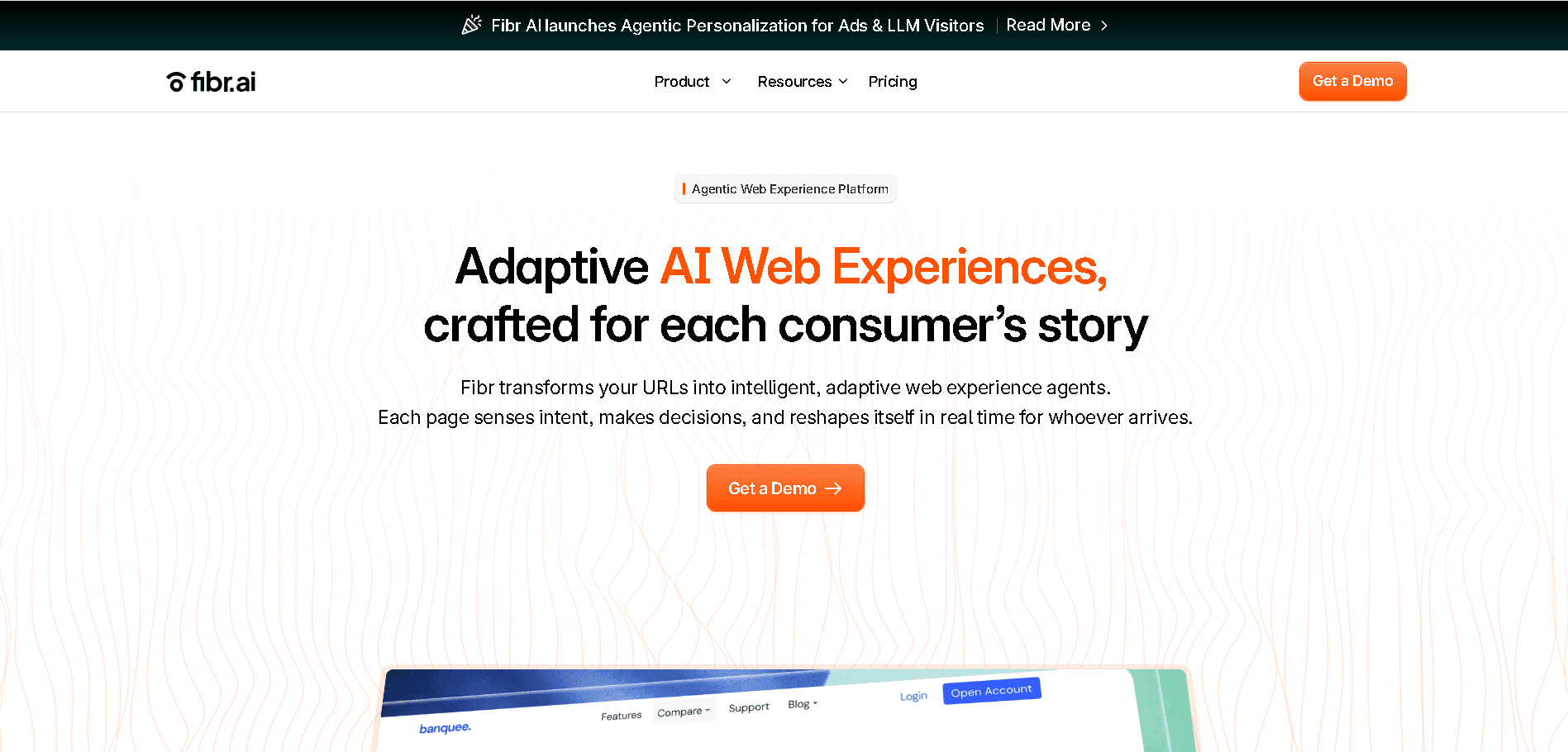
Modern marketing campaigns are highly personalized, but most websites still deliver the same experience to every visitor.
Someone arriving from a high-intent Google Ad, a lifecycle email, or an AI assistant often lands on a generic URL that ignores the context behind the click. That disconnect weakens message continuity and creates friction at the point where conversions matter most.
Fibr AI takes a fundamentally different approach from traditional conversion rate optimization tools. It acts as an Agentic Experience Layer that sits on top of your existing website and decodes visitor signals such as traffic source, intent, location, device, journey stage, and previous interactions.
Then, Fibr AI rewrites key elements of the experience before the URL loads. The platform continuously generates, learns from, and scales signal-matched experiences for every audience segment. You also get real-time personalization.
Key features
Agentic Experience Layer that works on top of your existing website without requiring a rebuild
Fibr AI Genesis for creating signal-matched experiences at scale
Autonomous experimentation that continuously learns from every visitor session instead of relying on fixed testing cycles
Journey personalization that adapts experiences across multiple touchpoints
LLM personalization for visitors arriving from AI assistants like ChatGPT and Claude
Ad-to-landing experience continuity that aligns messaging with campaign intent
Enterprise governance with approval workflows, zero-flicker loading, and compliance support
Pros
Eliminates lengthy manual optimization cycles through autonomous experience generation (G2)
Works well with your custom CDP setup (G2)
Helps you keep up with growth, whether you want to test different city-specific messaging or optimize CTAs (G2)
The AI suggestions with Genesis cut copywriting time (G2)
Cons
Certain third-party integrations require extra setup steps
VWO
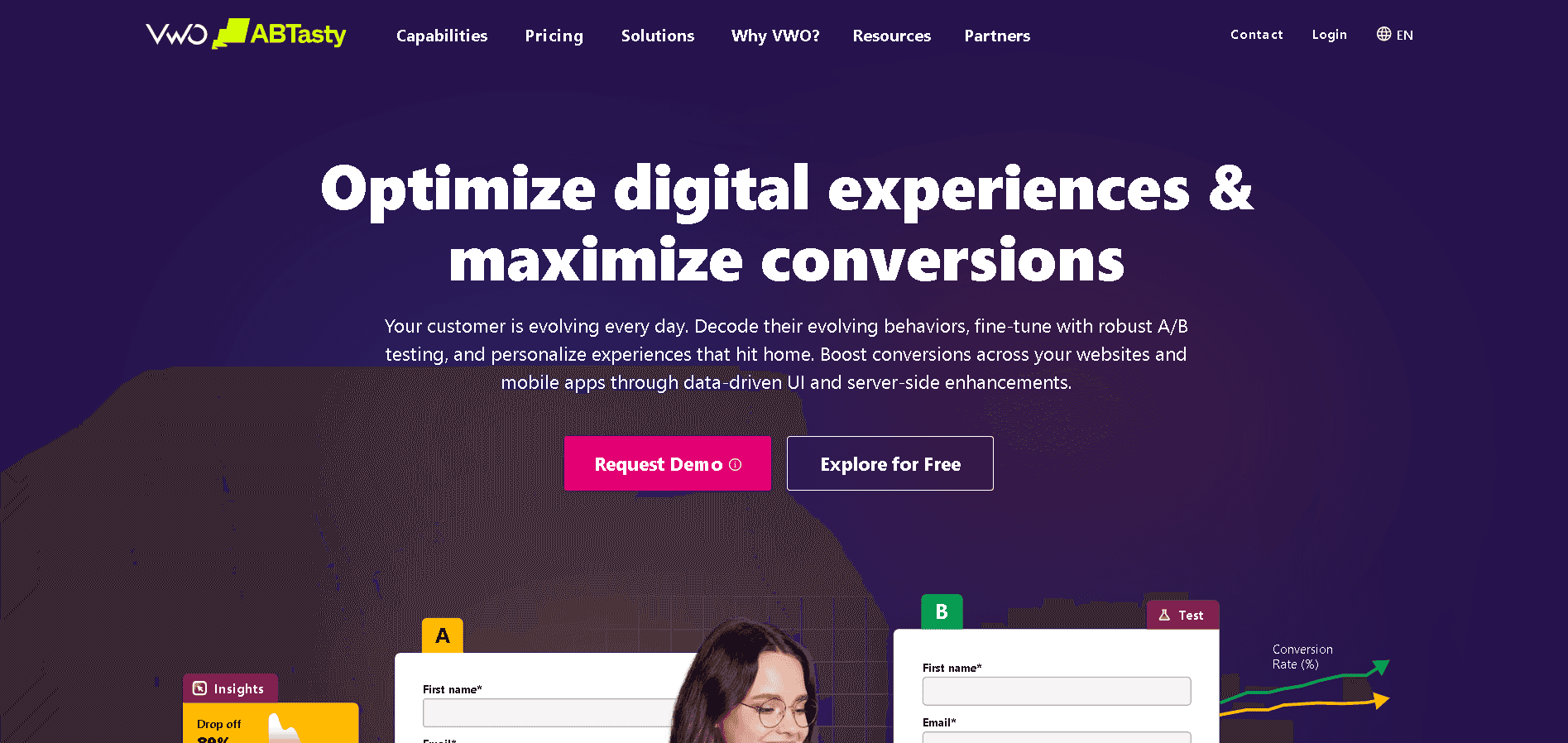
VWO combines CRO testing with behavioral analytics, showing you how visitors interact with your website before launching optimization experiments.
What sets VWO apart as one of the best CRO tools is the visual editor. It makes creating experience variations easier, while heatmaps and session recordings help uncover friction points that influence conversions.
Key features
A/B, multivariate, and split URL testing
Heatmaps and session recordings
Visual editor for creating variations
Visitor segmentation and personalization
Funnel and form analytics
Experiment reporting and statistical analysis
Pros
Makes it easy to create, launch, and analyze experiments without heavy technical involvement. (G2)
The visitor tracking feature helps choose landing pages to launch for maximum visibility (G2)
Cons
Kameleoon
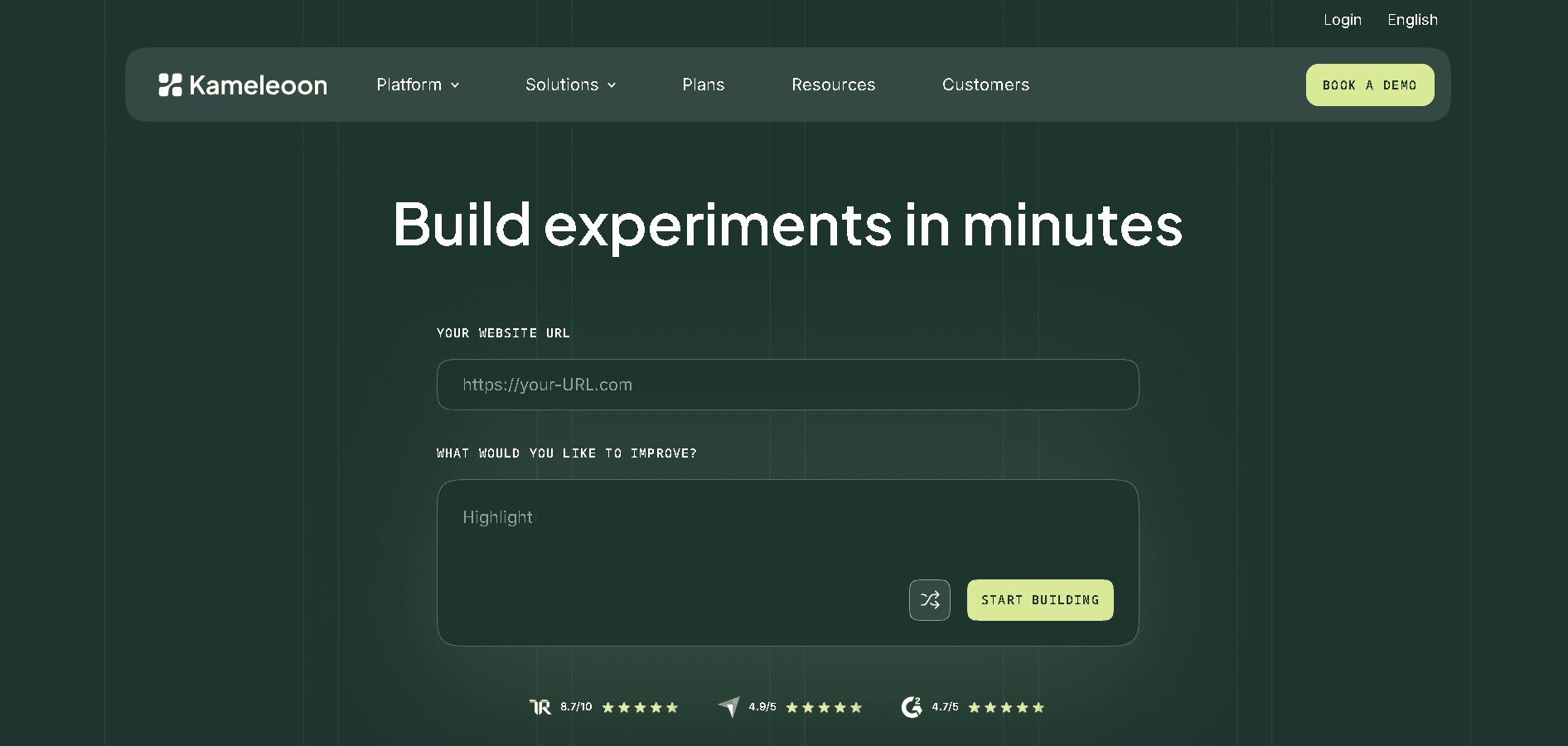
Kameleoon is an AI-powered experimentation and personalisation platform built for marketing, product, and engineering teams. Its biggest advantage is Prompt-Based Experimentation (PBX), which lets you turn ideas into live A/B tests by simply chatting with AI. You can build, launch, and analyse experiments faster while using advanced testing methods, feature flags, and personalisation from a single platform.
Key features
AI-powered Prompt-Based Experimentation to create tests using natural language
Web, feature, and mobile app experimentation
Advanced targeting and AI-driven personalisation
Multi-armed bandits, CUPED, and sequential testing
Feature flags and controlled rollouts
100+ native integrations with analytics, CRM, and data tools
Pros
Users praise the prompt customer support (G2)
You can configure it in multiple ways to suit your exact needs (G2)
The new PBX tools make complex tasks simple. (G2)
Cons
The interface has a learning curve. (G2)
Mobile testing can be complex, especially across different devices and screen sizes. (G2)
Hotjar
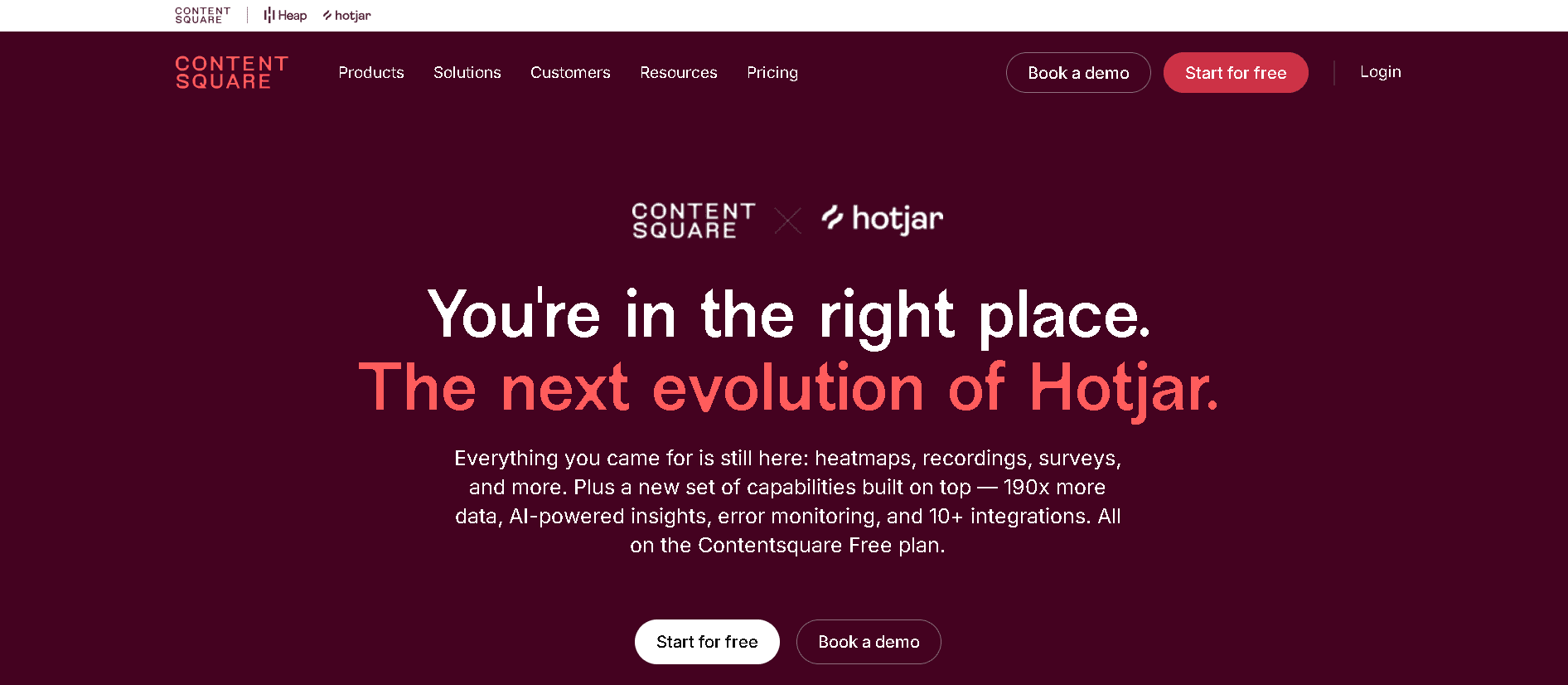
Hotjar (now Contentsquare) is CRO software that helps businesses understand why visitors behave as they do. Instead of relying only on numbers, it offers heatmaps with session recordings to show how users interact with a website and where they encounter friction.
The platform also collects feedback through surveys and interviews, giving teams deeper insights into customer behavior. What sets Hotjar apart as a CRO tool is its ability to combine behavioral analytics with direct user feedback, making it easier to identify optimization opportunities before implementing changes.
Key features
Heatmaps for click, scroll, and movement analysis
Session recordings
Feedback surveys and polls
User interviews
User behavior dashboard
Pros
It’s easy to install and use (G2)
The on-page survey and feedback widgets embed real user insights without disturbing the experience (G2)
Cons
Segmenting specific user profiles is difficult (G2)
Crazy Egg
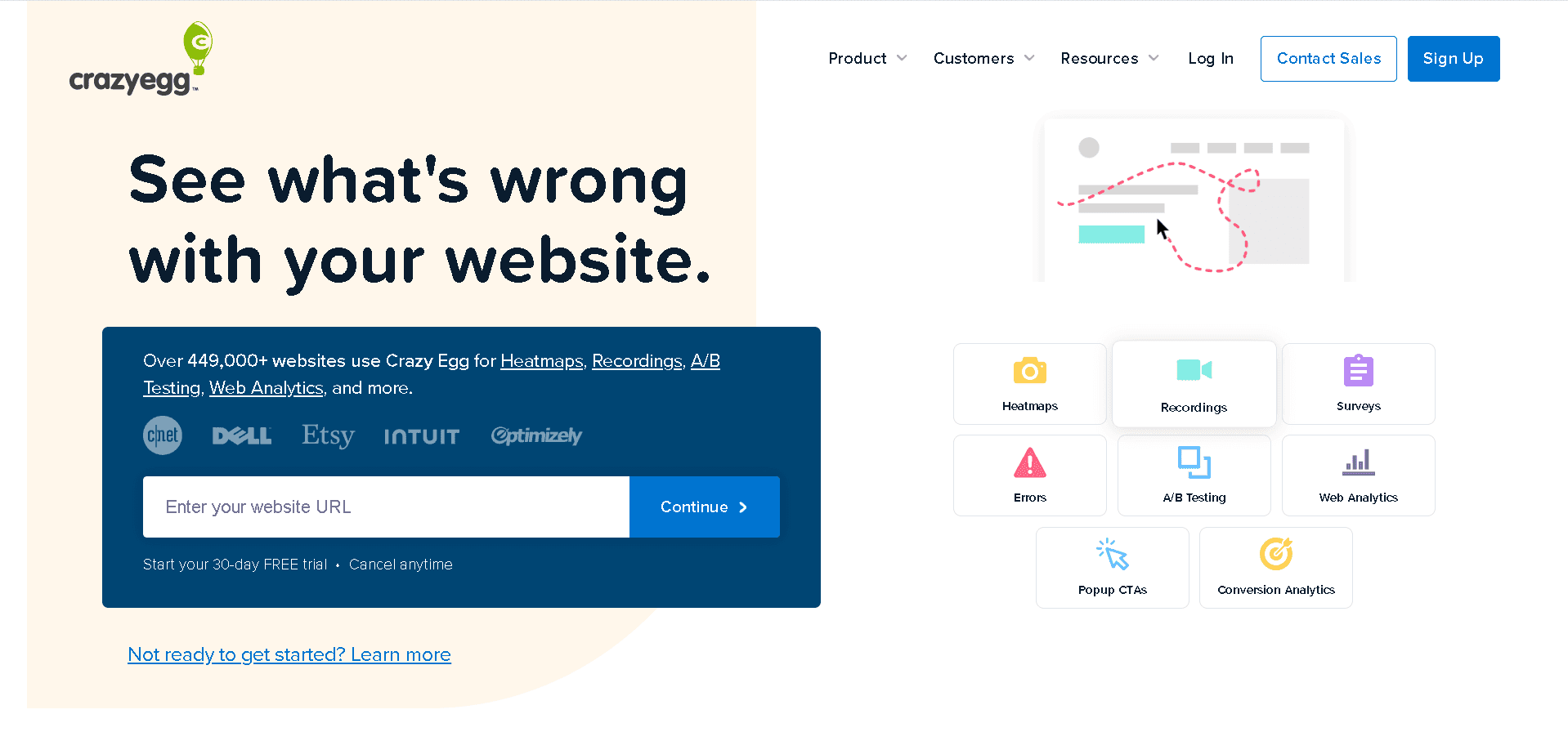
Crazy Egg is a website optimization platform that shows how visitors interact with your website. You get heatmaps with session recordings to uncover friction points, while built-in A/B testing helps validate optimization ideas from the same interface.
Key features
Heatmaps and scroll maps
Session recordings
A/B testing
Traffic source analysis
Error tracking
Snapshots for page performance insights
Pros
Feature-packed yet affordable for small businesses too (G2)
Quick to set up new trackers on this CRO platform (G2)
Cons
You can’t test traffic source signals (G2)
Dynamic Yield
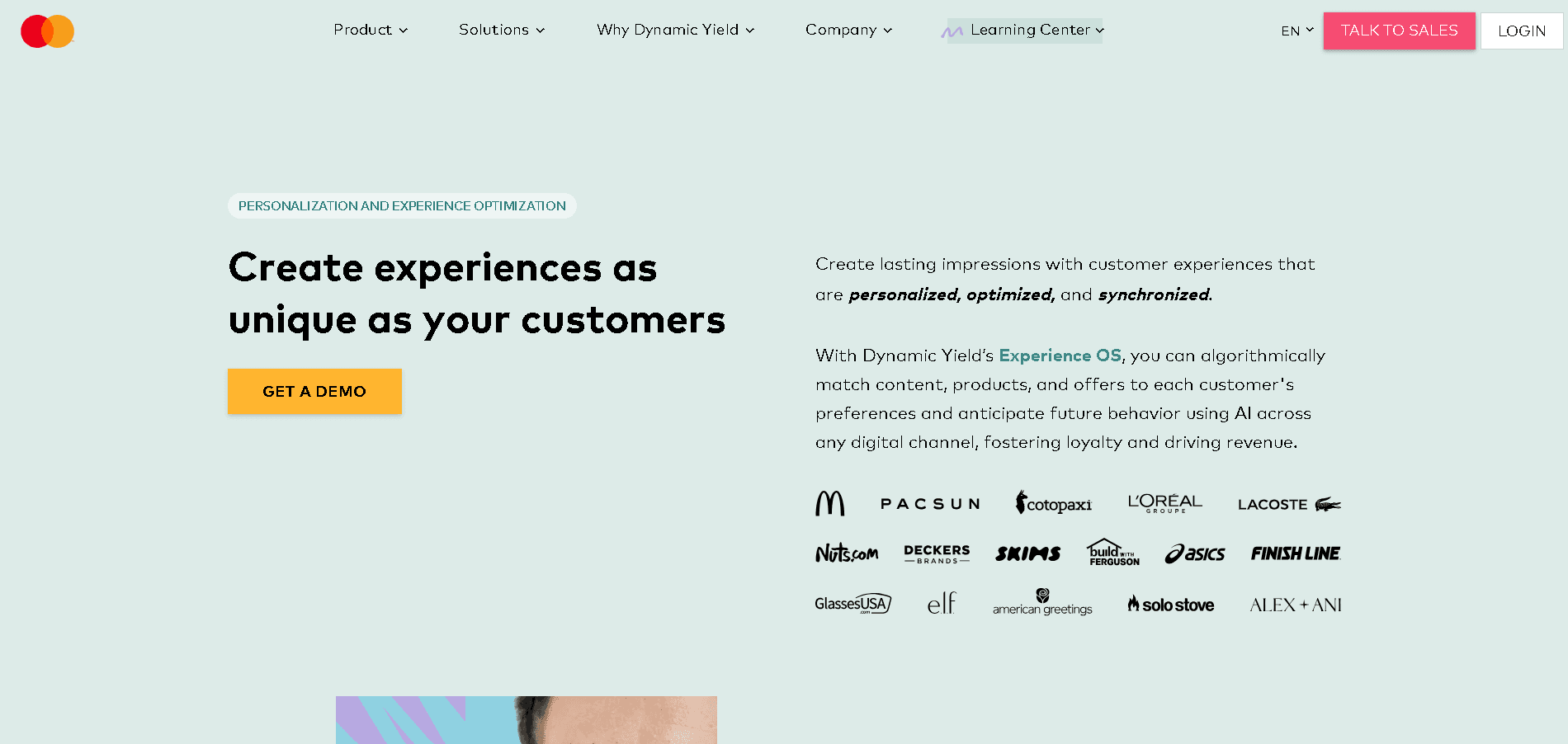
Dynamic Yield is an experience optimization platform that delivers personalized content, product recommendations, and offers across web, mobile, email, and other digital channels. You get AI-driven decisioning to tailor experiences based on customer behavior, preferences, and real-time context.
The platform also supports experimentation, audience segmentation, and recommendation engines, helping brands deliver more relevant customer journeys across every touchpoint.
Key features
AI-powered personalization
Product and content recommendations
Audience segmentation
A/B and multivariate testing
Omnichannel campaign management
Predictive targeting and decisioning
Pros
Very user-friendly with data presented in an easy-to-understand format (G2)
Templates give you new personalization ideas (G2)
Cons
Can’t automatically calculate the projected incremental annual figure (G2)
API integration isn’t extensive enough (G2)
Mixpanel
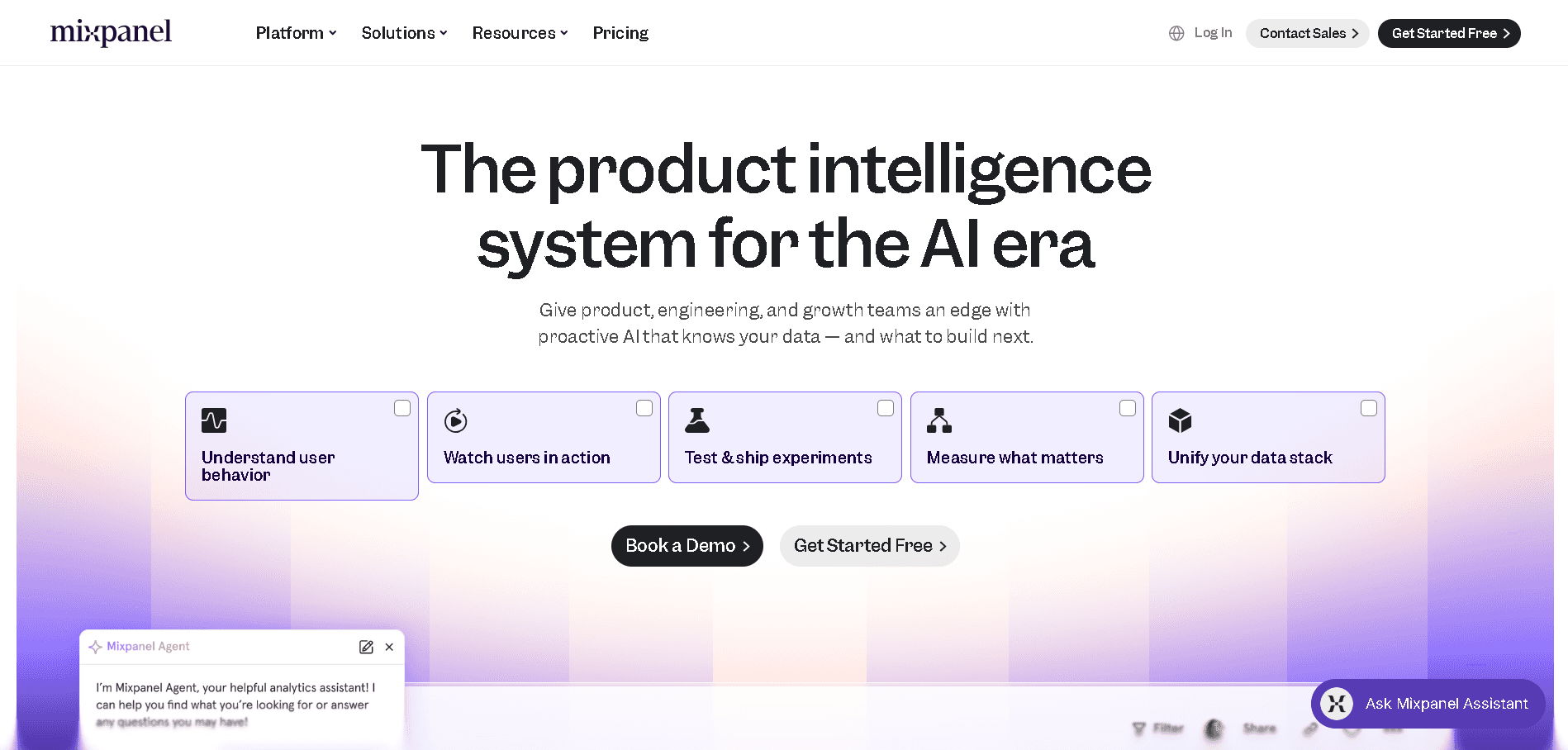
Mixpanel is a product analytics platform with CRO features like journey mapping and personalization. Beyond page views, it tracks user actions across the customer journey, making it easier to identify where people engage, drop off, or convert.
Mixpanel also integrates with experimentation and marketing platforms, so you can easily measure the impact of optimization efforts with detailed behavioral data.
Key features
Event-based product analytics
Funnel analysis and conversion tracking
Retention and cohort analysis
User segmentation
Real-time reporting dashboards
Custom reports and integrations
Pros
Powerful event-based analytics with intuitive funnel analysis that makes it easy to build, compare, and analyze conversion funnels. (G2)
Easy-to-use interface with fast, customizable reporting that helps both technical and non-technical users generate actionable insights. (G2)
Cons
CRO Tools Comparison Table
Here is a side-by-side comparison table to help you choose the right CRO tool:
Tools | Best for | Key features | AI capabilities | Pricing |
|---|---|---|---|---|
Fibr AI | AI-powered automatic personalization with intent signals | Agentic Experience Layer, autonomous experimentation, Genesis page generation, LLM traffic optimization, ad-to-landing message matching | Autonomous experimentation, real-time personalization, AI-generated landing pages | Custom |
VWO | Website testing and optimization | A/B testing, multivariate testing, heatmaps, session recordings, visual editor | AI-assisted experiment creation and optimization insights | Custom |
Kameleoon | Marketing and product teams that want to launch experiments faster with AI. | A/B testing, feature experimentation, feature flags, web and mobile experimentation, AI-powered personalisation, advanced statistical methods, 100+ integrations | Prompt-Based Experimentation (PBX), AI-generated experiments, AI-driven personalisation, AI-powered insights | Starts from $495/month |
Hotjar | User behavior analysis | Heatmaps, session recordings, surveys, user interviews, funnel analysis | Session summaries | $49/month |
Crazy Egg | Heatmaps and website optimization | Heatmaps, scroll maps, session recordings, A/B testing, error tracking | Basic AI-assisted insights | Custom |
Dynamic Yield | Enterprise personalization | AI-driven recommendations, audience segmentation, omnichannel personalization, experimentation | Predictive targeting, AI-powered decisioning, personalization engine | Custom |
Mixpanel | Product analytics and funnel analysis | Event tracking, funnel analysis, retention reports, user segmentation, custom dashboards | AI-assisted analytics and insight generation | Custom |
Key Features to Look For In a CRO Tool
The right CRO platform does much more than help you run A/B tests. It should help you understand visitor behavior, identify what needs improvement, launch experiments quickly, and measure results with confidence. Here are the features that make the biggest difference.
AI experimentation
Creating test ideas, building variations, and deciding what to test first can take weeks. AI speeds up that process by analyzing user behavior, spotting optimization opportunities, and even generating test variations for headlines, CTAs, layouts, or messaging.
Some advanced platforms also prioritize experiments based on expected impact, reducing the time spent guessing what might work. Instead of running random tests, you can focus on changes that have a higher chance of improving conversions.
Personalization
Not every visitor arrives with the same intent. Someone clicking a paid ad expects a different experience than a returning customer or an organic visitor.
Personalization lets you tailor landing pages, product recommendations, messaging, offers, or CTAs based on traffic source, location, device, audience segment, or previous behavior. When visitors see content that matches their needs, they spend less time searching for information and more time taking action.
Heatmaps and session replay
Analytics tell you what happened. Heatmaps and session recordings help you understand why it happened.
Heatmaps show where visitors click, scroll, and spend the most attention. Session replays let you watch real user journeys to uncover hesitation, confusion, or friction that numbers alone cannot explain.
These insights reveal problems like ignored CTAs, distracting page elements, confusing navigation, or forms that cause visitors to abandon the page. Instead of relying on assumptions, you can identify issues backed by real user behavior.
Analytics
Testing without reliable data quickly turns into guesswork. Built-in analytics should help you track conversion rates, engagement, bounce rates, revenue, and other metrics that matter to your business.
The best platforms also let you segment results by traffic source, audience, device, campaign, or geography. That extra layer of detail helps you understand whether an experiment improved performance across all visitors or only for specific segments.
Visual editor
A visual editor lets you build and modify page variations without depending on developers for every change.
Marketing teams can update headlines, images, buttons, layouts, or forms directly through a drag-and-drop interface. Faster implementation means you can launch more experiments, learn faster, and reduce the backlog waiting for engineering support.
Integrations
Your CRO platform should fit into the tools you already use, not the other way around.
Look for integrations with analytics platforms, CRM software, advertising platforms, marketing automation tools, customer data platforms, and content management systems. Connected data gives you a more complete view of the customer journey and makes experiment results easier to analyze.
Reporting
Running experiments is only useful if you can clearly understand the outcomes.
Strong reporting dashboards should show performance trends, conversion lifts, audience breakdowns, revenue impact, and experiment history in an easy-to-interpret way. Clear reporting also helps you share results with stakeholders and decide which winning variations deserve a permanent rollout.
Statistical significance
An experiment does not become successful simply because one variation performs better after a few days. Statistical significance helps determine whether the difference is likely due to the changes you made rather than random chance.
A good CRO platform automatically calculates confidence levels and alerts you when enough data has been collected to make a reliable decision. This prevents you from ending experiments too early and making costly decisions based on incomplete evidence.
Key Features to Look For In a CRO Tool
What is a CRO tool?
A CRO tool helps you improve the percentage of website visitors who complete a desired action, such as making a purchase, signing up, or requesting a demo. It provides data, testing, and optimization features that help you identify friction and validate changes before making them permanent.
Which CRO tool is best for ecommerce?
If you want to automate experimentation and deliver personalized shopping experiences, Fibr AI is one of the best CRO tools for ecommerce. It dynamically adapts landing pages based on visitor intent, traffic source, location, and other signals while continuously testing new variations.
What's the difference between A/B testing and personalization?
The difference between A/B testing and personalization is that A/B testing compares two or more versions of a page to determine which one performs better for a broad audience. However, personalization delivers different experiences to different visitor segments based on factors such as location, traffic source, device, or past behavior, making each experience more relevant.
Are free CRO tools worth using?
Yes, free CRO tools are a good starting point for understanding visitor behavior and running basic experiments. However, they often come with limits on traffic, features, integrations, or reporting. As your optimization program grows, a paid platform usually offers greater flexibility and deeper insights.
Can small businesses benefit from CRO software?
Yes, small businesses can benefit from CRO software. With the right tool, you often see significant improvements because even small increases in conversion rates can generate more leads or sales without increasing advertising spend. Many CRO platforms also offer free plans or affordable pricing, making them accessible for growing businesses.





Meenal Chirana
Content Marketing Manager
Meenal Chirana, Content Marketer at Fibr, brings five years of experience in the content field to the team. Her passion for creating engaging content is matched only by her expertise in writing, SEO and content marketing . Passionate about all things content and digital marketing, she is always on the lookout for innovative ways to connect with audiences and elevate brands.
Read summarized version with
TL;DR
Conversion rate optimization tools help you identify why visitors are not converting and validate improvements through data instead of assumptions.
Different tools solve different problems, from A/B testing and personalization to heatmaps, session recordings, analytics, and user feedback.
The best CRO platform depends on your goals, technical requirements, team size, and the level of experimentation you plan to run.
We evaluated every tool based on ease of use, AI capabilities, reporting, integrations, customer reviews, scalability, and overall value for money.
If you want to automate experimentation and deliver personalized experiences from a single platform, Fibr AI stands out with its AI-powered experience generation, autonomous testing, and signal-based personalization.
Introduction
Every visitor who lands on your website has the potential to become a customer. Yet, getting people to convert is rarely as simple as driving more traffic. You tweak headlines, redesign landing pages, shorten forms, and launch new campaigns, but conversions still refuse to move.
The real challenge is knowing what is holding visitors back and which changes will actually make a difference. That is where the right CRO tool becomes invaluable.
So, we evaluated hundreds of platforms and picked out the 7 best conversion rate optimization tools. Whether you are a small business or an enterprise, you will find a platform that aligns with your goals, simplifies experimentation, and converts more of your existing traffic into paying customers.
What Are Conversion Rate Optimization Tools?
Conversion rate optimization tools help you understand how visitors interact with your website, identify what prevents them from converting, and test changes that improve performance. Instead of relying on assumptions, these tools give you data and experimentation capabilities to make informed decisions.
You might notice high traffic but low conversions, visitors abandoning forms, shoppers leaving at checkout, or landing pages that fail to generate leads. CRO tools help uncover the reasons behind these issues, making it easier to prioritize improvements that have a measurable impact.
Most CRO tools fall into one or more of these categories:
A/B testing tools compare different versions of a page to identify which one delivers better results.
Personalization tools tailor content, offers, or messaging to different audience segments based on factors such as location, traffic source, or user behavior.
Heatmaps and session replay tools show where visitors click, scroll, and hesitate, helping you spot usability issues and friction points.
Analytics tools track metrics such as conversions, engagement, bounce rates, and user journeys to reveal performance trends.
Surveys and feedback tools collect direct input from visitors, giving you insights that behavioral data alone cannot provide.
Many businesses use multiple CRO tools together because no single platform excels at every stage of optimization.
An analytics tool might reveal that visitors are leaving a page early, while heatmaps explain where they get stuck.
An A/B testing platform can validate a solution.
And a personalization tool can deliver different experiences to different audiences after the winning variation is identified.
However, we have found a few options that stand out for their excellent CRO feature lists.
For example, Fibr AI automates the entire process as an agentic layer. It scans intent, location, URL, and other signals to dynamically update your landing pages. All ads lead to highly personalized pages, so there is never a mismatch in intent and messaging. Find out more on our toll snippet!
How We Chose These CRO Tools
Every CRO platform promises better conversions, faster testing, and deeper insights. In reality, the experience varies significantly from one tool to another. Our evaluation is based on the factors with the biggest impact on day-to-day optimization rather than long feature lists and marketing claims:
Ease of use was the first thing we considered. We looked for tools with intuitive interfaces, straightforward workflows, and features that reduce the learning curve for marketers, product teams, and analysts.
AI capabilities also played an important role. We prioritized platforms that use AI to solve practical problems, such as identifying testing opportunities, generating experiment ideas, personalizing experiences, or analyzing results.
Reporting was another key consideration. Clear dashboards, reliable metrics, and actionable insights make it easier to understand what is driving conversions. We favored platforms that present experiment outcomes in a way that supports confident decision-making without requiring extensive manual analysis.
Since CRO rarely happens in isolation, integrations were equally important. We gave preference to tools that connect smoothly with analytics platforms, CRMs, marketing automation software, content management systems, and other products commonly used in a digital marketing stack.
Customer reviews on G2 helped us understand how these platforms perform beyond product demos. We looked for recurring feedback about reliability, customer support, implementation experience, and long-term satisfaction instead of focusing on isolated opinions.
Scalability was another deciding factor. Some tools work well for small businesses but become limiting as traffic, experiments, and teams grow. We included platforms that can support organizations at different stages without requiring a complete migration later.
Finally, we considered value for money. The lowest-priced tool is not always the best investment. We evaluated whether each platform delivers enough capabilities, flexibility, and support to justify its pricing, helping businesses choose a solution that fits both their current needs and future growth.
7 Best Conversion Rate Optimization Tools
Here is a list of the best CRO software worth looking into:
Fibr AI
Modern marketing campaigns are highly personalized, but most websites still deliver the same experience to every visitor.
Someone arriving from a high-intent Google Ad, a lifecycle email, or an AI assistant often lands on a generic URL that ignores the context behind the click. That disconnect weakens message continuity and creates friction at the point where conversions matter most.
Fibr AI takes a fundamentally different approach from traditional conversion rate optimization tools. It acts as an Agentic Experience Layer that sits on top of your existing website and decodes visitor signals such as traffic source, intent, location, device, journey stage, and previous interactions.
Then, Fibr AI rewrites key elements of the experience before the URL loads. The platform continuously generates, learns from, and scales signal-matched experiences for every audience segment. You also get real-time personalization.
Key features
Agentic Experience Layer that works on top of your existing website without requiring a rebuild
Fibr AI Genesis for creating signal-matched experiences at scale
Autonomous experimentation that continuously learns from every visitor session instead of relying on fixed testing cycles
Journey personalization that adapts experiences across multiple touchpoints
LLM personalization for visitors arriving from AI assistants like ChatGPT and Claude
Ad-to-landing experience continuity that aligns messaging with campaign intent
Enterprise governance with approval workflows, zero-flicker loading, and compliance support
Pros
Eliminates lengthy manual optimization cycles through autonomous experience generation (G2)
Works well with your custom CDP setup (G2)
Helps you keep up with growth, whether you want to test different city-specific messaging or optimize CTAs (G2)
The AI suggestions with Genesis cut copywriting time (G2)
Cons
Certain third-party integrations require extra setup steps
VWO
VWO combines CRO testing with behavioral analytics, showing you how visitors interact with your website before launching optimization experiments.
What sets VWO apart as one of the best CRO tools is the visual editor. It makes creating experience variations easier, while heatmaps and session recordings help uncover friction points that influence conversions.
Key features
A/B, multivariate, and split URL testing
Heatmaps and session recordings
Visual editor for creating variations
Visitor segmentation and personalization
Funnel and form analytics
Experiment reporting and statistical analysis
Pros
Makes it easy to create, launch, and analyze experiments without heavy technical involvement. (G2)
The visitor tracking feature helps choose landing pages to launch for maximum visibility (G2)
Cons
Kameleoon
Kameleoon is an AI-powered experimentation and personalisation platform built for marketing, product, and engineering teams. Its biggest advantage is Prompt-Based Experimentation (PBX), which lets you turn ideas into live A/B tests by simply chatting with AI. You can build, launch, and analyse experiments faster while using advanced testing methods, feature flags, and personalisation from a single platform.
Key features
AI-powered Prompt-Based Experimentation to create tests using natural language
Web, feature, and mobile app experimentation
Advanced targeting and AI-driven personalisation
Multi-armed bandits, CUPED, and sequential testing
Feature flags and controlled rollouts
100+ native integrations with analytics, CRM, and data tools
Pros
Users praise the prompt customer support (G2)
You can configure it in multiple ways to suit your exact needs (G2)
The new PBX tools make complex tasks simple. (G2)
Cons
The interface has a learning curve. (G2)
Mobile testing can be complex, especially across different devices and screen sizes. (G2)
Hotjar
Hotjar (now Contentsquare) is CRO software that helps businesses understand why visitors behave as they do. Instead of relying only on numbers, it offers heatmaps with session recordings to show how users interact with a website and where they encounter friction.
The platform also collects feedback through surveys and interviews, giving teams deeper insights into customer behavior. What sets Hotjar apart as a CRO tool is its ability to combine behavioral analytics with direct user feedback, making it easier to identify optimization opportunities before implementing changes.
Key features
Heatmaps for click, scroll, and movement analysis
Session recordings
Feedback surveys and polls
User interviews
User behavior dashboard
Pros
It’s easy to install and use (G2)
The on-page survey and feedback widgets embed real user insights without disturbing the experience (G2)
Cons
Segmenting specific user profiles is difficult (G2)
Crazy Egg
Crazy Egg is a website optimization platform that shows how visitors interact with your website. You get heatmaps with session recordings to uncover friction points, while built-in A/B testing helps validate optimization ideas from the same interface.
Key features
Heatmaps and scroll maps
Session recordings
A/B testing
Traffic source analysis
Error tracking
Snapshots for page performance insights
Pros
Feature-packed yet affordable for small businesses too (G2)
Quick to set up new trackers on this CRO platform (G2)
Cons
You can’t test traffic source signals (G2)
Dynamic Yield
Dynamic Yield is an experience optimization platform that delivers personalized content, product recommendations, and offers across web, mobile, email, and other digital channels. You get AI-driven decisioning to tailor experiences based on customer behavior, preferences, and real-time context.
The platform also supports experimentation, audience segmentation, and recommendation engines, helping brands deliver more relevant customer journeys across every touchpoint.
Key features
AI-powered personalization
Product and content recommendations
Audience segmentation
A/B and multivariate testing
Omnichannel campaign management
Predictive targeting and decisioning
Pros
Very user-friendly with data presented in an easy-to-understand format (G2)
Templates give you new personalization ideas (G2)
Cons
Can’t automatically calculate the projected incremental annual figure (G2)
API integration isn’t extensive enough (G2)
Mixpanel
Mixpanel is a product analytics platform with CRO features like journey mapping and personalization. Beyond page views, it tracks user actions across the customer journey, making it easier to identify where people engage, drop off, or convert.
Mixpanel also integrates with experimentation and marketing platforms, so you can easily measure the impact of optimization efforts with detailed behavioral data.
Key features
Event-based product analytics
Funnel analysis and conversion tracking
Retention and cohort analysis
User segmentation
Real-time reporting dashboards
Custom reports and integrations
Pros
Powerful event-based analytics with intuitive funnel analysis that makes it easy to build, compare, and analyze conversion funnels. (G2)
Easy-to-use interface with fast, customizable reporting that helps both technical and non-technical users generate actionable insights. (G2)
Cons
CRO Tools Comparison Table
Here is a side-by-side comparison table to help you choose the right CRO tool:
Tools | Best for | Key features | AI capabilities | Pricing |
|---|---|---|---|---|
Fibr AI | AI-powered automatic personalization with intent signals | Agentic Experience Layer, autonomous experimentation, Genesis page generation, LLM traffic optimization, ad-to-landing message matching | Autonomous experimentation, real-time personalization, AI-generated landing pages | Custom |
VWO | Website testing and optimization | A/B testing, multivariate testing, heatmaps, session recordings, visual editor | AI-assisted experiment creation and optimization insights | Custom |
Kameleoon | Marketing and product teams that want to launch experiments faster with AI. | A/B testing, feature experimentation, feature flags, web and mobile experimentation, AI-powered personalisation, advanced statistical methods, 100+ integrations | Prompt-Based Experimentation (PBX), AI-generated experiments, AI-driven personalisation, AI-powered insights | Starts from $495/month |
Hotjar | User behavior analysis | Heatmaps, session recordings, surveys, user interviews, funnel analysis | Session summaries | $49/month |
Crazy Egg | Heatmaps and website optimization | Heatmaps, scroll maps, session recordings, A/B testing, error tracking | Basic AI-assisted insights | Custom |
Dynamic Yield | Enterprise personalization | AI-driven recommendations, audience segmentation, omnichannel personalization, experimentation | Predictive targeting, AI-powered decisioning, personalization engine | Custom |
Mixpanel | Product analytics and funnel analysis | Event tracking, funnel analysis, retention reports, user segmentation, custom dashboards | AI-assisted analytics and insight generation | Custom |
Key Features to Look For In a CRO Tool
The right CRO platform does much more than help you run A/B tests. It should help you understand visitor behavior, identify what needs improvement, launch experiments quickly, and measure results with confidence. Here are the features that make the biggest difference.
AI experimentation
Creating test ideas, building variations, and deciding what to test first can take weeks. AI speeds up that process by analyzing user behavior, spotting optimization opportunities, and even generating test variations for headlines, CTAs, layouts, or messaging.
Some advanced platforms also prioritize experiments based on expected impact, reducing the time spent guessing what might work. Instead of running random tests, you can focus on changes that have a higher chance of improving conversions.
Personalization
Not every visitor arrives with the same intent. Someone clicking a paid ad expects a different experience than a returning customer or an organic visitor.
Personalization lets you tailor landing pages, product recommendations, messaging, offers, or CTAs based on traffic source, location, device, audience segment, or previous behavior. When visitors see content that matches their needs, they spend less time searching for information and more time taking action.
Heatmaps and session replay
Analytics tell you what happened. Heatmaps and session recordings help you understand why it happened.
Heatmaps show where visitors click, scroll, and spend the most attention. Session replays let you watch real user journeys to uncover hesitation, confusion, or friction that numbers alone cannot explain.
These insights reveal problems like ignored CTAs, distracting page elements, confusing navigation, or forms that cause visitors to abandon the page. Instead of relying on assumptions, you can identify issues backed by real user behavior.
Analytics
Testing without reliable data quickly turns into guesswork. Built-in analytics should help you track conversion rates, engagement, bounce rates, revenue, and other metrics that matter to your business.
The best platforms also let you segment results by traffic source, audience, device, campaign, or geography. That extra layer of detail helps you understand whether an experiment improved performance across all visitors or only for specific segments.
Visual editor
A visual editor lets you build and modify page variations without depending on developers for every change.
Marketing teams can update headlines, images, buttons, layouts, or forms directly through a drag-and-drop interface. Faster implementation means you can launch more experiments, learn faster, and reduce the backlog waiting for engineering support.
Integrations
Your CRO platform should fit into the tools you already use, not the other way around.
Look for integrations with analytics platforms, CRM software, advertising platforms, marketing automation tools, customer data platforms, and content management systems. Connected data gives you a more complete view of the customer journey and makes experiment results easier to analyze.
Reporting
Running experiments is only useful if you can clearly understand the outcomes.
Strong reporting dashboards should show performance trends, conversion lifts, audience breakdowns, revenue impact, and experiment history in an easy-to-interpret way. Clear reporting also helps you share results with stakeholders and decide which winning variations deserve a permanent rollout.
Statistical significance
An experiment does not become successful simply because one variation performs better after a few days. Statistical significance helps determine whether the difference is likely due to the changes you made rather than random chance.
A good CRO platform automatically calculates confidence levels and alerts you when enough data has been collected to make a reliable decision. This prevents you from ending experiments too early and making costly decisions based on incomplete evidence.
Key Features to Look For In a CRO Tool
What is a CRO tool?
A CRO tool helps you improve the percentage of website visitors who complete a desired action, such as making a purchase, signing up, or requesting a demo. It provides data, testing, and optimization features that help you identify friction and validate changes before making them permanent.
Which CRO tool is best for ecommerce?
If you want to automate experimentation and deliver personalized shopping experiences, Fibr AI is one of the best CRO tools for ecommerce. It dynamically adapts landing pages based on visitor intent, traffic source, location, and other signals while continuously testing new variations.
What's the difference between A/B testing and personalization?
The difference between A/B testing and personalization is that A/B testing compares two or more versions of a page to determine which one performs better for a broad audience. However, personalization delivers different experiences to different visitor segments based on factors such as location, traffic source, device, or past behavior, making each experience more relevant.
Are free CRO tools worth using?
Yes, free CRO tools are a good starting point for understanding visitor behavior and running basic experiments. However, they often come with limits on traffic, features, integrations, or reporting. As your optimization program grows, a paid platform usually offers greater flexibility and deeper insights.
Can small businesses benefit from CRO software?
Yes, small businesses can benefit from CRO software. With the right tool, you often see significant improvements because even small increases in conversion rates can generate more leads or sales without increasing advertising spend. Many CRO platforms also offer free plans or affordable pricing, making them accessible for growing businesses.
Meenal Chirana
Content Marketing Manager
Meenal Chirana, Content Marketer at Fibr, brings five years of experience in the content field to the team. Her passion for creating engaging content is matched only by her expertise in writing, SEO and content marketing . Passionate about all things content and digital marketing, she is always on the lookout for innovative ways to connect with audiences and elevate brands.