
Read summarized version with
Introduction
Imagine that a charity organization establishes an online donation drive. They have great stories, wonderful visuals, and a strong mission, but all visitors to the donation page don't convert. Even after their best efforts, they do not achieve what they are hoping for and miss the mark. The donations are much lower than expected.
Why? Their donation page wasn't optimized for conversions.
Even with a great cause, results do not necessarily follow without a proper conversion strategy. That is where CRO software can make a difference.
CRO software is designed to help businesses optimize the site on efficiency grounds by observing the behavior of the users and providing possible amendments that would likely increase the conversion rates. Whether selling more, generating leads, or enhancing sign-ups, Conversion rate optimization services offer valuable information regarding the performance of your website and how you can look to improve it in the future.
What is CRO Software?
Conversion rate optimization software or CRO Software refers to the set of tools offered to business organizations to optimize website performance based on the visitor's behavior visiting the website. Conversion rate optimization experts use conversion rate optimization services, which is the process of improving a website to enhance visitor conversion, such as making purchases, filling in a form, or subscribing to any other type of service.
Generally, CRO software includes features like A/B testing, heatmaps, session recordings, and form analytics allowing marketers to gather data on how visitors interact with their website.
In other words, CRO software will help businesses understand what works and what does not. Understanding these aspects leads to proper decision-making, which in turn leads to better performance.
For example, A business might put two distinct headlines that appear at the top of its home page: "Start Your Free Trial Today" or "Get 20% Off Your First Purchase."
However, through the use of the A/B testing functionality provided in Conversion rate optimization Software, a business may find out, for example, that one headline is actually resulting in more conversions and thus could make decisions based on fact.
Real-Life Example of CRO Software
One recent example is Nike, which implemented CRO software tools and testing strategies to improve its checkout process. Thus, they were able to reduce cart abandonment and saw a 20% increase in completed purchases within six months from the date of deployment.
This example of real business success demonstrates how successfully applied CRO marketing can directly impact business results.
Econsultancy states that "more than 60% of companies that use A/B testing—one of the key features of CRO software, the results have been termed significant in terms of impact to conversion rates". CRO experts fine-tune from lead-generating
Their call-to-action (CTA) buttons were hard to find, buried deep under large blocks of text.
The checkout process had too many steps, leading to cart abandonment.
There is even a case where visitors did not interact with descriptions of their product, which were rather sketchy.
Using these insights, Company X recreated their landing pages and optimized checkout with big visible call-to-action buttons. Results: The conversion rate jumped to 35% and sales rose by 50% in three months.
Similarly, many organizations overlook the optimization of critical pages, such as donation pages, leading to missed opportunities. By applying similar CRO strategies used on landing pages, like improving the visibility of call-to-action buttons and streamlining the user experience, nonprofits can significantly reduce bounce rates and increase donations. For those looking to enhance their donation pages with these strategies, you can explore a donation page creator designed to help boost conversions.
The Role of CRO Software
So, what exactly is CRO software, and how does it work? CRO software is the tool that is used in the analysis of user behavior as well as testing variations of your website and optimizing for better performance. It infers from data how things are working and not working, so businesses can manage appropriate strategies.
Key Features of CRO Software
A/B Testing
A/B testing probably represents one of the most common features in CRO software. They enable businesses to test a couple of versions of a webpage to view which one performs better in terms of conversions. By running controlled experiments, businesses will now know which design elements, headlines, or calls to action work better in terms of user engagement. A/B testing is iterative and companies are constantly improving their websites.
The whole point of A/B testing is it removes the guesswork in optimization. Instead of waiting for assumptions as to what should and should not work, businesses will use actual data from users to make wiser decisions, leading to effective changes.
Heatmaps
Heat maps help you understand how your visitors behave on your website. Areas of interest to your visitors- what attracts the most clicks, scrolled sections, and areas of concentration all be represented visually. This is how marketers can ultimately figure out what element on a page is most important to eventually position those elements in a way that maximizes a conversion event.
Session Recordings
Session recordings allow the marketer to see how users are moving through the site in real time. By seeing where users click, scroll, or hesitate, businesses can identify pain points in the user journey and make necessary improvements. Session recording is especially helpful on complex pages, product pages, or checkout pages.
Personalization and Dynamic Landing Pages
Personalization is becoming progressively more crucial in the digital realm, and through CRO software, a business can create personalized experiences for visitors. For example, with dynamic landing pages, the page can adapt to the user's location, device, or previous behavior, making it more relative and converting the user's experience more efficiently. Personalized messages or offers through user's data will highly increase engagement along with conversion rates.
AI-Powered Insights
Advanced CRO software is now applying AI to further delve into the depth of businesses. AI-powered tools can analyze far larger sets of data and automatically suggest optimizations. For example, AI analytics can discover more subtle patterns in user behavior that humans may fail to notice, leading to even more accurate predictions and, therefore, better decision-making, To ensure your Mac handles all these advanced CRO tools efficiently, following a free up space on Mac guide can help keep your system running smoothly and prevent slowdowns during analysis and testing.
A Forrester study states that companies that leverage AI-powered CRO tools saw an average lift of 15% in conversion rates in just six months. Predicting user behavior and thus the giving of personal experiences is proving to be the game changer in Conversion rate optimization.
Forms Analytics
Most organizations use forms on a website to capture visitor data, whether that's through a sign-up form or purchase form. Form analytics helps the company understand how visitors interact with their forms-including time spent on each field, where visitors drop off, and what types of fields are most often skipped over.
Analyzing this information allows businesses to make their forms more streamlined and reduce friction, thereby improving conversion rates.
How to Choose the Right CRO Software for Your Business?
With so many CRO tools out there, how do you decide which one's right for your business? The simple answer: by understanding your needs and goals. Perhaps your challenge is to optimize lead-generating landing pages, enhance the user experience on your website, or simply simplify your conversion funnel - the right software can make all the difference.
Here are a few things to consider when choosing CRO software:
Ease of use: Seek ease of integration if your team is not very technologically savvy.
Scalability: Should be able to scale with your business working with an increasing level of traffic and complexity.
For actual support, you have to seek a tool that offers good customer support and resources like tutorials and guides so that you can get the most out of this.
The Role of CRO Agencies in CRO Software
While CRO software is very powerful, most businesses won't have the expertise or resources to use it effectively. This is where CRO agencies come in. These are agencies specializing in helping businesses implement conversion rate optimization strategies by providing expert guidance and using advanced CRO tools.
The services provided by such agencies range from A/B testing and user behavior analysis to website optimization and dynamic landing page creation. The businesses can only make the most out of their Conversion rate optimization software by hiring qualified CRO experts to maximize their return and retrieving measurable improvements in conversion rates.
Companies that focus on CRO services have seen conversion rates improve significantly. According to research, businesses that use CRO services are twice as likely to see a significant sales increase than those that don't.
3 Conversion Rate Optimization Agencies You Must Know About
Fibr
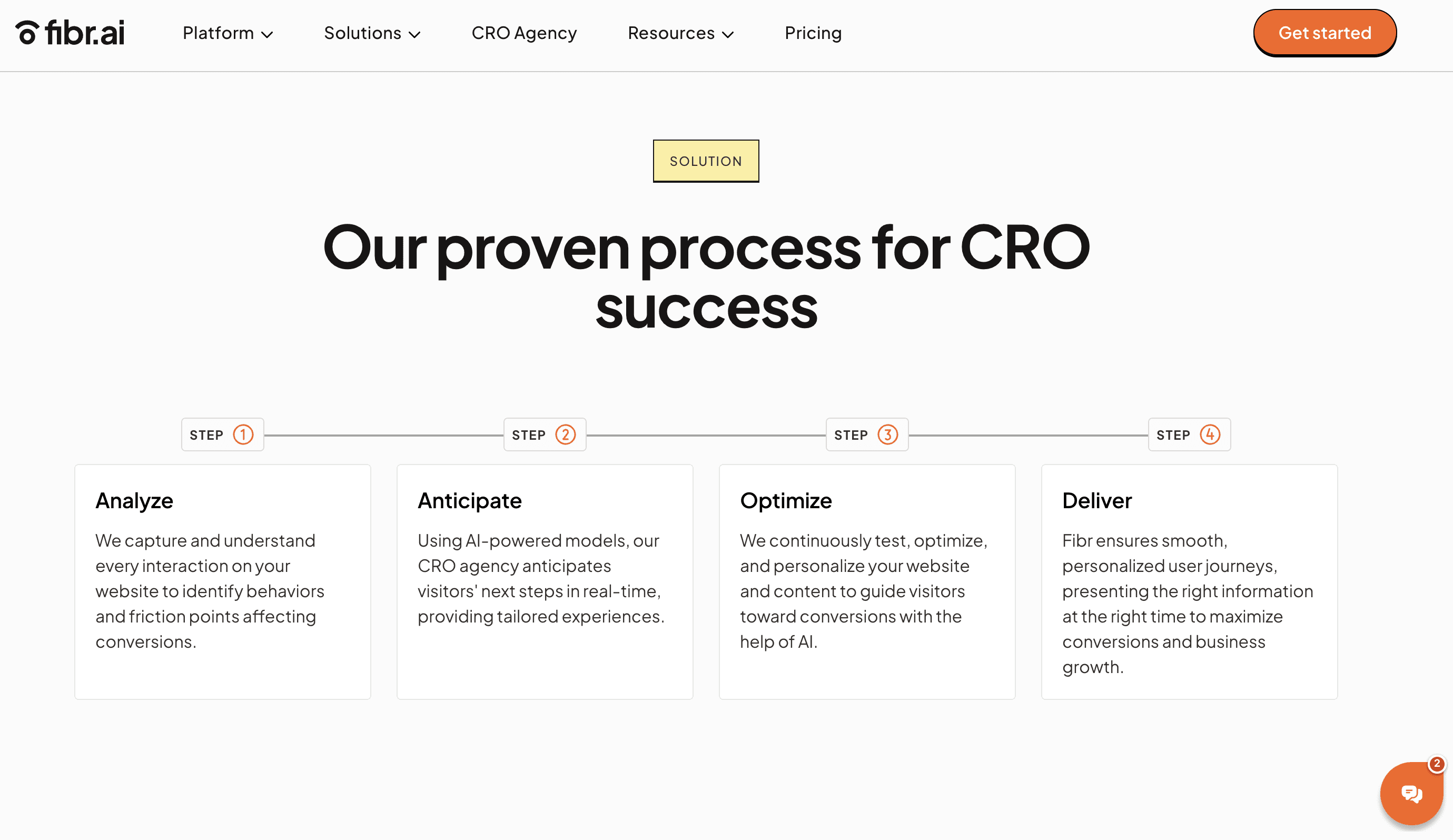
When it comes to Conversion Rate Optimization (CRO), having the right software is crucial—but software alone won’t guarantee results. This is where the expertise of a seasoned CRO agency like Fibr can truly make a difference. Fibr combines cutting-edge CRO tools with expert insights to deliver a holistic optimization approach that goes beyond just data collection.
Here’s how Fibr can help you achieve success:
CRO Audit
Fibr thorough audits identify the weak points on your conversion funnel with clear actionable insights about where improvements can be made towards boosting conversions.
Landing Page Creation
Fibr creates high-converting landing pages tailored towards your audience and campaign goals so that it aligns with the expectations of your visitors for better results.
Using advanced, AI-driven personalization, Fibr customizes the website experience for each visitor, showing them relevant content that increases engagement and conversion rates.
A/B Testing
Continuous A/B variations allow for endless optimization of the design, messaging, and structure of your website regarding identifying elements that drive the highest conversion.
User Behavior Analysis
Through the use of heatmaps, session recordings, and behavior tracking, Fibr learns extremely how visitors interact with your site at each point. Therefore, it gains an understanding of friction points occurring in your website and hence optimizes your user experience in that way.
Data and Analytics
Fibr provides you with the best quality of analytics based on KPIs and conversion metrics, so you obtain an extremely clear view of performance as well as ways towards improvement.
Conversion Funnel Analysis
Fibr evaluates every stage of your conversion funnel, from where people are dropping off to implementing targeted fixes aimed at streamlining the journey and thus improving conversions.
Growth Natives
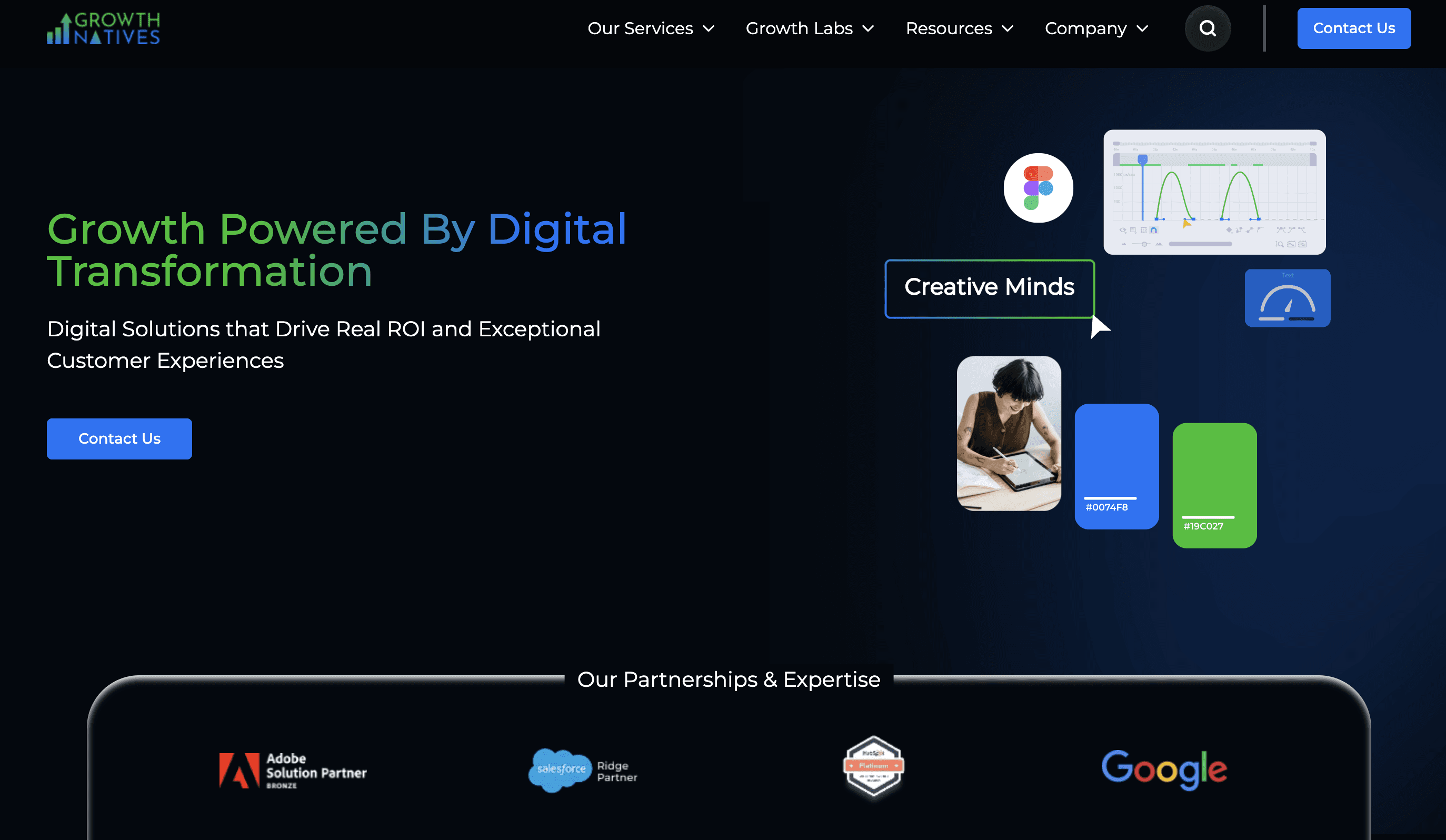
Growth Natives is a digital champion that doesn't only optimize but also converts and makes the rate a success metric. Their acumen in mixing technology with creativity reconstructs how businesses engage and get converted from the online audience.
NETGAINS
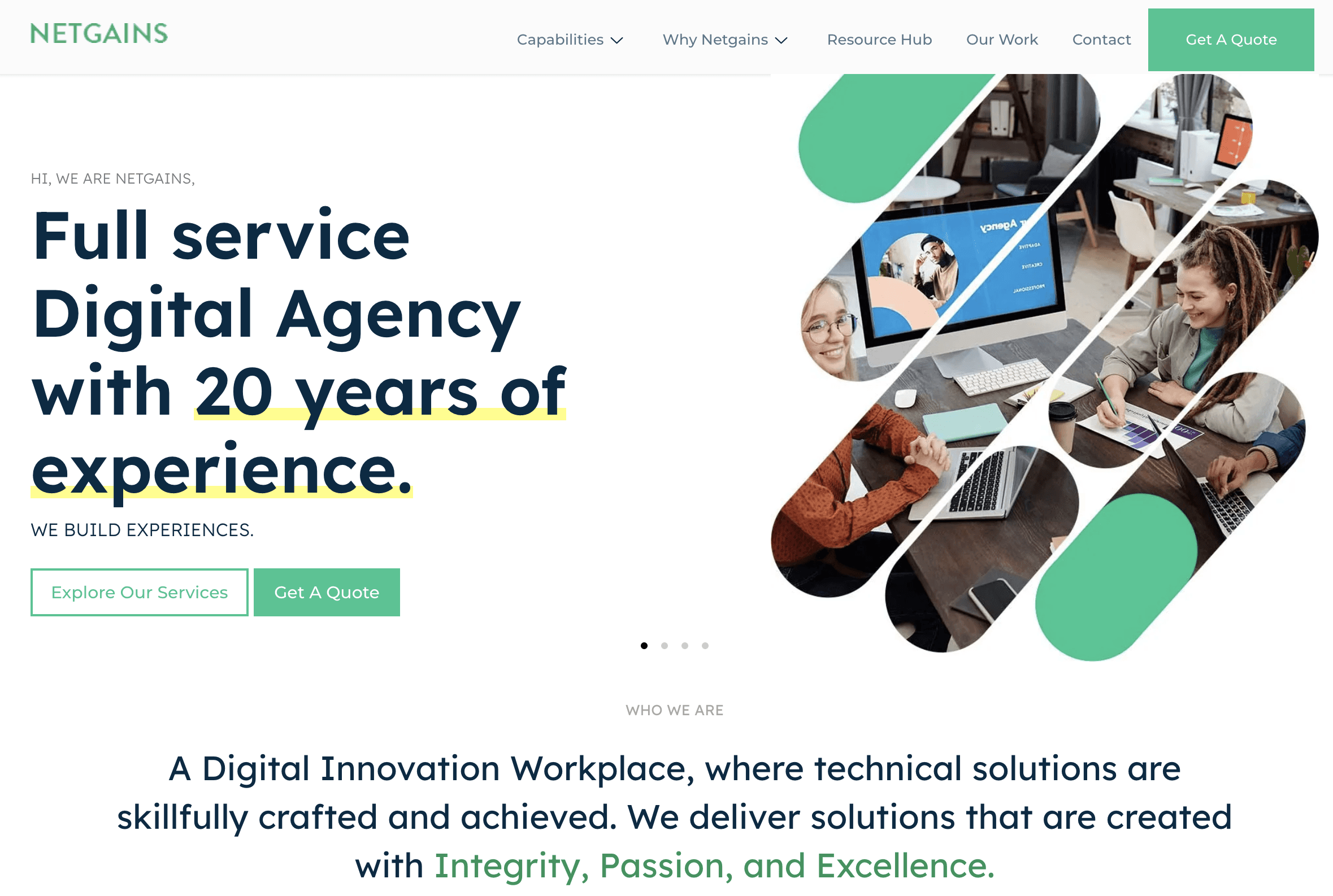
NETGAINS stands as an example of 20 years of creativity and technology brought together seamlessly. The firm specializes in conversion optimization and digital marketing but takes pride in its beacon of excellence within the digital space.
The approach is focused on retail, embracing the evolving landscape within digital trade, especially in sectors of education, energy, and government.
Summary
CRO software is one of the big assets a business can have if the need to improve its web operations arises. It equips business people with instruments that can help them analyze user behavior, test different elements of a website, and optimize their strategies.
True potential is achieved when using CRO software in tandem with expert guidance. But if you want the best results, being a reliable CRO agency like Fibr by your side can take optimization efforts to the next level.
With its expertise in CRO tools and services, Fibr can help you turn website visitors into loyal customers, driving growth and delivering lasting business success.



Ankur Goyal
CEO @ Fibr AI
Ankur Goyal, a visionary entrepreneur, is the driving force behind Fibr, a groundbreaking AI co-pilot for websites. With a dual degree from Stanford University and IIT Delhi, Ankur brings a unique blend of technical prowess and business acumen to the table. This isn't his first rodeo; Ankur is a seasoned entrepreneur with a keen understanding of consumer behavior, web dynamics, and AI. Through Fibr, he aims to revolutionize the way websites engage with users, making digital interactions smarter and more intuitive.
Read summarized version with
Introduction
Imagine that a charity organization establishes an online donation drive. They have great stories, wonderful visuals, and a strong mission, but all visitors to the donation page don't convert. Even after their best efforts, they do not achieve what they are hoping for and miss the mark. The donations are much lower than expected.
Why? Their donation page wasn't optimized for conversions.
Even with a great cause, results do not necessarily follow without a proper conversion strategy. That is where CRO software can make a difference.
CRO software is designed to help businesses optimize the site on efficiency grounds by observing the behavior of the users and providing possible amendments that would likely increase the conversion rates. Whether selling more, generating leads, or enhancing sign-ups, Conversion rate optimization services offer valuable information regarding the performance of your website and how you can look to improve it in the future.
What is CRO Software?
Conversion rate optimization software or CRO Software refers to the set of tools offered to business organizations to optimize website performance based on the visitor's behavior visiting the website. Conversion rate optimization experts use conversion rate optimization services, which is the process of improving a website to enhance visitor conversion, such as making purchases, filling in a form, or subscribing to any other type of service.
Generally, CRO software includes features like A/B testing, heatmaps, session recordings, and form analytics allowing marketers to gather data on how visitors interact with their website.
In other words, CRO software will help businesses understand what works and what does not. Understanding these aspects leads to proper decision-making, which in turn leads to better performance.
For example, A business might put two distinct headlines that appear at the top of its home page: "Start Your Free Trial Today" or "Get 20% Off Your First Purchase."
However, through the use of the A/B testing functionality provided in Conversion rate optimization Software, a business may find out, for example, that one headline is actually resulting in more conversions and thus could make decisions based on fact.
Real-Life Example of CRO Software
One recent example is Nike, which implemented CRO software tools and testing strategies to improve its checkout process. Thus, they were able to reduce cart abandonment and saw a 20% increase in completed purchases within six months from the date of deployment.
This example of real business success demonstrates how successfully applied CRO marketing can directly impact business results.
Econsultancy states that "more than 60% of companies that use A/B testing—one of the key features of CRO software, the results have been termed significant in terms of impact to conversion rates". CRO experts fine-tune from lead-generating
Their call-to-action (CTA) buttons were hard to find, buried deep under large blocks of text.
The checkout process had too many steps, leading to cart abandonment.
There is even a case where visitors did not interact with descriptions of their product, which were rather sketchy.
Using these insights, Company X recreated their landing pages and optimized checkout with big visible call-to-action buttons. Results: The conversion rate jumped to 35% and sales rose by 50% in three months.
Similarly, many organizations overlook the optimization of critical pages, such as donation pages, leading to missed opportunities. By applying similar CRO strategies used on landing pages, like improving the visibility of call-to-action buttons and streamlining the user experience, nonprofits can significantly reduce bounce rates and increase donations. For those looking to enhance their donation pages with these strategies, you can explore a donation page creator designed to help boost conversions.
The Role of CRO Software
So, what exactly is CRO software, and how does it work? CRO software is the tool that is used in the analysis of user behavior as well as testing variations of your website and optimizing for better performance. It infers from data how things are working and not working, so businesses can manage appropriate strategies.
Key Features of CRO Software
A/B Testing
A/B testing probably represents one of the most common features in CRO software. They enable businesses to test a couple of versions of a webpage to view which one performs better in terms of conversions. By running controlled experiments, businesses will now know which design elements, headlines, or calls to action work better in terms of user engagement. A/B testing is iterative and companies are constantly improving their websites.
The whole point of A/B testing is it removes the guesswork in optimization. Instead of waiting for assumptions as to what should and should not work, businesses will use actual data from users to make wiser decisions, leading to effective changes.
Heatmaps
Heat maps help you understand how your visitors behave on your website. Areas of interest to your visitors- what attracts the most clicks, scrolled sections, and areas of concentration all be represented visually. This is how marketers can ultimately figure out what element on a page is most important to eventually position those elements in a way that maximizes a conversion event.
Session Recordings
Session recordings allow the marketer to see how users are moving through the site in real time. By seeing where users click, scroll, or hesitate, businesses can identify pain points in the user journey and make necessary improvements. Session recording is especially helpful on complex pages, product pages, or checkout pages.
Personalization and Dynamic Landing Pages
Personalization is becoming progressively more crucial in the digital realm, and through CRO software, a business can create personalized experiences for visitors. For example, with dynamic landing pages, the page can adapt to the user's location, device, or previous behavior, making it more relative and converting the user's experience more efficiently. Personalized messages or offers through user's data will highly increase engagement along with conversion rates.
AI-Powered Insights
Advanced CRO software is now applying AI to further delve into the depth of businesses. AI-powered tools can analyze far larger sets of data and automatically suggest optimizations. For example, AI analytics can discover more subtle patterns in user behavior that humans may fail to notice, leading to even more accurate predictions and, therefore, better decision-making, To ensure your Mac handles all these advanced CRO tools efficiently, following a free up space on Mac guide can help keep your system running smoothly and prevent slowdowns during analysis and testing.
A Forrester study states that companies that leverage AI-powered CRO tools saw an average lift of 15% in conversion rates in just six months. Predicting user behavior and thus the giving of personal experiences is proving to be the game changer in Conversion rate optimization.
Forms Analytics
Most organizations use forms on a website to capture visitor data, whether that's through a sign-up form or purchase form. Form analytics helps the company understand how visitors interact with their forms-including time spent on each field, where visitors drop off, and what types of fields are most often skipped over.
Analyzing this information allows businesses to make their forms more streamlined and reduce friction, thereby improving conversion rates.
How to Choose the Right CRO Software for Your Business?
With so many CRO tools out there, how do you decide which one's right for your business? The simple answer: by understanding your needs and goals. Perhaps your challenge is to optimize lead-generating landing pages, enhance the user experience on your website, or simply simplify your conversion funnel - the right software can make all the difference.
Here are a few things to consider when choosing CRO software:
Ease of use: Seek ease of integration if your team is not very technologically savvy.
Scalability: Should be able to scale with your business working with an increasing level of traffic and complexity.
For actual support, you have to seek a tool that offers good customer support and resources like tutorials and guides so that you can get the most out of this.
The Role of CRO Agencies in CRO Software
While CRO software is very powerful, most businesses won't have the expertise or resources to use it effectively. This is where CRO agencies come in. These are agencies specializing in helping businesses implement conversion rate optimization strategies by providing expert guidance and using advanced CRO tools.
The services provided by such agencies range from A/B testing and user behavior analysis to website optimization and dynamic landing page creation. The businesses can only make the most out of their Conversion rate optimization software by hiring qualified CRO experts to maximize their return and retrieving measurable improvements in conversion rates.
Companies that focus on CRO services have seen conversion rates improve significantly. According to research, businesses that use CRO services are twice as likely to see a significant sales increase than those that don't.
3 Conversion Rate Optimization Agencies You Must Know About
Fibr
When it comes to Conversion Rate Optimization (CRO), having the right software is crucial—but software alone won’t guarantee results. This is where the expertise of a seasoned CRO agency like Fibr can truly make a difference. Fibr combines cutting-edge CRO tools with expert insights to deliver a holistic optimization approach that goes beyond just data collection.
Here’s how Fibr can help you achieve success:
CRO Audit
Fibr thorough audits identify the weak points on your conversion funnel with clear actionable insights about where improvements can be made towards boosting conversions.
Landing Page Creation
Fibr creates high-converting landing pages tailored towards your audience and campaign goals so that it aligns with the expectations of your visitors for better results.
Using advanced, AI-driven personalization, Fibr customizes the website experience for each visitor, showing them relevant content that increases engagement and conversion rates.
A/B Testing
Continuous A/B variations allow for endless optimization of the design, messaging, and structure of your website regarding identifying elements that drive the highest conversion.
User Behavior Analysis
Through the use of heatmaps, session recordings, and behavior tracking, Fibr learns extremely how visitors interact with your site at each point. Therefore, it gains an understanding of friction points occurring in your website and hence optimizes your user experience in that way.
Data and Analytics
Fibr provides you with the best quality of analytics based on KPIs and conversion metrics, so you obtain an extremely clear view of performance as well as ways towards improvement.
Conversion Funnel Analysis
Fibr evaluates every stage of your conversion funnel, from where people are dropping off to implementing targeted fixes aimed at streamlining the journey and thus improving conversions.
Growth Natives
Growth Natives is a digital champion that doesn't only optimize but also converts and makes the rate a success metric. Their acumen in mixing technology with creativity reconstructs how businesses engage and get converted from the online audience.
NETGAINS
NETGAINS stands as an example of 20 years of creativity and technology brought together seamlessly. The firm specializes in conversion optimization and digital marketing but takes pride in its beacon of excellence within the digital space.
The approach is focused on retail, embracing the evolving landscape within digital trade, especially in sectors of education, energy, and government.
Summary
CRO software is one of the big assets a business can have if the need to improve its web operations arises. It equips business people with instruments that can help them analyze user behavior, test different elements of a website, and optimize their strategies.
True potential is achieved when using CRO software in tandem with expert guidance. But if you want the best results, being a reliable CRO agency like Fibr by your side can take optimization efforts to the next level.
With its expertise in CRO tools and services, Fibr can help you turn website visitors into loyal customers, driving growth and delivering lasting business success.
Ankur Goyal
CEO @ Fibr AI
Ankur Goyal, a visionary entrepreneur, is the driving force behind Fibr, a groundbreaking AI co-pilot for websites. With a dual degree from Stanford University and IIT Delhi, Ankur brings a unique blend of technical prowess and business acumen to the table. This isn't his first rodeo; Ankur is a seasoned entrepreneur with a keen understanding of consumer behavior, web dynamics, and AI. Through Fibr, he aims to revolutionize the way websites engage with users, making digital interactions smarter and more intuitive.

Is your website starting every visit from zero?
Is your website starting every visit from zero?
Is your website starting every visit from zero?
Fibr gives your website the intelligence it needs right from the start
Fibr AI gives your website the
intelligence it needs right from the start
Delaware, USA
Subscribe to our newsletter for exclusive updates and insights.
By clicking submit, you agree to the terms and conditions and acknowledge the privacy policy.






Delaware, USA
Subscribe to our newsletter for exclusive updates and insights.
By clicking submit, you agree to the terms and conditions and acknowledge the privacy policy.
Delaware, USA
Subscribe to our newsletter for exclusive updates and insights.
By clicking submit, you agree to the terms and conditions and acknowledge the privacy policy.