Table of Content
Read summarized version with
Businesses rely on other businesses for software, tools, and services. The sales process, however, isn’t simple. Unlike B2C, where a single decision-maker can complete a purchase in minutes, B2B sales involve multiple stakeholders, lengthy negotiations, and high-value deals. Converting a lead into a paying customer takes time, effort, and trust.
Now, imagine adding more friction to this process. Landing pages that don’t answer the right questions, a website that lacks credibility, and a conversion path filled with unnecessary steps, these all push potential clients away. If they don’t find the information they need or doubt your reliability, they’ll look elsewhere.
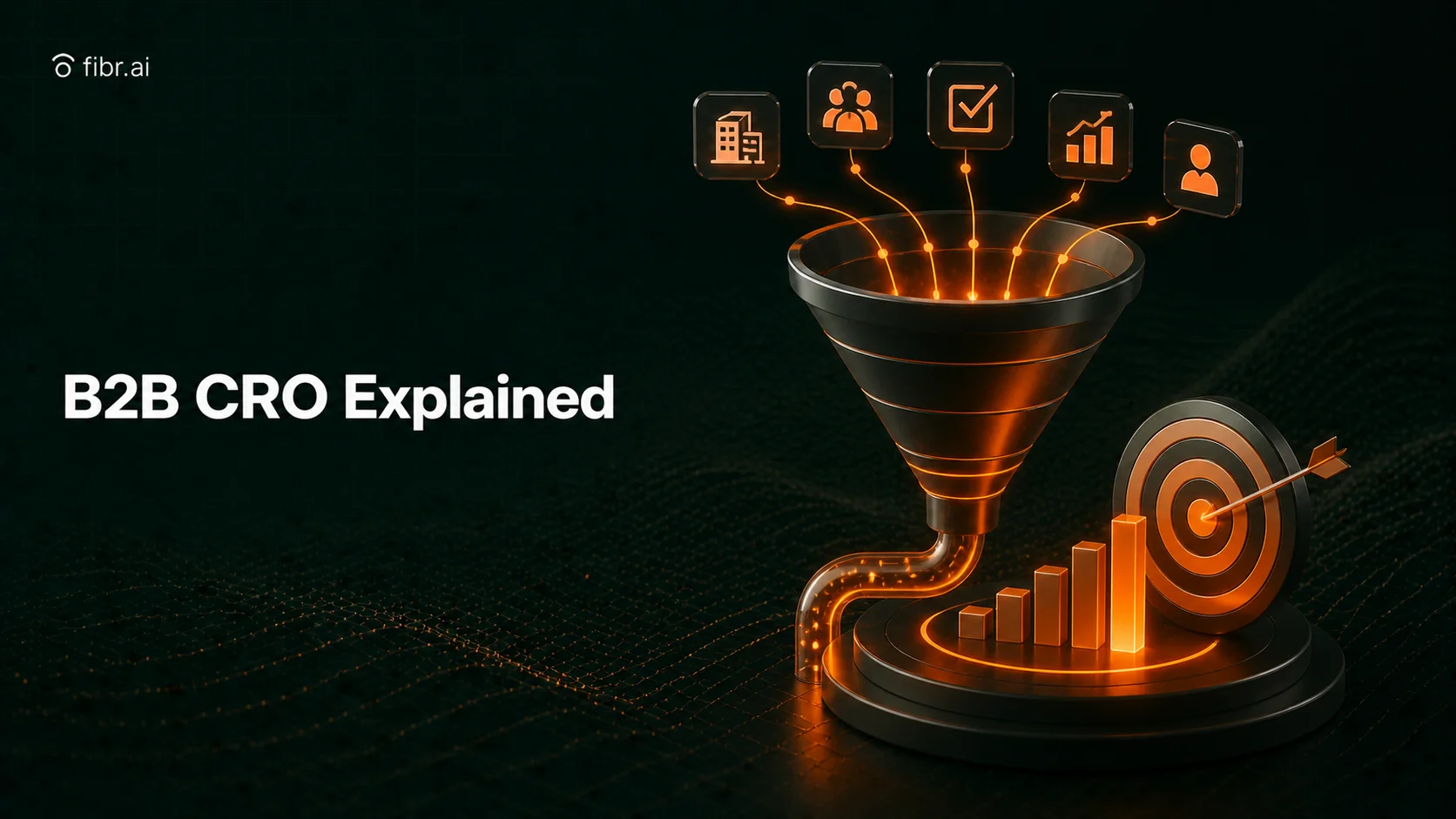
That’s where B2B conversion rate optimization (CRO) helps. It optimizes every stage of the sales funnel, from ad clicks to the final purchase, making it easier for businesses to move forward.
In this article, we explore everything you need to know about B2B conversion rate optimization, how to improve it and how using AI for automating the CRO process can help your business driver conversions.
Key Takeaways
B2B Conversion Rate Optimization (CRO) is a strategic process that improves the percentage of website visitors who complete a desired action. This involves optimizing landing pages, reducing friction, using trust signals, personalizing experiences, and testing website performance to boost conversions.
Unlike B2C, B2B CRO requires a tailored approach due to longer sales cycles, multiple decision-makers, and higher perceived risks. Effective strategies include simplifying the conversion path, demonstrating thought leadership, offering personalized demos, and leveraging AI-driven tools for conversions.
AI-powered solutions like Fibr AI automate CRO through dynamic personalization, continuous testing, and proactive site optimization. Fibr AI helps businesses create relevant user experiences, refine website elements, and ensure peak site performance to drive higher conversions.
What is B2B conversion rate optimization?
B2B conversion rate optimization is the process of increasing the number of users who complete the desired action (sign up for a trial/ subscribe/ purchase) after landing on your B2B website or landing page.
B2B conversion rate optimization is tricky because B2B sales cycles are longer and multiple decision makers are involved in a decision making process that prioritizes logic, ROI, and long-term value.
Unlike B2C, where a conversion is often a direct purchase, B2B conversions can take many forms, depending on your business goals and the stage of the buyer's journey. Here are some common B2B conversion types:
Top of the Funnel (Awareness/Interest)
Website form submissions (e.g., contact form, newsletter signup)
Downloading gated content (e.g., white papers, eBooks, case studies)
Webinar registrations
Social media engagement (e.g., shares, likes, comments)
Middle of the Funnel (Consideration/Evaluation)
Demo requests
Free trial signups
Product page views
Quote requests
Bottom of the Funnel (Decision/Purchase)
Qualified leads (SQLs)
Closed deals
Subscription sign-ups
How to calculate B2B conversion rate?
The B2B conversion rate is simply the percentage of visitors to your B2B website or landing page who actually perform the action you want them to. It is calculated as a ratio between the total number of visitors and the number of conversions. The formula for B2B conversion rate is:
Conversion Rate = (Number of Conversions / Total Number of Visitors) x 100%
How to improve conversion rate in B2B?
Let’s now discuss how you can improve your B2B conversion rate with strategies that address the complexities of business sales. Unlike B2C, where decisions happen quickly, B2B buyers require more information, reassurance, and a seamless experience before committing. Optimizing each step of the conversion process ensures that leads move forward instead of dropping off.
1. Create landing pages that work
Most businesses don’t land on your homepage first, they arrive through ads, blog posts, or social media links that direct them to your landing page. If that page isn’t optimized, your conversion rate will suffer. A high-performing landing page must grab attention, provide relevant information, and guide the visitor toward a clear action. Here’s how:
Headline
Your headline is the first thing visitors see, so it must immediately capture their interest and confirm they’re in the right place. It should:
Match the ad, email, or post that led them there.
Speak directly to their pain points or needs.
Be clear, specific, and value-driven. Avoid vague or overly clever wording.
For example:
“Automate Your Sales Process & Save 10+ Hours a Week with AI” (Clear, direct, and tied to a specific benefit)
“Revolutionizing Sales Efficiency” (Too vague. What does it even mean?)
Visuals
Images, graphics, or videos should enhance your message, not distract from it. The right visuals:
Align with the intent of the page (e.g., a demo screenshot for software instead of a generic handshake stock photo).
Show the product in action when possible. For example, videos or GIFs work well for SaaS tools.
Keep branding consistent, ensuring colors and design match the rest of your site.
CTA
Your call to action (CTA) should be impossible to miss and persuasive enough to get the visitor to act. To be effective, it must:
Be action-oriented: Use verbs like “Get,” “Try,” “Book,” or “Download.”
Align with the original ad or content that brought them here. If the ad promised a free trial, the CTA should not say “Contact Sales.”
Be concise and benefit-driven.
Examples:
“Start Your Free 7-Day Trial” (Clear, benefit-driven)
“Learn More” (Too generic, lacks urgency)
Pro Tip: AI-powered CTA generators can help refine and personalize CTAs for different audiences.
Conversion Form
A long, complicated form is one of the biggest conversion killers. Visitors don’t want to fill out unnecessary fields, especially in the awareness stage of the funnel.
To optimize your form:
Only ask for essential information (name, email, and maybe one qualifying question).
Use smart forms that adjust based on user responses. Don’t show every field at once.
Clearly state why you need their details (e.g., “We’ll send you a free report”).
If your landing pages aren’t converting, use Fibr AI’s Landing Page Analyzer to identify and fix weak spots.
2. Simplify the conversion path
B2B buyers are busy. A complicated conversion process will frustrate them, leading to drop-offs before they reach the final step. The goal is to reduce friction and make it easy for them to take action.
Avoid unnecessary redirects: Sending users through multiple pages to complete a simple action increases the chances of losing them.
Speed matters: If your page takes more than 3 seconds to load, expect lower conversions. Optimize images, scripts, and hosting to improve load times.
Clear next steps: Guide users through the process with clear progress indicators and logical navigation.
For Example: If you’re offering a free trial, don’t ask them to book a call first. Let them sign up immediately with minimal effort.
3. Offer Personalized Demos and Consultations
Unlike B2C purchases, B2B contracts often involve large investments and long-term commitments. This makes businesses cautious, requiring more information before making a decision. This extra level of interaction builds trust and makes businesses feel more confident in their decision. Offering a personalized demo or consultation can increase conversions by reducing uncertainty.
Let prospects experience the product firsthand before making a commitment.
Customize the demo based on their industry, company size, or pain points.
Introduce them to your team, showing them who they’ll be working with.
4. Iterate and Analyse
No B2B CRO strategy works without A/B testing. Every element, headlines, CTAs, page layouts, images, and form fields, needs to be tested and optimized.
Test different headlines to see which messaging resonates best.
Tweak CTA placements and wording to drive more conversions.
Experiment with different form lengths to balance lead quality and volume.
If you run a SaaS business, test whether a benefit-focused headline like “Cut Reporting Time by 50%” converts better than a feature-focused one like “Automated Reporting Software.”
Fibr AI can automate testing and provide insights into what's working. The more you analyze and optimize, the better your conversion rates will be.
What is a good B2B sales conversion rate?
Now, to know how well you are doing in terms of conversions, you need a benchmark to compare yourself against. The overall B2B sales conversion rate across industries falls between 2% and 5%, with a median of 4.3%. However, conversion rates vary widely depending on the industry, product type, and sales cycle length.
For instance, SaaS businesses see an average conversion rate of 3%, with subcategories ranging from 1.8% to 6.2%. B2B services generally perform better, with conversion rates averaging 3.5% and peaking at 6.3%. High-ticket industries, such as B2B tech, tend to have lower rates, some as low as 1%, because customers take longer to evaluate their options before committing to a purchase.
Challenges in B2B conversion rate optimization
Optimizing B2B conversion rates is more difficult than in B2C because businesses take longer to make decisions, require more information, and involve multiple people in the buying process.
Unlike individual consumers, businesses evaluate purchases based on long-term impact, cost-effectiveness, and alignment with their existing operations. This means your conversion strategy needs to address multiple concerns while keeping prospects engaged throughout a longer sales cycle.
1. Complex Decision-Making Process
B2B sales involve multiple stakeholders, each with different priorities. A finance team may focus on costs, while an operations team looks at usability. This lengthens the conversion cycle and makes it harder to create messaging that appeals to everyone involved.
2. Long Sales Cycles
Unlike B2C, where purchases happen quickly, B2B sales take weeks or even months. Buyers conduct thorough research, compare multiple options, and often require demos or consultations before making a decision. Keeping leads engaged throughout this process requires consistent follow-ups, personalized content, and trust-building efforts.
3. Higher Perceived Risk
B2B purchases often involve long-term contracts, high costs, or operational dependencies, making businesses more cautious. A wrong decision can lead to financial losses, inefficiencies, or reputational damage, so buyers take extra time to evaluate options. Overcoming this hesitation requires clear value demonstrations, risk-reducing incentives, and strong customer support.
Challenges in B2B conversion rate optimization
Without the right tools it is almost impossible to get B2B CRO right. It is a complicated process with a lot of steps and having essential tools at your disposal can ease the process.
1. Fibr AI
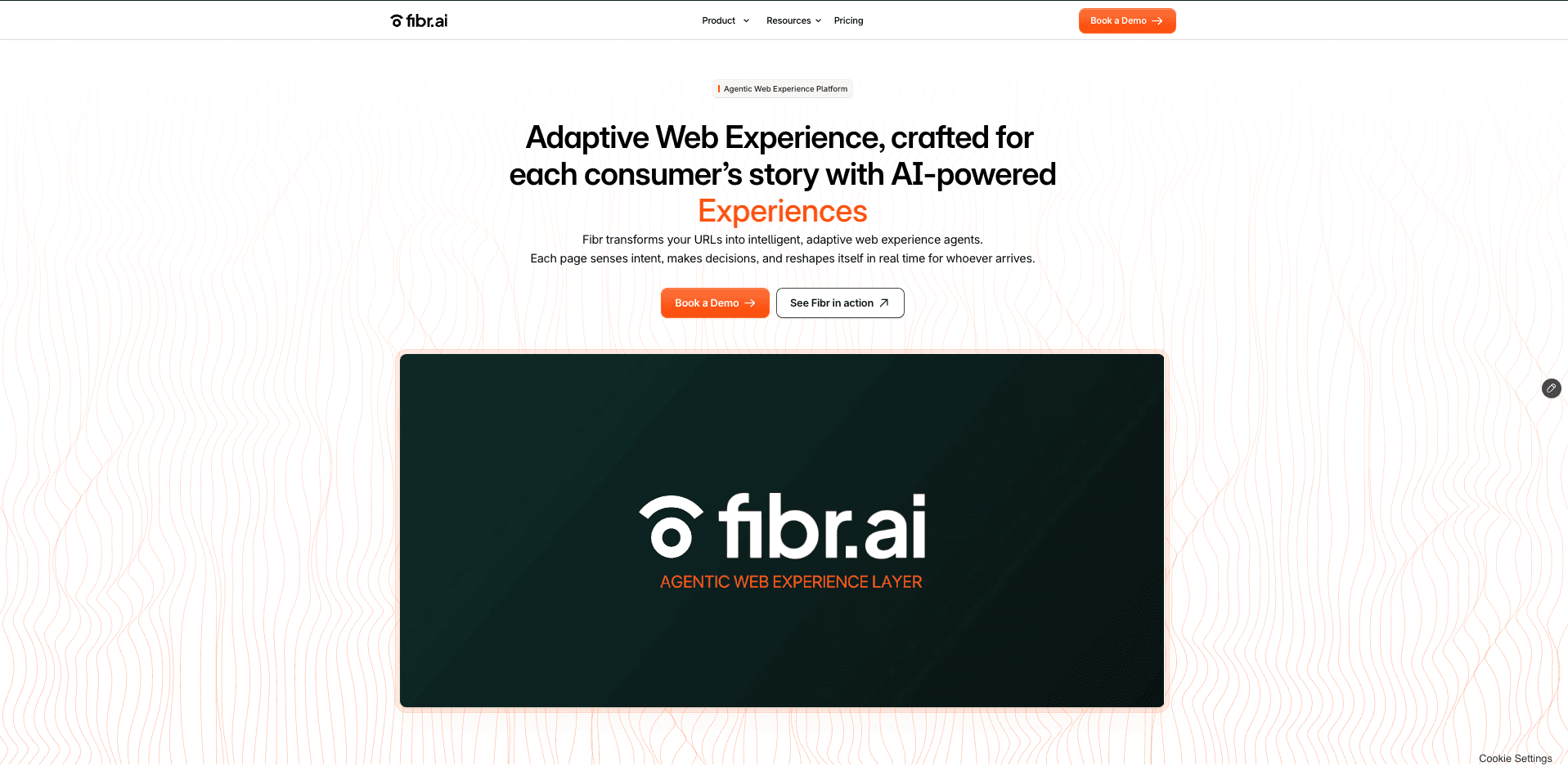
Fibr AI delivers an automated, AI-driven conversion optimization service that aims to significantly boost your conversion rates and enhance user interactions. It essentially transforms your website into an adaptive, growth-oriented platform through constant testing and customized experiences. Fibr achieves this by conducting a high volume of experiments quickly and cost-effectively, surpassing traditional CRO approaches.
Here are the key features of this tool:
Personalized User Journeys: Fibr creates highly tailored experiences by dynamically adjusting website content based on individual visitor actions and aligning landing pages with specific advertising campaign objectives.
Automated Experimentation: Fibr continuously conducts A/B tests, using data analysis to generate testable hypotheses and refining site performance to maximize return on investment.
Proactive Site Maintenance: Fibr provides round-the-clock monitoring of website performance, ensuring consistent uptime, rapid loading speeds, and instant alerts for any potential issues.
Effortless Integration: Fibr is designed to work smoothly with your existing marketing technology, including content management systems, analytics platforms, advertising tools, and customer data platforms, to enhance your current workflows.
2. Google Analytics

Google Analytics provides data on website traffic, user behavior, and conversion funnels. It enables you to identify areas for improvement in your B2B CRO efforts by analyzing user interactions and identifying potential roadblocks.
Fibr AI integrates with Google Analytics 4 (GA4) by sending events whenever a visitor sees a personalized variation. This allows you to view Fibr's personalization data within your existing GA4 reports, providing a consolidated view of website performance.
3. VWO

VWO is a platform designed to facilitate website optimization and experimentation. It offers tools for A/B testing, heatmaps, and session recordings, allowing users to gather insights into visitor behavior. VWO can contribute to incremental increases in conversion rates by identifying areas of friction and potential improvements through its testing features. While it provides a range of testing capabilities, the process often requires significant manual setup and analysis.
B2B Conversion Rate Optimization is something you have to think about if you want to maximize your sales and lead generation. Now, getting this right manually can be quite the challenge as you need to analyze vast amounts of data, understand complex buyer journeys, and continually adapt to changing market conditions, all while maintaining a consistent and personalized experience across multiple touchpoints.
This is where Fibr AI comes in. Fibr AI is a one-stop-shop CRO solution. It uses AI-powered automation and intelligent insights to help you with dynamic personalization, continuous testing, and proactive website monitoring all as one connected system rather than separate tools. It keeps your website running smoothly and securely, delivers personalized experiences that resonate with each visitor, and continuously tests and optimizes website elements to maximize conversion rates.
Apart from this automation, the Fibr team carefully guides you through your B2B CRO process, helping you set up data-driven strategies and personalized campaigns that work for your business. What’s more to it is a seamless integration that you can add Fibr AI to your existing marketing strategy without having to fully overhaul your current systems.
Whether yours is a SaaS, enterprise, or e-commerce type of B2B business, Fibr AI can help you. Book a demo today to learn how Fibr AI's future-proof technology can help you drive conversions!
1. How can I improve my B2B landing page conversion rates?
Focus on clear, concise messaging and strong calls-to-action to guide visitors. You should also ensure your landing page aligns with the specific needs and pain points of your target audience.
2. How is B2B CRO different from B2C CRO?
B2B CRO targets multiple decision-makers, involves longer sales cycles, and requires more in-depth content to build trust. B2C CRO focuses on emotional triggers, quick purchases, and simplified checkout processes.
3. Why are trust signals important in B2B CRO?
Trust signals like testimonials, case studies, and certifications reduce hesitation and build credibility. Without them, potential clients may doubt your reliability and choose a competitor.
4. What are common mistakes to avoid in B2B CRO?
Complex forms, vague messaging, and missing trust signals drive your potential customers away. Ignoring data-driven testing and failing to personalize content can also hurt your conversions.





Meenal Chirana
Content Marketing Manager
Meenal Chirana, Content Marketer at Fibr, brings five years of experience in the content field to the team. Her passion for creating engaging content is matched only by her expertise in writing, SEO and content marketing . Passionate about all things content and digital marketing, she is always on the lookout for innovative ways to connect with audiences and elevate brands.
Table of Content
Read summarized version with
Businesses rely on other businesses for software, tools, and services. The sales process, however, isn’t simple. Unlike B2C, where a single decision-maker can complete a purchase in minutes, B2B sales involve multiple stakeholders, lengthy negotiations, and high-value deals. Converting a lead into a paying customer takes time, effort, and trust.
Now, imagine adding more friction to this process. Landing pages that don’t answer the right questions, a website that lacks credibility, and a conversion path filled with unnecessary steps, these all push potential clients away. If they don’t find the information they need or doubt your reliability, they’ll look elsewhere.
That’s where B2B conversion rate optimization (CRO) helps. It optimizes every stage of the sales funnel, from ad clicks to the final purchase, making it easier for businesses to move forward.
In this article, we explore everything you need to know about B2B conversion rate optimization, how to improve it and how using AI for automating the CRO process can help your business driver conversions.
Key Takeaways
B2B Conversion Rate Optimization (CRO) is a strategic process that improves the percentage of website visitors who complete a desired action. This involves optimizing landing pages, reducing friction, using trust signals, personalizing experiences, and testing website performance to boost conversions.
Unlike B2C, B2B CRO requires a tailored approach due to longer sales cycles, multiple decision-makers, and higher perceived risks. Effective strategies include simplifying the conversion path, demonstrating thought leadership, offering personalized demos, and leveraging AI-driven tools for conversions.
AI-powered solutions like Fibr AI automate CRO through dynamic personalization, continuous testing, and proactive site optimization. Fibr AI helps businesses create relevant user experiences, refine website elements, and ensure peak site performance to drive higher conversions.
What is B2B conversion rate optimization?
B2B conversion rate optimization is the process of increasing the number of users who complete the desired action (sign up for a trial/ subscribe/ purchase) after landing on your B2B website or landing page.
B2B conversion rate optimization is tricky because B2B sales cycles are longer and multiple decision makers are involved in a decision making process that prioritizes logic, ROI, and long-term value.
Unlike B2C, where a conversion is often a direct purchase, B2B conversions can take many forms, depending on your business goals and the stage of the buyer's journey. Here are some common B2B conversion types:
Top of the Funnel (Awareness/Interest)
Website form submissions (e.g., contact form, newsletter signup)
Downloading gated content (e.g., white papers, eBooks, case studies)
Webinar registrations
Social media engagement (e.g., shares, likes, comments)
Middle of the Funnel (Consideration/Evaluation)
Demo requests
Free trial signups
Product page views
Quote requests
Bottom of the Funnel (Decision/Purchase)
Qualified leads (SQLs)
Closed deals
Subscription sign-ups
How to calculate B2B conversion rate?
The B2B conversion rate is simply the percentage of visitors to your B2B website or landing page who actually perform the action you want them to. It is calculated as a ratio between the total number of visitors and the number of conversions. The formula for B2B conversion rate is:
Conversion Rate = (Number of Conversions / Total Number of Visitors) x 100%
How to improve conversion rate in B2B?
Let’s now discuss how you can improve your B2B conversion rate with strategies that address the complexities of business sales. Unlike B2C, where decisions happen quickly, B2B buyers require more information, reassurance, and a seamless experience before committing. Optimizing each step of the conversion process ensures that leads move forward instead of dropping off.
1. Create landing pages that work
Most businesses don’t land on your homepage first, they arrive through ads, blog posts, or social media links that direct them to your landing page. If that page isn’t optimized, your conversion rate will suffer. A high-performing landing page must grab attention, provide relevant information, and guide the visitor toward a clear action. Here’s how:
Headline
Your headline is the first thing visitors see, so it must immediately capture their interest and confirm they’re in the right place. It should:
Match the ad, email, or post that led them there.
Speak directly to their pain points or needs.
Be clear, specific, and value-driven. Avoid vague or overly clever wording.
For example:
“Automate Your Sales Process & Save 10+ Hours a Week with AI” (Clear, direct, and tied to a specific benefit)
“Revolutionizing Sales Efficiency” (Too vague. What does it even mean?)
Visuals
Images, graphics, or videos should enhance your message, not distract from it. The right visuals:
Align with the intent of the page (e.g., a demo screenshot for software instead of a generic handshake stock photo).
Show the product in action when possible. For example, videos or GIFs work well for SaaS tools.
Keep branding consistent, ensuring colors and design match the rest of your site.
CTA
Your call to action (CTA) should be impossible to miss and persuasive enough to get the visitor to act. To be effective, it must:
Be action-oriented: Use verbs like “Get,” “Try,” “Book,” or “Download.”
Align with the original ad or content that brought them here. If the ad promised a free trial, the CTA should not say “Contact Sales.”
Be concise and benefit-driven.
Examples:
“Start Your Free 7-Day Trial” (Clear, benefit-driven)
“Learn More” (Too generic, lacks urgency)
Pro Tip: AI-powered CTA generators can help refine and personalize CTAs for different audiences.
Conversion Form
A long, complicated form is one of the biggest conversion killers. Visitors don’t want to fill out unnecessary fields, especially in the awareness stage of the funnel.
To optimize your form:
Only ask for essential information (name, email, and maybe one qualifying question).
Use smart forms that adjust based on user responses. Don’t show every field at once.
Clearly state why you need their details (e.g., “We’ll send you a free report”).
If your landing pages aren’t converting, use Fibr AI’s Landing Page Analyzer to identify and fix weak spots.
2. Simplify the conversion path
B2B buyers are busy. A complicated conversion process will frustrate them, leading to drop-offs before they reach the final step. The goal is to reduce friction and make it easy for them to take action.
Avoid unnecessary redirects: Sending users through multiple pages to complete a simple action increases the chances of losing them.
Speed matters: If your page takes more than 3 seconds to load, expect lower conversions. Optimize images, scripts, and hosting to improve load times.
Clear next steps: Guide users through the process with clear progress indicators and logical navigation.
For Example: If you’re offering a free trial, don’t ask them to book a call first. Let them sign up immediately with minimal effort.
3. Offer Personalized Demos and Consultations
Unlike B2C purchases, B2B contracts often involve large investments and long-term commitments. This makes businesses cautious, requiring more information before making a decision. This extra level of interaction builds trust and makes businesses feel more confident in their decision. Offering a personalized demo or consultation can increase conversions by reducing uncertainty.
Let prospects experience the product firsthand before making a commitment.
Customize the demo based on their industry, company size, or pain points.
Introduce them to your team, showing them who they’ll be working with.
4. Iterate and Analyse
No B2B CRO strategy works without A/B testing. Every element, headlines, CTAs, page layouts, images, and form fields, needs to be tested and optimized.
Test different headlines to see which messaging resonates best.
Tweak CTA placements and wording to drive more conversions.
Experiment with different form lengths to balance lead quality and volume.
If you run a SaaS business, test whether a benefit-focused headline like “Cut Reporting Time by 50%” converts better than a feature-focused one like “Automated Reporting Software.”
Fibr AI can automate testing and provide insights into what's working. The more you analyze and optimize, the better your conversion rates will be.
What is a good B2B sales conversion rate?
Now, to know how well you are doing in terms of conversions, you need a benchmark to compare yourself against. The overall B2B sales conversion rate across industries falls between 2% and 5%, with a median of 4.3%. However, conversion rates vary widely depending on the industry, product type, and sales cycle length.
For instance, SaaS businesses see an average conversion rate of 3%, with subcategories ranging from 1.8% to 6.2%. B2B services generally perform better, with conversion rates averaging 3.5% and peaking at 6.3%. High-ticket industries, such as B2B tech, tend to have lower rates, some as low as 1%, because customers take longer to evaluate their options before committing to a purchase.
Challenges in B2B conversion rate optimization
Optimizing B2B conversion rates is more difficult than in B2C because businesses take longer to make decisions, require more information, and involve multiple people in the buying process.
Unlike individual consumers, businesses evaluate purchases based on long-term impact, cost-effectiveness, and alignment with their existing operations. This means your conversion strategy needs to address multiple concerns while keeping prospects engaged throughout a longer sales cycle.
1. Complex Decision-Making Process
B2B sales involve multiple stakeholders, each with different priorities. A finance team may focus on costs, while an operations team looks at usability. This lengthens the conversion cycle and makes it harder to create messaging that appeals to everyone involved.
2. Long Sales Cycles
Unlike B2C, where purchases happen quickly, B2B sales take weeks or even months. Buyers conduct thorough research, compare multiple options, and often require demos or consultations before making a decision. Keeping leads engaged throughout this process requires consistent follow-ups, personalized content, and trust-building efforts.
3. Higher Perceived Risk
B2B purchases often involve long-term contracts, high costs, or operational dependencies, making businesses more cautious. A wrong decision can lead to financial losses, inefficiencies, or reputational damage, so buyers take extra time to evaluate options. Overcoming this hesitation requires clear value demonstrations, risk-reducing incentives, and strong customer support.
Challenges in B2B conversion rate optimization
Without the right tools it is almost impossible to get B2B CRO right. It is a complicated process with a lot of steps and having essential tools at your disposal can ease the process.
1. Fibr AI
Fibr AI delivers an automated, AI-driven conversion optimization service that aims to significantly boost your conversion rates and enhance user interactions. It essentially transforms your website into an adaptive, growth-oriented platform through constant testing and customized experiences. Fibr achieves this by conducting a high volume of experiments quickly and cost-effectively, surpassing traditional CRO approaches.
Here are the key features of this tool:
Personalized User Journeys: Fibr creates highly tailored experiences by dynamically adjusting website content based on individual visitor actions and aligning landing pages with specific advertising campaign objectives.
Automated Experimentation: Fibr continuously conducts A/B tests, using data analysis to generate testable hypotheses and refining site performance to maximize return on investment.
Proactive Site Maintenance: Fibr provides round-the-clock monitoring of website performance, ensuring consistent uptime, rapid loading speeds, and instant alerts for any potential issues.
Effortless Integration: Fibr is designed to work smoothly with your existing marketing technology, including content management systems, analytics platforms, advertising tools, and customer data platforms, to enhance your current workflows.
2. Google Analytics
Google Analytics provides data on website traffic, user behavior, and conversion funnels. It enables you to identify areas for improvement in your B2B CRO efforts by analyzing user interactions and identifying potential roadblocks.
Fibr AI integrates with Google Analytics 4 (GA4) by sending events whenever a visitor sees a personalized variation. This allows you to view Fibr's personalization data within your existing GA4 reports, providing a consolidated view of website performance.
3. VWO
VWO is a platform designed to facilitate website optimization and experimentation. It offers tools for A/B testing, heatmaps, and session recordings, allowing users to gather insights into visitor behavior. VWO can contribute to incremental increases in conversion rates by identifying areas of friction and potential improvements through its testing features. While it provides a range of testing capabilities, the process often requires significant manual setup and analysis.
B2B Conversion Rate Optimization Success with Fibr AI
B2B Conversion Rate Optimization is something you have to think about if you want to maximize your sales and lead generation. Now, getting this right manually can be quite the challenge as you need to analyze vast amounts of data, understand complex buyer journeys, and continually adapt to changing market conditions, all while maintaining a consistent and personalized experience across multiple touchpoints.
This is where Fibr AI comes in. Fibr AI is a one-stop-shop CRO solution. It uses AI-powered automation and intelligent insights to help you with dynamic personalization, continuous testing, and proactive website monitoring all as one connected system rather than separate tools. It keeps your website running smoothly and securely, delivers personalized experiences that resonate with each visitor, and continuously tests and optimizes website elements to maximize conversion rates.
Apart from this automation, the Fibr team carefully guides you through your B2B CRO process, helping you set up data-driven strategies and personalized campaigns that work for your business. What’s more to it is a seamless integration that you can add Fibr AI to your existing marketing strategy without having to fully overhaul your current systems.
Whether yours is a SaaS, enterprise, or e-commerce type of B2B business, Fibr AI can help you. Book a demo today to learn how Fibr AI's future-proof technology can help you drive conversions!
Frequently Asked Questions
1. How can I improve my B2B landing page conversion rates?
Focus on clear, concise messaging and strong calls-to-action to guide visitors. You should also ensure your landing page aligns with the specific needs and pain points of your target audience.
2. How is B2B CRO different from B2C CRO?
B2B CRO targets multiple decision-makers, involves longer sales cycles, and requires more in-depth content to build trust. B2C CRO focuses on emotional triggers, quick purchases, and simplified checkout processes.
3. Why are trust signals important in B2B CRO?
Trust signals like testimonials, case studies, and certifications reduce hesitation and build credibility. Without them, potential clients may doubt your reliability and choose a competitor.
4. What are common mistakes to avoid in B2B CRO?
Complex forms, vague messaging, and missing trust signals drive your potential customers away. Ignoring data-driven testing and failing to personalize content can also hurt your conversions.
Meenal Chirana
Content Marketing Manager
Meenal Chirana, Content Marketer at Fibr, brings five years of experience in the content field to the team. Her passion for creating engaging content is matched only by her expertise in writing, SEO and content marketing . Passionate about all things content and digital marketing, she is always on the lookout for innovative ways to connect with audiences and elevate brands.