Read summarized version with
Want to create a high-converting real-estate landing page, but creative juices aren’t flowing? Or do you want to see what some of the best real estate companies are doing for inspiration? Whatever the case, we've got you covered.
Below, we explore 10 high-converting real estate landing page examples in 2025, along with key learnings from each page. This will help you get some inspiration for your next campaign and drive more conversions.
TL;DR
Here are the key takeaways from the top 10 high-converting real estate landing pages in 2025:
Clear Value Proposition: Ensure the page heading clearly conveys the brand's value proposition, as seen in the Redfin example, which highlights "selling for the top dollar for HALF the listing fee".
Streamlined Design: A minimalist design, like Streeteasy, can make the page more user-friendly and clean.
Simplified Core Offering: Simplify your core offering to encourage user action, as demonstrated by Streeteasy.
Prominent CTAs: Make the call to action (CTA) dominant and place it above the fold for easy user access, as highlighted in the Realtor.com example.
Video Testimonials: Use video testimonials to boost credibility and motivate users to take the desired action.
Single Conversion Goal: Keep the landing page simple and focused on a single conversion goal, as seen in the The Sold Collective example.
Concise Content: Use short and punchy headlines to highlight the USPs of the business and build trust, as seen in the Jesse Dougherty example.
Attention-Grabbing Elements: Incorporate elements like icons, high-contrast colours, or images to grab the attention of skimmers.
Simplify Complex Concepts: Simplify complex concepts for users, as Flyhomes did with the "buy-before-sell" concept.
What is a real estate landing page?
A real estate landing page is a dedicated web page created with a specific conversion goal in mind, including lead generation, scheduling bookings, or building your email list. Unlike your generic web pages, a landing page matches the exact intent of your ad or email link.
Users can access real-estate landing pages when they click an ad, an email link, or even a search listing, provided you’ve optimized your real-estate landing page for SEO.
But what makes landing pages for real estate good or conversion-friendly? Ain’t that the entire purpose of this article? Let’s explore some of the most high-converting real estate landing page examples and understand what makes them so special.
1.Realtor.com landing page

This real estate landing page is from Realtor.com.
Right off the bat, there’s a primary headline, followed by a secondary headline and a clear call-to-action or CTA. The moment users land on this landing page, they’d know what to do i.e. search for a home in their ideal location.
Scrolling down a bit, you’ll find several listings, from affordable to luxury homes. Also, you’ll find an option to apply for a loan and information about any location of your choice. It seems users are getting everything they need in one place.
What can you learn from this real estate landing page example?
The CTA is pretty dominant and placed above the fold, which makes it easy for users to notice and take the desired action.
Also, while the landing page is long, it includes essential information or functionalities the users exploring properties might find useful. This will keep the users on the page longer, increasing their chances of taking the desired action.
2.HomeLight: home value estimator

This real estate landing page from HomeLight is focused on helping users calculate their house’s value.
The landing page has a primary heading that clearly explains the purpose. And the secondary headline assures users they’ll get an estimate within 2 minutes, which solves a crucial pain point as users are often ghosted when they input the details.
If you scroll down a little, you’ll find a text copy paired with an image that helps you trust the tool more. This copy mentions how, by answering a few simple questions, you can find the actual value of your house, which most tools miss out on.
There’s another copy that explains the process by which HomeLight estimates the value of your property, which builds credibility.

Scrolling further down, you’ll find several customer reviews, FAQs, and tools/tips essential to build trust, address the queries you might have, and further ease the process, respectively.
What can you learn from this real estate landing page example?
The landing page mentions that users will get an estimate within 2 minutes, which makes you want to enter the details instantly. It tells users they can get a fair value estimate by answering a few questions. The landing page also explains how they include human elements to calculate the estimate.
All these elements build trust and credibility, slowly pushing the user to take the desired action.
3.Flyhomes real estate landing page

This realtor landing page from Flyhomes focuses on the unique concept of buying before selling.
Primary headline does a perfect job telling the users what the page is about.
Secondary headline further explains the concept of buying before selling.
The section above the fold is pretty clean and has a single contrasting call to action.
As you scroll down a little, the Flyhomes team breaks down the buy-before-sell concept and adds a contrasting CTA.
The following sections talk about the common pain points of the users and how Flyhomes can help them.
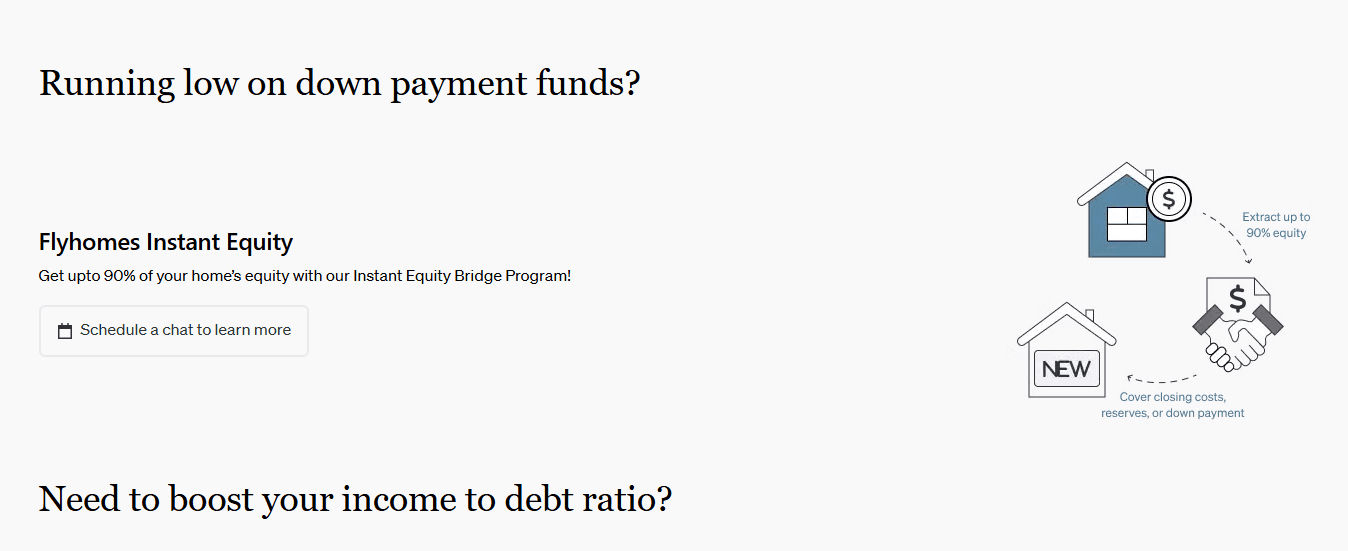
All this is followed by testimonial videos from successful buyers and sellers, boosting credibility and motivating the users to take action.
What can you learn from this real estate landing page example?
The Flyhomes team did a fantastic job decoding the buy-before-you-sell concept without overwhelming the users. So, when you’re creating a landing page for your real estate business, make sure you simplify things for your users.
Also, try to gather as many video testimonials as you can. While text-based reviews are also effective, video testimonials take the credibility game to another level.
4.Zillow real estate landing page

This landing page from Zillow focuses on helping users find an agent to help them make a better buying or selling decision.
It is a clear heading, followed by a subheading and clear CTAs above the fold. Where most popular real estate landing pages feature a single CTA, this one has two, which can be a little confusing for some users.
While 2 CTAs above the fold can be confusing, there’s a good thing about the 2nd CTA, i.e., it’s a testimonial video. If a user clicks the “Watch a story” button, they’ll see a client testimonial video, which can instantly convince them to take the desired action.
As you scroll a little, you’ll find the USPs of hiring a Zillow Premier Agent partner, which does a great job of building trust among users.

On moving further down, we found multiple CTAs (same colour and formatting as the primary CTA) to distinct resources, which can be confusing for the users:

What can you learn from this real estate landing page example?
The landing page team at Zillow pushed up a client testimonial video right to the top of the page to build credibility right off the bat. You can also try to move client reviews, preferably videos (with a thumbnail) above the fold.
Another great thing about this landing page is how clean (especially above the fold) the landing page is. There is limited content, and the team does a good job explaining the entire process to the users, which is essential to convince them to take action.
5.The Sold Collective real estate landing page
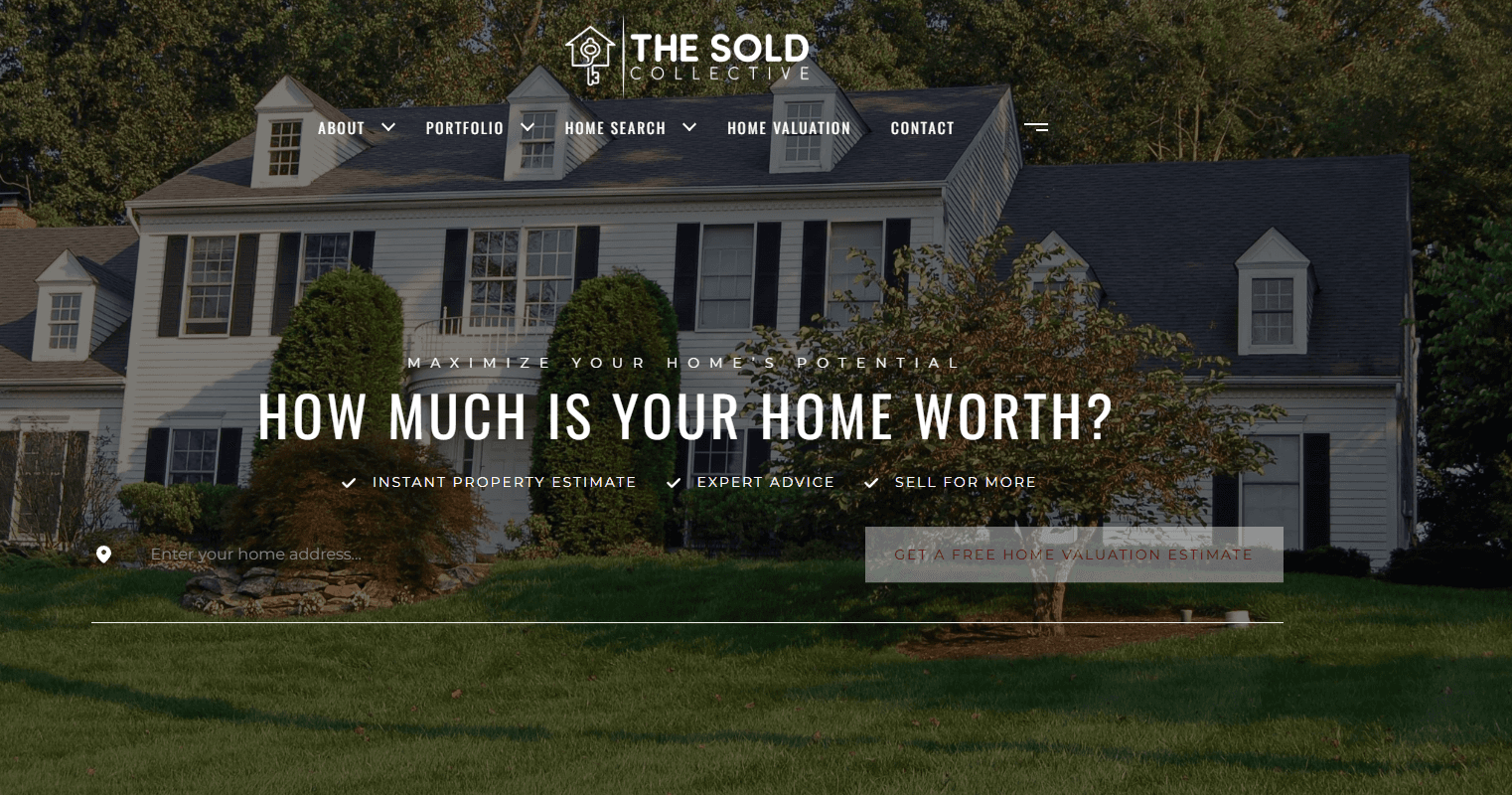
This landing page from The Sold Collective is about calculating the worth or value of your property. It is clean and does a great job of directing the users to enter their address to get a free home valuation.
However, the CTA and the search bar text could have been bold or a little more dominant as they’re difficult to notice because of the background image.
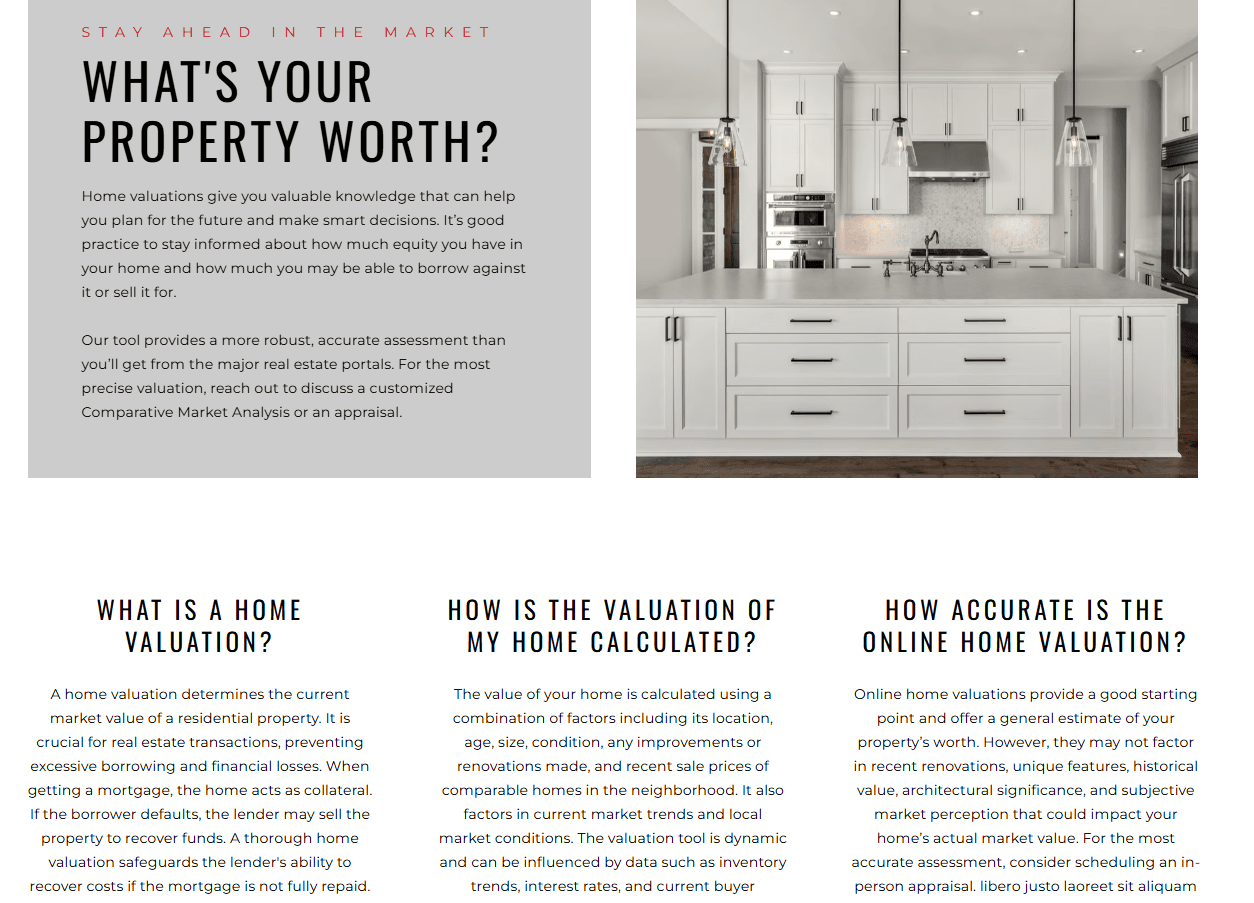
As you scroll a bit, the sections stress the importance of home valuation and how Sold Collective’s tool provides a more robust and accurate valuation.
What can you learn from this real estate landing page example?
The landing page features a clean design, gets straight to the point, and has a single goal. Also, the Sold Collective team has included a lot of text-based content, which explains different concepts and clears common visitor queries.
Therefore, keep your landing page simple and ensure it has a single conversion goal. Also, the CTAs should be clear, unlike in this landing page example.
6.Sundae real estate landing page
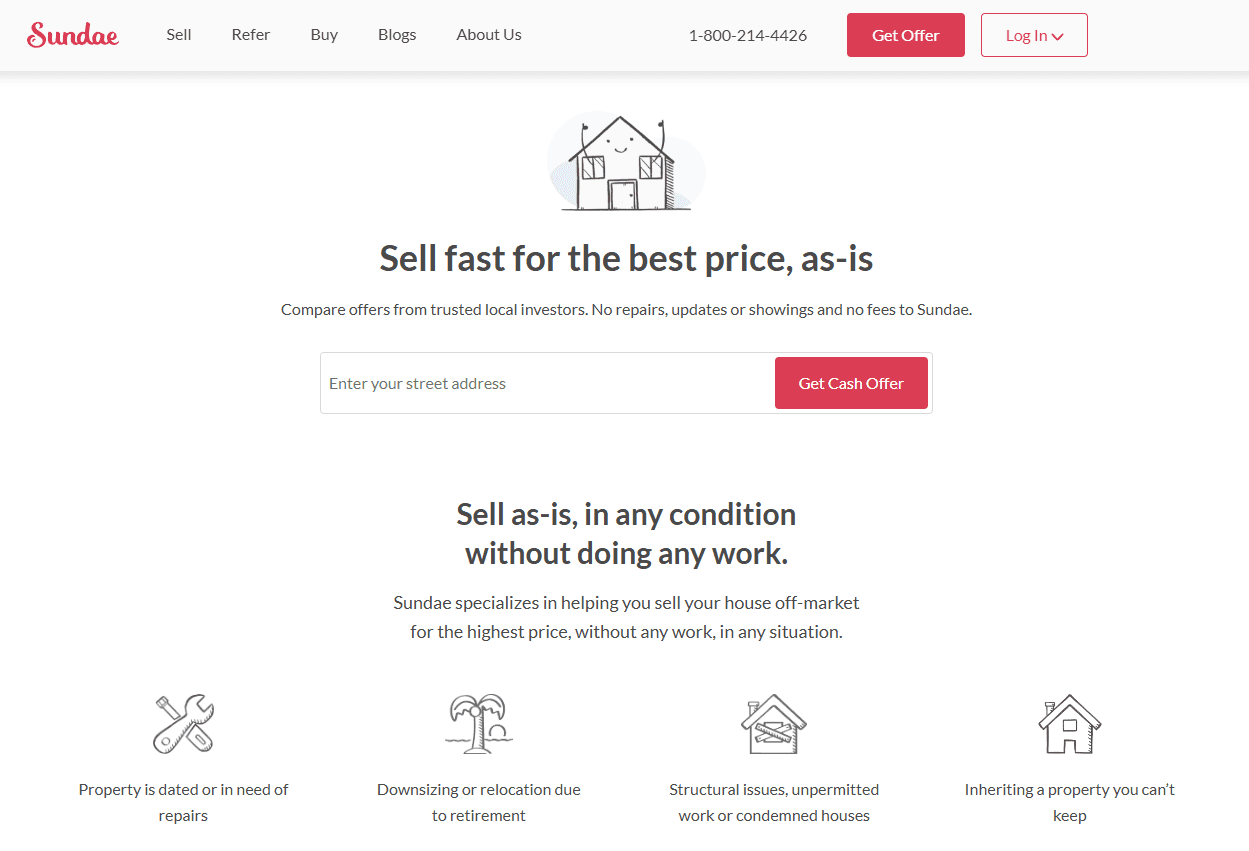
This landing page from Sundae focuses on promoting their unique service, i.e., sell as-is, which allows users to sell their property without making any changes or repairs.
One thing that we liked about this landing page is it promotes their primary goal successfully, above the fold. The secondary headline perfectly supplements the primary one and guides the visitors to enter their address and click the CTA. To be honest, the CTA text makes you want to click.
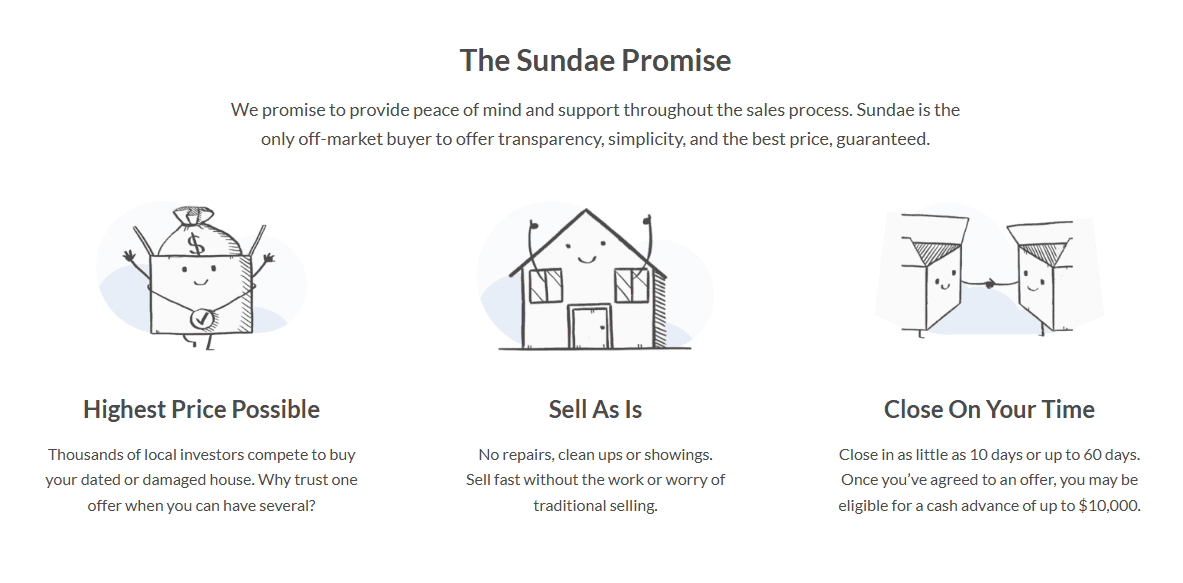
The next section is about The Sundae Promise, which reiterates the uniqueness of their platform, i.e., high price, sell as is, and close on your time.
Next comes the customer reviews. Each review includes a large image, which makes it look more original and reliable. These guys have also included the meat of the review above the complete text.

What can you learn from this real estate landing page example?
Sundae’s team did a great job of not deviating from their main value proposition. Right from the start to the very end, they’re focused on helping users sell at a higher price quickly, on their own time, without making any effort.
Another important learning is how they formatted the customer reviews. They selected the most impactful words from every review, making them easier for users to skim.
7.Jesse Dougherty real estate landing page
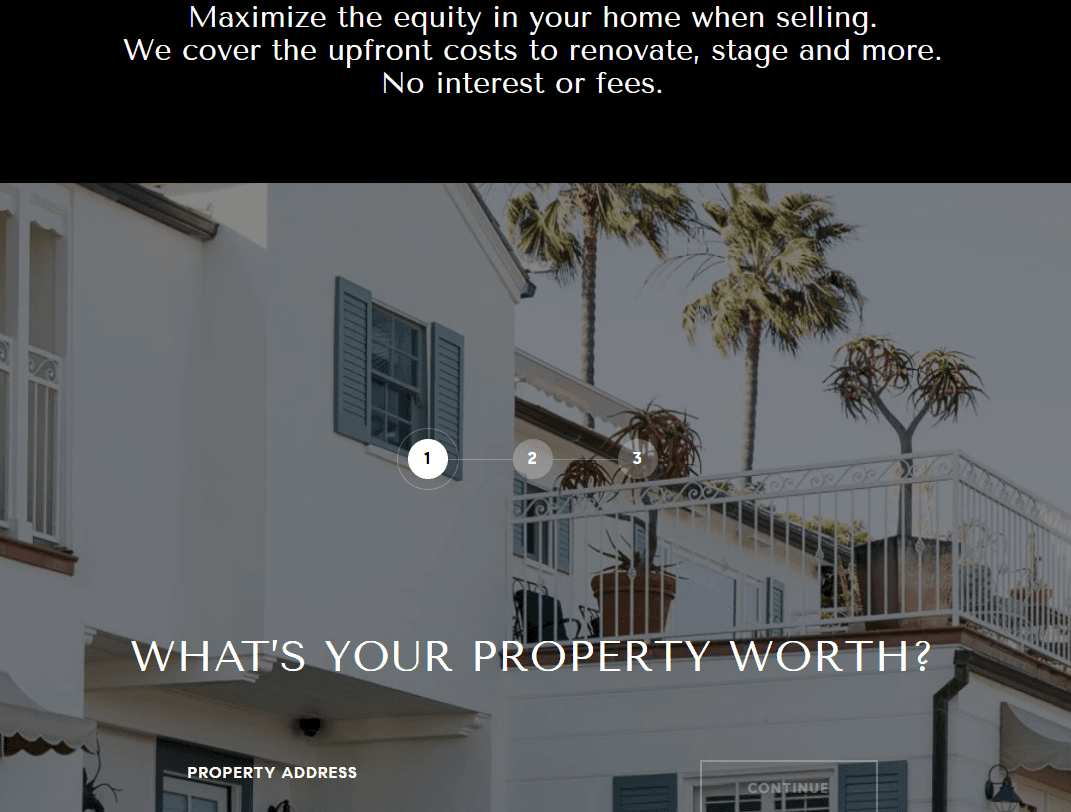
This real estate landing page example from Jesse Dougherty is effective for several reasons.
Right when the users land on this page, they’re greeted with short and punchy headlines. These headlines highlight the USPs of the business, which instantly builds trust.
After the primary headline, there’s a search bar where users can enter their property’s address, hit the CTA, enter the contact details, and get a fair valuation for their home.
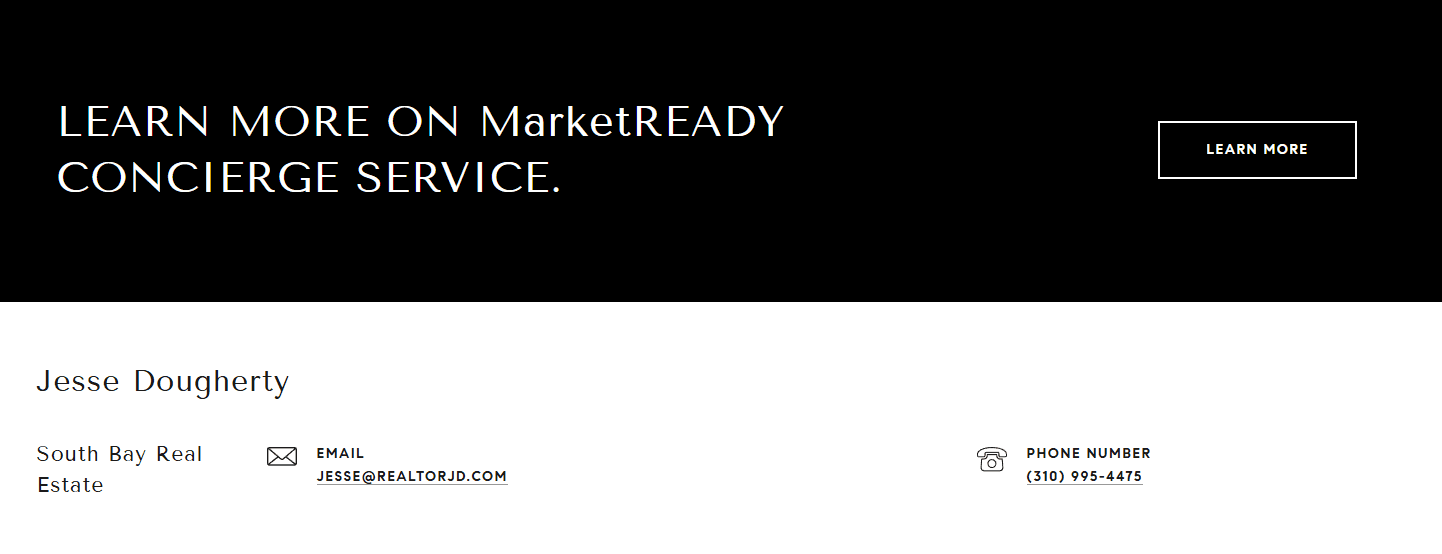
As you scroll a little, there’s a CTA about their concierge services, and that’s it, the page ends right there.
What can you learn from this real estate landing page example?
One of the best things about this landing page is its brevity. There’s no unnecessary image, infographic, or text block to distract the users. In fact, these guys skipped the client testimonial section (that’s something we would not suggest.)
8.Luxury Chicago Apartments real estate landing page

This property landing page from Luxury Chicago Apartments is dedicated to a single property.
Above the fold, you’ll find all the information about the property from its images, name and address, pricing, and the option to book a tour. However, they have placed two CTAs that do the same job of helping the user book a tour. This can confuse the user as they may not know which CTA to click.
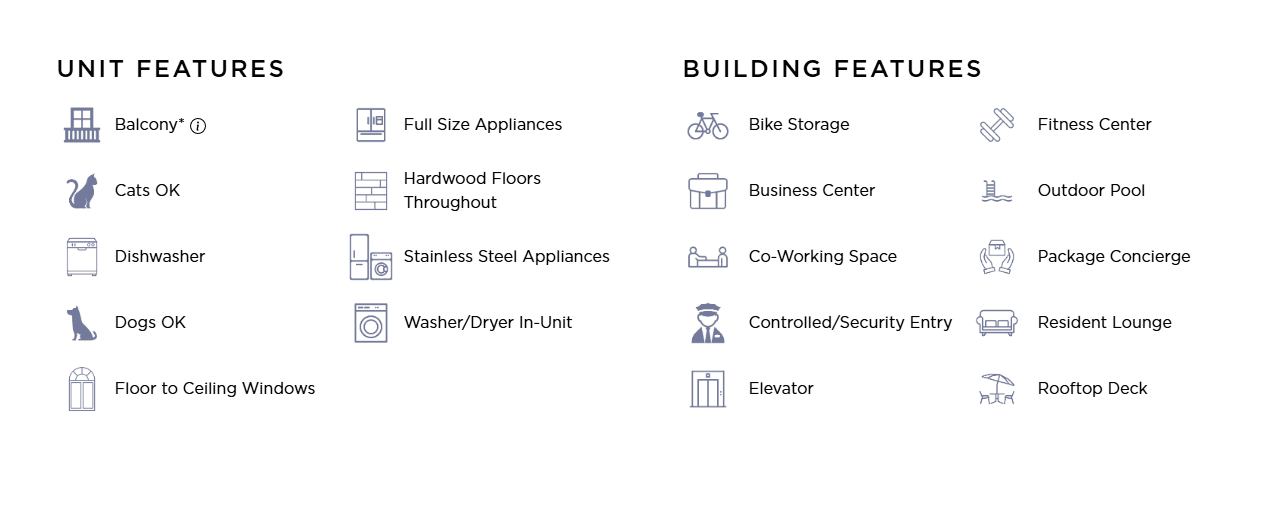
As you scroll a little, you’ll find a section that highlights the building and unit features. These icons act like scroll stoppers and grab the users’ attention.
What can you learn from this real estate landing page example?
Use elements like icons, high-contrast colours or even images in your landing pages to grab the visitors' attention.
Make sure you don’t place multiple CTAs at the same place that take the user to the same destination. Keep your CTAs distinct so users know what button to click and when.
9.Streeteasy real estate landing page

This real estate landing page from Streeteasy has a minimalist design and a clear layout to avoid clutter.
Above the fold, there’s a clear primary heading that states the purpose of the landing page, i.e. to help users buy, rent or sell their property. The well-designed search bar, with several rent/buy, location and price filters, invites the users to take action immediately.
As you scroll a little, you’ll notice 3 cards for 3 distinct users: buyers, sellers and owners who wish to rent. This is a great way to segment the users based on their needs or intent.

On exploring the landing page further, you’ll find a section that simplifies the process of using Streeteasy’s platform, along with a clear CTA.

What can you learn from this real estate landing page example?
One of the key learnings of this landing page is the minimalistic design that makes it more user-friendly and clean. Also, you should always try to simplify your core offering to initiate action from the user.
While there were multiple good things, this landing page did not have customer testimonials. That’s not something you’d want to avoid. Because testimonials build trust and they could persuade the users to take that last step.
10.Redfin real estate landing page
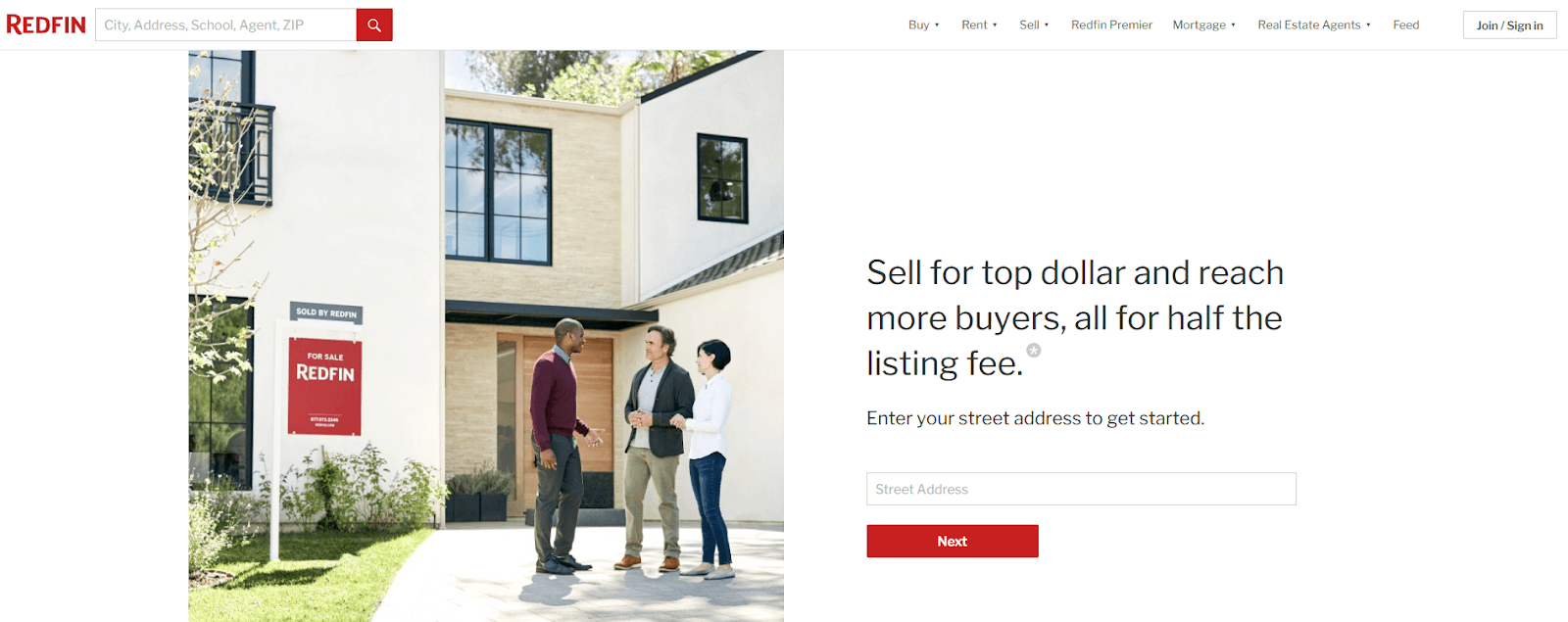
This real estate agent landing page from Redfin focuses on helping users sell their homes.
The section above the fold is clean and has a single conversion goal, i.e. getting users to type in their address.
The page heading clearly delivers the value proposition of the brand, which is helping users get top dollar for their property for half the listing fee.
You’ll see an interactive calculator upon scrolling, which shows users how much they can save in listing fees when they sell with Redfin.
Above the fold, Redfin’s team highlighted “selling for the top dollar for HALF the listing fee”. In this section, they’re comparing the listing fee Redfin agents charge vs others. This section backs their claim and builds trust, further convincing the users to take action.

What can you learn from this real estate landing page example?
This landing page focuses on only one thing from the beginning to the end, i.e. helping users sell at a higher price and save one listing fee. By focusing on a single message throughout the page, you can ensure the users don’t wander off mid-way and take the desired action.
Conclusion
There you have it: top 10 real estate landing page examples with key learnings. You can incorporate the learnings from these examples and create better-performing real estate landing pages for your next campaign.
Note. What works for someone may not necessarily work for you. Therefore, keep experimenting until you figure out the right combination.
FAQs
How do I know if my real estate landing page is effective?
To determine the effectiveness of your property landing page, you need to create at least two variants of your landing page:
Variant A: use a generic one
Variant B: implement the learnings from this article
Once the variations are ready, you can perform A/B testing using free tools like Fibr AI. The result of this test will help you determine which landing page is more effective.
How can I create landing page variations?
One of the easiest and most effective ways of creating landing page variations is by using Fibr AI. This platform comes with an Intuitive no-code editor that helps you create high-converting landing page variations in bulk within minutes. It also allows you to run A/B tests with the variations you just created. Sounds convenient? Try Fibr now!





Ankur Goyal
CEO @ Fibr AI
Ankur Goyal, a visionary entrepreneur, is the driving force behind Fibr, a groundbreaking AI co-pilot for websites. With a dual degree from Stanford University and IIT Delhi, Ankur brings a unique blend of technical prowess and business acumen to the table. This isn't his first rodeo; Ankur is a seasoned entrepreneur with a keen understanding of consumer behavior, web dynamics, and AI. Through Fibr, he aims to revolutionize the way websites engage with users, making digital interactions smarter and more intuitive.
Read summarized version with
Want to create a high-converting real-estate landing page, but creative juices aren’t flowing? Or do you want to see what some of the best real estate companies are doing for inspiration? Whatever the case, we've got you covered.
Below, we explore 10 high-converting real estate landing page examples in 2025, along with key learnings from each page. This will help you get some inspiration for your next campaign and drive more conversions.
TL;DR
Here are the key takeaways from the top 10 high-converting real estate landing pages in 2025:
Clear Value Proposition: Ensure the page heading clearly conveys the brand's value proposition, as seen in the Redfin example, which highlights "selling for the top dollar for HALF the listing fee".
Streamlined Design: A minimalist design, like Streeteasy, can make the page more user-friendly and clean.
Simplified Core Offering: Simplify your core offering to encourage user action, as demonstrated by Streeteasy.
Prominent CTAs: Make the call to action (CTA) dominant and place it above the fold for easy user access, as highlighted in the Realtor.com example.
Video Testimonials: Use video testimonials to boost credibility and motivate users to take the desired action.
Single Conversion Goal: Keep the landing page simple and focused on a single conversion goal, as seen in the The Sold Collective example.
Concise Content: Use short and punchy headlines to highlight the USPs of the business and build trust, as seen in the Jesse Dougherty example.
Attention-Grabbing Elements: Incorporate elements like icons, high-contrast colours, or images to grab the attention of skimmers.
Simplify Complex Concepts: Simplify complex concepts for users, as Flyhomes did with the "buy-before-sell" concept.
What is a real estate landing page?
A real estate landing page is a dedicated web page created with a specific conversion goal in mind, including lead generation, scheduling bookings, or building your email list. Unlike your generic web pages, a landing page matches the exact intent of your ad or email link.
Users can access real-estate landing pages when they click an ad, an email link, or even a search listing, provided you’ve optimized your real-estate landing page for SEO.
But what makes landing pages for real estate good or conversion-friendly? Ain’t that the entire purpose of this article? Let’s explore some of the most high-converting real estate landing page examples and understand what makes them so special.
1.Realtor.com landing page
This real estate landing page is from Realtor.com.
Right off the bat, there’s a primary headline, followed by a secondary headline and a clear call-to-action or CTA. The moment users land on this landing page, they’d know what to do i.e. search for a home in their ideal location.
Scrolling down a bit, you’ll find several listings, from affordable to luxury homes. Also, you’ll find an option to apply for a loan and information about any location of your choice. It seems users are getting everything they need in one place.
What can you learn from this real estate landing page example?
The CTA is pretty dominant and placed above the fold, which makes it easy for users to notice and take the desired action.
Also, while the landing page is long, it includes essential information or functionalities the users exploring properties might find useful. This will keep the users on the page longer, increasing their chances of taking the desired action.
2.HomeLight: home value estimator
This real estate landing page from HomeLight is focused on helping users calculate their house’s value.
The landing page has a primary heading that clearly explains the purpose. And the secondary headline assures users they’ll get an estimate within 2 minutes, which solves a crucial pain point as users are often ghosted when they input the details.
If you scroll down a little, you’ll find a text copy paired with an image that helps you trust the tool more. This copy mentions how, by answering a few simple questions, you can find the actual value of your house, which most tools miss out on.
There’s another copy that explains the process by which HomeLight estimates the value of your property, which builds credibility.
Scrolling further down, you’ll find several customer reviews, FAQs, and tools/tips essential to build trust, address the queries you might have, and further ease the process, respectively.
What can you learn from this real estate landing page example?
The landing page mentions that users will get an estimate within 2 minutes, which makes you want to enter the details instantly. It tells users they can get a fair value estimate by answering a few questions. The landing page also explains how they include human elements to calculate the estimate.
All these elements build trust and credibility, slowly pushing the user to take the desired action.
3.Flyhomes real estate landing page
This realtor landing page from Flyhomes focuses on the unique concept of buying before selling.
Primary headline does a perfect job telling the users what the page is about.
Secondary headline further explains the concept of buying before selling.
The section above the fold is pretty clean and has a single contrasting call to action.
As you scroll down a little, the Flyhomes team breaks down the buy-before-sell concept and adds a contrasting CTA.
The following sections talk about the common pain points of the users and how Flyhomes can help them.
All this is followed by testimonial videos from successful buyers and sellers, boosting credibility and motivating the users to take action.
What can you learn from this real estate landing page example?
The Flyhomes team did a fantastic job decoding the buy-before-you-sell concept without overwhelming the users. So, when you’re creating a landing page for your real estate business, make sure you simplify things for your users.
Also, try to gather as many video testimonials as you can. While text-based reviews are also effective, video testimonials take the credibility game to another level.
4.Zillow real estate landing page
This landing page from Zillow focuses on helping users find an agent to help them make a better buying or selling decision.
It is a clear heading, followed by a subheading and clear CTAs above the fold. Where most popular real estate landing pages feature a single CTA, this one has two, which can be a little confusing for some users.
While 2 CTAs above the fold can be confusing, there’s a good thing about the 2nd CTA, i.e., it’s a testimonial video. If a user clicks the “Watch a story” button, they’ll see a client testimonial video, which can instantly convince them to take the desired action.
As you scroll a little, you’ll find the USPs of hiring a Zillow Premier Agent partner, which does a great job of building trust among users.
On moving further down, we found multiple CTAs (same colour and formatting as the primary CTA) to distinct resources, which can be confusing for the users:
What can you learn from this real estate landing page example?
The landing page team at Zillow pushed up a client testimonial video right to the top of the page to build credibility right off the bat. You can also try to move client reviews, preferably videos (with a thumbnail) above the fold.
Another great thing about this landing page is how clean (especially above the fold) the landing page is. There is limited content, and the team does a good job explaining the entire process to the users, which is essential to convince them to take action.
5.The Sold Collective real estate landing page
This landing page from The Sold Collective is about calculating the worth or value of your property. It is clean and does a great job of directing the users to enter their address to get a free home valuation.
However, the CTA and the search bar text could have been bold or a little more dominant as they’re difficult to notice because of the background image.
As you scroll a bit, the sections stress the importance of home valuation and how Sold Collective’s tool provides a more robust and accurate valuation.
What can you learn from this real estate landing page example?
The landing page features a clean design, gets straight to the point, and has a single goal. Also, the Sold Collective team has included a lot of text-based content, which explains different concepts and clears common visitor queries.
Therefore, keep your landing page simple and ensure it has a single conversion goal. Also, the CTAs should be clear, unlike in this landing page example.
6.Sundae real estate landing page
This landing page from Sundae focuses on promoting their unique service, i.e., sell as-is, which allows users to sell their property without making any changes or repairs.
One thing that we liked about this landing page is it promotes their primary goal successfully, above the fold. The secondary headline perfectly supplements the primary one and guides the visitors to enter their address and click the CTA. To be honest, the CTA text makes you want to click.
The next section is about The Sundae Promise, which reiterates the uniqueness of their platform, i.e., high price, sell as is, and close on your time.
Next comes the customer reviews. Each review includes a large image, which makes it look more original and reliable. These guys have also included the meat of the review above the complete text.
What can you learn from this real estate landing page example?
Sundae’s team did a great job of not deviating from their main value proposition. Right from the start to the very end, they’re focused on helping users sell at a higher price quickly, on their own time, without making any effort.
Another important learning is how they formatted the customer reviews. They selected the most impactful words from every review, making them easier for users to skim.
7.Jesse Dougherty real estate landing page
This real estate landing page example from Jesse Dougherty is effective for several reasons.
Right when the users land on this page, they’re greeted with short and punchy headlines. These headlines highlight the USPs of the business, which instantly builds trust.
After the primary headline, there’s a search bar where users can enter their property’s address, hit the CTA, enter the contact details, and get a fair valuation for their home.
As you scroll a little, there’s a CTA about their concierge services, and that’s it, the page ends right there.
What can you learn from this real estate landing page example?
One of the best things about this landing page is its brevity. There’s no unnecessary image, infographic, or text block to distract the users. In fact, these guys skipped the client testimonial section (that’s something we would not suggest.)
8.Luxury Chicago Apartments real estate landing page
This property landing page from Luxury Chicago Apartments is dedicated to a single property.
Above the fold, you’ll find all the information about the property from its images, name and address, pricing, and the option to book a tour. However, they have placed two CTAs that do the same job of helping the user book a tour. This can confuse the user as they may not know which CTA to click.
As you scroll a little, you’ll find a section that highlights the building and unit features. These icons act like scroll stoppers and grab the users’ attention.
What can you learn from this real estate landing page example?
Use elements like icons, high-contrast colours or even images in your landing pages to grab the visitors' attention.
Make sure you don’t place multiple CTAs at the same place that take the user to the same destination. Keep your CTAs distinct so users know what button to click and when.
9.Streeteasy real estate landing page
This real estate landing page from Streeteasy has a minimalist design and a clear layout to avoid clutter.
Above the fold, there’s a clear primary heading that states the purpose of the landing page, i.e. to help users buy, rent or sell their property. The well-designed search bar, with several rent/buy, location and price filters, invites the users to take action immediately.
As you scroll a little, you’ll notice 3 cards for 3 distinct users: buyers, sellers and owners who wish to rent. This is a great way to segment the users based on their needs or intent.
On exploring the landing page further, you’ll find a section that simplifies the process of using Streeteasy’s platform, along with a clear CTA.
What can you learn from this real estate landing page example?
One of the key learnings of this landing page is the minimalistic design that makes it more user-friendly and clean. Also, you should always try to simplify your core offering to initiate action from the user.
While there were multiple good things, this landing page did not have customer testimonials. That’s not something you’d want to avoid. Because testimonials build trust and they could persuade the users to take that last step.
10.Redfin real estate landing page
This real estate agent landing page from Redfin focuses on helping users sell their homes.
The section above the fold is clean and has a single conversion goal, i.e. getting users to type in their address.
The page heading clearly delivers the value proposition of the brand, which is helping users get top dollar for their property for half the listing fee.
You’ll see an interactive calculator upon scrolling, which shows users how much they can save in listing fees when they sell with Redfin.
Above the fold, Redfin’s team highlighted “selling for the top dollar for HALF the listing fee”. In this section, they’re comparing the listing fee Redfin agents charge vs others. This section backs their claim and builds trust, further convincing the users to take action.
What can you learn from this real estate landing page example?
This landing page focuses on only one thing from the beginning to the end, i.e. helping users sell at a higher price and save one listing fee. By focusing on a single message throughout the page, you can ensure the users don’t wander off mid-way and take the desired action.
Conclusion
There you have it: top 10 real estate landing page examples with key learnings. You can incorporate the learnings from these examples and create better-performing real estate landing pages for your next campaign.
Note. What works for someone may not necessarily work for you. Therefore, keep experimenting until you figure out the right combination.
FAQs
How do I know if my real estate landing page is effective?
To determine the effectiveness of your property landing page, you need to create at least two variants of your landing page:
Variant A: use a generic one
Variant B: implement the learnings from this article
Once the variations are ready, you can perform A/B testing using free tools like Fibr AI. The result of this test will help you determine which landing page is more effective.
How can I create landing page variations?
One of the easiest and most effective ways of creating landing page variations is by using Fibr AI. This platform comes with an Intuitive no-code editor that helps you create high-converting landing page variations in bulk within minutes. It also allows you to run A/B tests with the variations you just created. Sounds convenient? Try Fibr now!
Ankur Goyal
CEO @ Fibr AI
Ankur Goyal, a visionary entrepreneur, is the driving force behind Fibr, a groundbreaking AI co-pilot for websites. With a dual degree from Stanford University and IIT Delhi, Ankur brings a unique blend of technical prowess and business acumen to the table. This isn't his first rodeo; Ankur is a seasoned entrepreneur with a keen understanding of consumer behavior, web dynamics, and AI. Through Fibr, he aims to revolutionize the way websites engage with users, making digital interactions smarter and more intuitive.